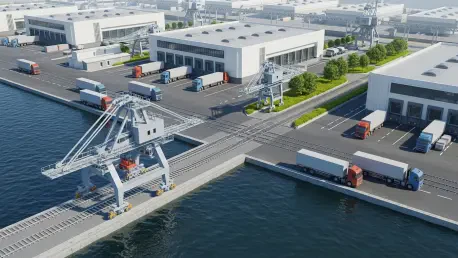

Rohit Laila is a veteran of the logistics industry, bringing decades of deep-sector experience in supply chain management and delivery systems. As a staunch advocate for technological integration within transportation, he has witnessed firsthand how infrastructure investment can dictate the economic health of entire regions. In this discussion, we explore the historic $25 million federal BUILD grant awarded to the Ports of Indiana for its Jeffersonville facility. We delve into the technical metamorphosis of the port—including its massive jump in lift capacity and warehouse expansion—and examine how this $32 million project will solidify Indiana’s standing as a premier multimodal freight hub while insulating the supply chain from environmental and operational bottlenecks.
The $25 million BUILD grant is being celebrated as a historic milestone for the state; from your perspective, what makes this specific award so significant compared to previous investments in the region?
This is a monumental achievement because it represents the largest federal award in the 65-year history of the Ports of Indiana, more than doubling any previous grant the state has received. When you realize that the U.S. Department of Transportation reviewed 1,200 applications and only selected 127 projects for this $1.73 billion funding pool, it underscores the national importance of the Jeffersonville facility. This isn’t just about maintenance; it is the largest single infrastructure investment since the port opened in 1985. This grant provides the necessary capital to transform an underutilized area along the Ohio River into a high-volume multimodal terminal that will serve as a primary engine for the regional economy.
With the port’s lift capacity scheduled to increase from 35 tons to a staggering 300 tons, how will this technical upgrade change the type of cargo and industry players coming through Southern Indiana?
An 800% increase in lift capacity is a total game-changer that allows the port to handle heavy-lift and breakbulk cargoes that were simply impossible to manage before. By installing a new 300-ton crane system and building a 6,500-square-foot dock, the facility can now attract major manufacturers and steel producers who require specialized heavy-duty logistics. This allows the port to handle much larger, more complex project cargoes, moving them seamlessly between river, rail, and truck. We are looking at a future where the port isn’t just moving standard containers, but is the go-to destination for the massive components that build American industry.
The project includes moving the general cargo facility outside the floodplain; can you explain the strategic and sensory benefits of this specific move for long-term operations?
Establishing the first general cargo facility located entirely outside the floodplain is a brilliant move for operational resilience and peace of mind for every stakeholder involved. In the past, the threat of rising river levels could stall the supply chain, but this new 22,000-square-foot warehouse ensures that goods remain dry, secure, and moving regardless of the weather. It eliminates the logistical anxiety of flood-related shutdowns and provides a reliable, all-weather terminal for Indiana’s farmers and businesses. This stability is what allows the port to double its barge-rail transloading capacity, ensuring that the rhythm of commerce never misses a beat due to environmental factors.
How does this expansion specifically address the need for lower transportation costs and increased efficiency for local manufacturers and the agricultural sector?
This expansion is designed to slash transportation costs by creating a more efficient, high-volume multimodal terminal that reduces the time cargo spends sitting in transit. By more than doubling the total general cargo capacity, we are effectively removing the bottlenecks that often force businesses to seek more expensive, less efficient routes. The synergy between the new warehouse and the enhanced rail-to-barge capabilities means that Indiana manufacturers can get their products to global markets much faster. It creates a high-quality infrastructure environment that supports jobs and gives our local farmers a competitive edge by streamlining the way they move their harvests to the rest of the world.
What is your forecast for the Jeffersonville port’s role in the regional economy by 2028?
By the time the project reaches completion in 2028, I expect Jeffersonville to be firmly established as one of the Midwest’s premier multimodal freight hubs. The infusion of modern technology and expanded capacity will act as a magnet for new industrial development, drawing in businesses that rely on heavy-lift capabilities and reliable rail-river connections. We will see a significantly more robust supply chain that is not only faster but also much more cost-effective for regional industry. Ultimately, this investment secures the port’s position as a critical artery for North American trade, ensuring it remains a cornerstone of Indiana’s economic strength for decades to come.