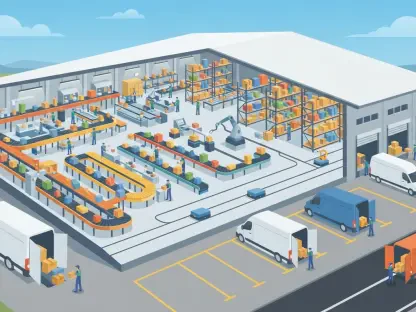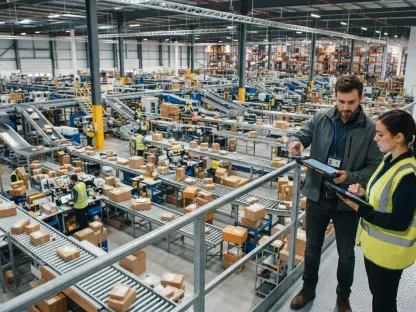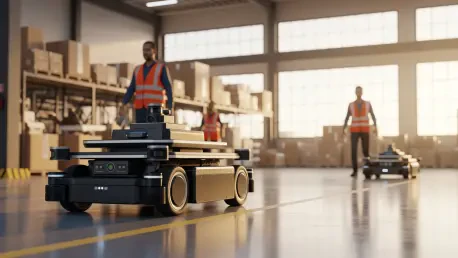

The sprawling distribution centers that power global commerce have quietly transformed into the most sophisticated testing laboratories for the next generation of humanoid and autonomous robots. While the ultimate goal for many technology firms is to place a helpful machine in every private residence, the chaotic and unpredictable nature of the home environment makes it a difficult starting point for hardware deployment. Instead, engineers are utilizing the semi-controlled surroundings of modern warehouses to refine the balance, perception, and interactive capabilities of these machines. This methodical approach allows developers to identify and solve critical engineering hurdles before a single unit crosses a domestic threshold. By treating the logistics sector as a high-stakes training ground, the industry ensures that the transition from industrial utility to household assistance is backed by years of rigorous real-world data and safety validation. This strategy moves the technology beyond experimental prototypes and toward reliable products.
Designing Robotic Structures: The Choice Between Legs and Wheels
Within the current landscape of robotic development, a significant debate centers on whether the bipedal form is truly necessary for machines operating in human-centric environments. Bipedal robots are engineered to mirror the human gait, which provides them with the unique ability to navigate infrastructure that was built specifically for people, such as narrow doorways and multi-story staircases. This design philosophy eliminates the need for expensive facility retrofitting, as the robot can simply walk where a person would walk. However, maintaining balance on two legs introduces immense computational complexity and physical risk, particularly when a robot must carry heavy loads or move over uneven surfaces. To mitigate these risks, early deployments in logistics often involve physical barriers or specialized zones to protect human workers from potential mechanical instability. Despite these challenges, the versatility of the bipedal form remains a primary focus for companies aiming to create robots that can eventually handle the diverse tasks required.
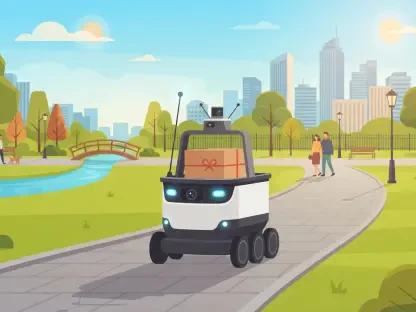
In contrast to the humanoid approach, many developers are finding success with wheeled platforms that prioritize stability and energy efficiency over biological mimicry. These robots, often resembling mobile pedestals or compact delivery units, utilize a lower center of gravity to ensure they remain upright even during sudden stops or when carrying lopsided weights. While they are physically unable to climb stairs, their movement is far more predictable and energy-efficient than that of their legged counterparts, making them ideal for the flat, expansive floors of a distribution center. This inherent stability allows for a more seamless integration into existing workflows, as human employees feel more comfortable working in close proximity to a machine that is unlikely to tip over. The development of these wheeled systems highlights a practical reality in modern engineering: the ideal shape of a robot is often determined by the environment. By mastering wheeled navigation, engineers perfect the sensors and software that will eventually guide more complex domestic machines.
Enhancing Machine Intelligence: Sensor Fusion and Real-Time Awareness
The physical capability of a robot is only as effective as the artificial intelligence that controls its movements and interprets its surroundings in real-time. Modern industrial robots are equipped with a suite of advanced sensors, including high-resolution LiDAR and sophisticated 3D cameras, which allow them to build a digital map of their environment as they move. The current challenge for AI developers is moving beyond simple obstacle avoidance toward a more nuanced understanding of the world. For instance, a robot must be able to distinguish between a static wall and a dynamic human worker who might suddenly change direction or reach into the machine’s path. Current training protocols involve teaching robots to recognize specific industrial hazards, such as the thin, protruding forks of a forklift or a spilled liquid on the floor, which might be difficult for standard proximity sensors to detect. This high-level perception is critical for ensuring that robots can operate safely in the dense and bustling atmosphere of a warehouse floor.
Beyond the intelligence of individual units, the industry is increasingly focusing on collective or fleet intelligence, where a central digital brain manages dozens of robots simultaneously. This centralized coordination allows machines to share data about traffic patterns and environmental changes, effectively preventing the jerky and unpredictable movements that often cause unease among human coworkers. To accelerate the learning process, companies are utilizing high-speed digital simulations that allow robots to experience decades of operation in just a few days of processing time. These digital twins of real warehouses enable engineers to test how robots react to rare or dangerous edge cases without putting any physical assets or people at risk. By the time a robot is deployed on a physical floor, it has already encountered thousands of simulated scenarios, from sudden power failures to unexpected human interference. This extensive pre-training ensures that when these machines eventually move to the home, they possess a refined level of awareness.
Establishing Safety Frameworks: Regulations and Global Standards
As robots move closer to widespread public adoption, the creation of rigid safety frameworks and international engineering standards has become a top priority for the tech industry. Before any autonomous machine is permitted to operate in a shared space, it must undergo a battery of stress tests designed to identify every conceivable point of failure. These evaluations are not merely internal quality checks but are becoming part of a standardized global certification process that proves a robot’s reliability to insurers and regulators alike. This is a critical step because insurance companies require a deep understanding of the risks associated with robotic interaction before they can provide coverage for companies or homeowners. By establishing these protocols in the industrial sector first, manufacturers are building the legal and ethical foundation necessary for domestic use. The rigorous data collected from thousands of hours of warehouse operation provides the empirical evidence needed to convince skeptical public officials that these machines are safe.
The development of specific ISO standards for bipedal and mobile robots represents a significant milestone in the maturation of the robotics industry. These regulations provide a detailed blueprint for how a robot should behave in an emergency, how it should communicate its intentions to nearby humans, and how its mechanical systems must be shielded to prevent injury. For example, new protocols are being finalized that dictate the maximum speed and force a robot can apply when it detects a human in its immediate vicinity. These guidelines ensure that different manufacturers are working toward a common safety goal, creating a more predictable environment for everyone involved. The technical groundwork being laid today in warehouses serves as a direct precursor to the future regulations that will govern home assistant robots. By perfecting these safety mechanisms in a controlled industrial setting, engineers are ensuring that the first generation of consumer-grade humanoids will adhere to the highest possible standards of protection.
Evaluating the Domestic Frontier: Challenges of the Home Environment
Despite the rapid progress made in industrial settings, the average family home remains the most significant challenge for roboticists due to its inherent lack of structure. Unlike the flat floors and clearly marked lanes of a distribution center, a private residence is often a chaotic obstacle course filled with soft furniture, scattered toys, and erratic pets. These environments require a level of physical dexterity and cognitive flexibility that is far beyond the current requirements of most warehouse tasks. A robot in a home must be able to navigate over plush carpeting, detect a sleeping dog in a dark hallway, and gently interact with children who may not understand the machine’s limitations. The margin for error in these scenarios is incredibly small, as a single mechanical failure or miscalculation could lead to property damage or serious physical injury. Consequently, while warehouse robots prove the core technology is viable, the transition to the living room demands a substantial leap in the ability to react to a constantly changing landscape.
The industry successfully demonstrated that the path to the human home required a detour through the rigorous demands of the warehouse floor. By prioritizing the development of robust hardware and sophisticated sensor fusion in a logistics context, engineers established a baseline of safety and reliability that was previously unattainable. Stakeholders moved beyond theoretical designs and focused on implementing standardized testing protocols that addressed the physical risks of human-robot collaboration. This methodical progression allowed companies to refine their AI models and battery efficiency while gathering the data necessary to satisfy international regulatory bodies. Instead of rushing prototypes into domestic spaces, the sector chose to build a foundation of trust through years of incident-free industrial operation. This cautious strategy provided the necessary technical insights to solve the stability and perception problems that once hindered progress. The groundwork was laid for a future where autonomous assistants could be integrated into daily life.