
The global demand for air cargo capacity has reached an unprecedented peak, forcing major international carriers like Emirates to rethink the lifecycle of their existing wide-body aircraft fleets. As of 2026, the transition of a passenger-configured Boeing 777-300ER into a dedicated freighter represents one of the most complex engineering challenges in the aviation industry. This process, often referred to as a P2F (Passenger-to-Freighter) conversion, is not a simple task of removing seats and loading boxes. It involves a comprehensive teardown and a complete structural overhaul that allows the aircraft to withstand the immense pressures and weights associated with heavy-duty logistics. By utilizing mid-life aircraft for these conversions, the industry is able to extend the operational utility of these machines, ensuring they remain productive assets in a rapidly evolving global market. The sheer scale of this transformation requires thousands of specialized man-hours, advanced materials, and a deep understanding of aeronautical engineering to maintain the airworthiness of the platform while fundamentally changing its original purpose.
1. Internal Disassembly: Stripping the Passenger Infrastructure
The initial phase of the conversion begins with a meticulous deconstruction of the passenger cabin, a process that effectively turns a luxury airliner into a hollow aluminum shell. Technical teams start by extracting hundreds of passenger seats, overhead stowage bins, and the expansive carpeting that once defined the interior comfort of the aircraft. However, the most labor-intensive aspect of this stage involves the removal of miles of complex wiring and fiber optic cables that supported the in-flight entertainment systems and passenger service units. Each electrical connection must be carefully mapped, labeled, and terminated without disrupting the primary flight control systems or the cockpit’s avionics. Once the interior is stripped, the galleys and lavatories are also removed, as they are no longer necessary for cargo operations. This complete gutting of the cabin is essential to reduce the aircraft’s empty weight, thereby maximizing the payload capacity for its future role in transporting heavy freight across the globe.
Beyond the visible removals, engineers must also address the insulation and sidewall panels that protect passengers from the extreme temperatures of high-altitude flight. These materials are replaced with durable, fire-resistant liners designed specifically for cargo environments, where the primary concern shifts from human comfort to fire suppression and containment. The removal of the passenger windows is another critical step, as they are replaced with solid metal plugs that are riveted into the fuselage. These plugs are lighter than the glass they replace and require far less maintenance over the remaining lifespan of the aircraft. By the time this phase is completed, the aircraft interior is unrecognizable, resembling a vast, empty tunnel that is ready to be reinforced for the heavy loads it will soon carry. This stage sets the foundation for the structural modifications, ensuring that every square inch of the fuselage is prepared for the rigorous demands of industrial cargo transport and the logistical pressures that define the modern shipping era.
2. Structural Reinforcement: Implementing Heavy Cargo Solutions
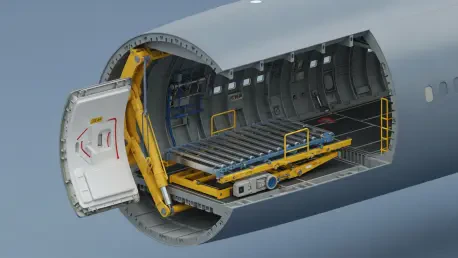
Following the internal demolition, the conversion process moves into the critical phase of structural reinforcement, which focuses on the floor and the fuselage skin. Unlike passenger loads, which are distributed across thousands of small contact points, cargo loads are concentrated on heavy pallets and containers that can weigh several tons each. To accommodate this, the original floor beams are replaced or reinforced with high-strength alloys capable of supporting the increased weight of the main deck cargo. A sophisticated cargo handling system is then installed, featuring motorized rollers and ball transfer units that allow a small crew to maneuver massive pallets with minimal physical effort. These systems are integrated directly into the floor structure, ensuring that the cargo remains securely locked in place during takeoff, turbulence, and landing. The floor must also be designed to handle the shifting centers of gravity that occur when loading and unloading diverse types of freight, from heavy machinery to temperature-sensitive pharmaceuticals.
The most iconic physical change during the conversion is the installation of the main deck cargo door, a massive aperture cut into the side of the aircraft’s fuselage. This modification required the installation of a heavy-duty door frame, which redistributed the structural loads around the new opening to maintain the integrity of the airframe under pressure. The door itself operated on a complex hydraulic system, allowing it to swing upward and provide a clear path for large cargo containers. This technological pivot provided the necessary flexibility for the fleet to respond to the shifting economic landscape that emerged between 2026 and 2028. By the end of the conversion, the aircraft underwent rigorous flight testing to ensure that the new structural weight and balance met all safety certifications. These converted freighters ultimately filled a vital gap in the logistics chain, proving that existing passenger jets could be successfully repurposed to meet the growing needs of global trade. The strategic decision to invest in these conversions optimized fleet efficiency and reinforced the resilience of international supply networks during a period of high volatility.