
The chaotic aftermath of a natural disaster often reveals a chilling truth: the difference between life and death depends less on the availability of aid and more on the speed of the machinery moving it. When a massive earthquake struck Venezuela on June 24, the immediate challenge was not merely a lack of food or medicine, but the sudden collapse of infrastructure that threatened to stall every incoming flight and truck. This crisis served as a pivotal turning point for modern humanitarian efforts, demonstrating that private logistics networks have transitioned from auxiliary supporters to the primary engines of survival in a broken landscape.
The intervention of the “GoHelp” program illustrates a broader shift in how global crises are managed. Goodwill alone cannot repair a fractured supply chain or clear a landing strip; it requires the precise coordination of international assets. By analyzing the response to the Venezuelan earthquake, it becomes clear that corporate logistical muscle is the only force capable of bridging the gap between global intentions and local needs. This evolution suggests that the future of humanitarian aid lies in the seamless fusion of private sector efficiency and public sector relief mandates.
Beyond Goodwill: The High-Stakes Reality of Modern Crisis Management
The seconds following a natural catastrophe are often the most critical for search-and-rescue operations, yet the bottleneck for aid rarely involves a global lack of supplies. In Venezuela, the primary obstacle was navigating a shattered transportation network that risked stranding thousands of tons of cargo at distant borders. This reality forced a move away from traditional charity models, highlighting the necessity of professionalized logistics to manage the high-stakes environment of a disaster zone.
The mobilization of DHL Group’s specialized teams proved that modern crisis management depends on pre-existing industrial networks. While government agencies often struggle with the sudden demand for heavy transport, private logistics firms maintain a constant state of readiness. The Venezuelan case study underscores how corporate infrastructure can stabilize a situation by providing the technical reliability that traditional relief channels often lose during the first forty-eight hours of a catastrophe.
Why Private Infrastructure Is No Longer Optional in Disaster Zones
In the wake of catastrophic events, traditional government and NGO channels frequently find their resources stretched to a breaking point. In Venezuela, UNICEF estimated that 1.8 million people, including hundreds of thousands of children, faced urgent threats to their safety due to the destruction of homes and essential services. When the scale of a disaster reaches these levels, the public sector’s ability to coordinate large-scale airlifts is often hampered by bureaucratic delays and a lack of regional transport hubs.
Private logistics firms possess specialized air networks and supply chain technology that public entities simply do not maintain on a global scale. By integrating these corporate assets into disaster relief, the international community can bypass local infrastructure failures and ensure that aid moves at the speed of the crisis. The ability to pivot global delivery routes instantly is a capability unique to the private sector, making it an indispensable part of the humanitarian response.
Analyzing the DHL GoHelp Model: From Panama to the Venezuelan Frontlines
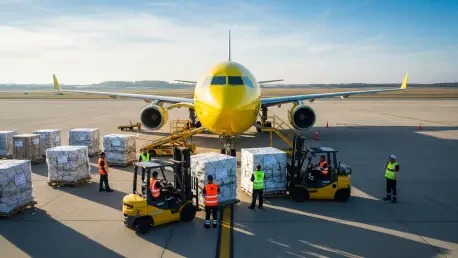
The effectiveness of the response in Venezuela hinged on the mobilization of the Disaster Response Team, a specialized unit designed to bridge the gap between aid collection and actual delivery. Between June 27 and July 9, the operation executed three major humanitarian flights, transporting over 100 tons of essential supplies consolidated at Panama’s Tocumen International Airport. This logistical feat relied on a synchronized effort where more than 65 employee volunteers sorted and palletized cargo ranging from medical supplies to search-and-rescue equipment.
This model demonstrated that the most effective disaster relief occurs when private sector air networks are used to facilitate the work of the International Organization for Migration and the World Food Programme. By utilizing a regional hub in Panama, the operation was able to consolidate aid from various sources before pushing it into the disaster zone with maximum efficiency. This centralized approach reduced the time spent on administrative processing and allowed for a continuous flow of supplies to the ground.
Data and Insights: Quantifying the Impact of Corporate Logistics Expertise
Expert consensus identifies logistics as the actual lifeline of any humanitarian mission, particularly when nearly two million lives are at risk. Data from the DHL operation reveals a distinct shift toward a more professionalized supply chain approach, moving away from ad-hoc assistance toward a culture of long-term disaster preparedness. The launch of the Academy of Humanitarian Logistics represents a notable trend in the industry, focusing on training humanitarian organizations in practical, real-world logistics.
The value of the private sector lies not just in its physical assets like planes and warehouses, but in its ability to transfer specialized knowledge to non-profit organizations. This educational bridge ensures that future emergency responses are faster and more disciplined, reducing the likelihood of aid being wasted due to poor inventory management. By quantifying success through delivery speed and volume, the private sector has set a new benchmark for what is possible in crisis response.
Strategies for Integrating Private Logistics into Humanitarian Frameworks
To replicate the success of the Venezuelan relief effort, global organizations prioritized moving beyond reactive partnerships toward a framework of constant readiness. This involved establishing formal public-private partnerships long before a disaster occurred, allowing for the pre-positioning of supplies at strategic global hubs. Humanitarian agencies professionalized their supply chain management by enrolling in specialized logistics training programs and utilizing corporate sorting technologies.
By leveraging existing global air networks and employee volunteer programs, aid organizations ensured that when the next disaster struck, the logistical lifeline was already in place and ready to deploy. Stakeholders discovered that the most resilient systems were those where private industry and humanitarian groups shared data and resources seamlessly. Ultimately, these integrated strategies transformed the nature of disaster relief from a series of desperate reactions into a disciplined, proactive movement of life-saving resources.