
The global maritime industry is currently navigating a complex regulatory storm as the European Union intensifies its efforts to enforce strict environmental standards across its territorial waters. While the expansion of the Emissions Trading System was intended to foster a greener shipping sector, many operators have utilized sophisticated geographical workarounds to minimize their financial liabilities under the current framework. These tactical maneuvers often involve adding brief stops at non-member ports to exploit the “50% rule,” which applies to voyages entering or leaving the bloc from international destinations. In response to these evasive practices, the European Commission is preparing to unveil a comprehensive suite of updates designed to fortify the maritime carbon market and ensure that every ton of carbon dioxide emitted is accounted for accurately. By mid-July, new directives are expected to redefine compliance, signaling a shift toward a more rigorous enforcement era that protects the integrity of the market while discouraging companies from seeking loopholes.
Maritime Regulation: The Mechanics of Carbon Compliance
Regulatory Gaps: The Limitations of Partial Emission Coverage
The existing regulatory framework, which became fully operational at the beginning of 2026, mandates that shipping companies surrender allowances for all emissions generated during voyages between two ports within the European Union. However, a significant loophole persists regarding intercontinental traffic, where only half of the emissions are currently subject to the carbon tax for journeys originating from or ending at a destination outside the bloc. This specific provision was originally implemented to maintain the economic competitiveness of European trade while encouraging global participation in decarbonization efforts, but it has inadvertently incentivized “evasive port calls.” By stopping at a nearby hub just outside the EU’s jurisdiction, a large container vessel can effectively reset its voyage data, ensuring that the taxable portion of its journey is limited to the final, much shorter leg. This strategy significantly reduces the total number of carbon allowances required for compliance, saving millions of dollars for major carriers.
Operational Tactics: The Logistical Evolution of Evasive Port Maneuvers
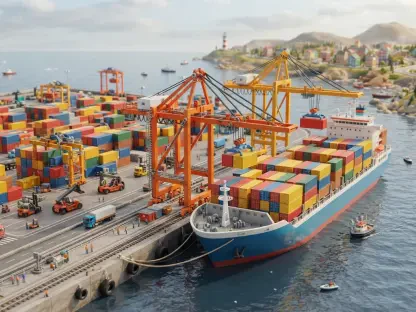
The practice of making strategic stops at transshipment hubs in North Africa or the Mediterranean has transformed from a rare occurrence into a calculated operational standard for many global carriers. These stops are often purely administrative in nature, involving minimal cargo handling while serving the primary purpose of circumventing the financial burden of the 100% emission requirement for intra-EU routes. Because the cost of these extra port calls is frequently lower than the price of carbon allowances, shipping lines have optimized their routes to prioritize stops in countries like Egypt or Morocco. This geographical arbitrage has created a tiered system where companies with the most flexible logistics networks can avoid millions in annual expenses that smaller, more localized operators must bear. Consequently, the European Commission has identified a need to tighten the definitions of what constitutes a legitimate port of call, aiming to distinguish between genuine cargo activity and tax evasion.
Global Impact: Assessing Strategic Risks and Financial Realities
Targeted Hubs: Identifying Strategic Ports for Enhanced Oversight
To combat the trend of tactical docking, the European Union has developed a list of “neighboring container transshipment ports” that are specifically excluded from voyage resets under the carbon market rules. The upcoming legislative proposal aims to significantly broaden this list, potentially including major maritime hubs in Jordan and additional sites along the British coastline that serve as gateway points for European trade. By designating these locations as non-qualifying for the 50% rule reset, the EU ensures that the carbon liability is calculated from the original point of departure rather than the last stop outside the bloc. This move is designed to level the playing field, making it increasingly difficult for carriers to find convenient “tax havens” along major shipping lanes. The expanded criteria will focus on ports where transshipment activity exceeds a specific threshold, ensuring that the regulations target high-volume logistics hubs while avoiding unnecessary market interference.
Economic Risks: Navigating Carbon Leakage and Market Competition
The financial implications of these regulatory adjustments are immense, as the maritime carbon market is projected to generate billions in annual revenue, placing a permanent burden on shipping lines. If the Commission successfully closes current loopholes, companies will have to decide whether to absorb these costs or redesign their logistics networks. Port authorities have expressed concern that this could lead to “carbon leakage,” where maritime activity shifts to regions with less stringent laws. If docking at a European port becomes too expensive, global carriers may reroute cargo to non-EU terminals and move goods via smaller feeder vessels. This shift would damage the economic vitality of major hubs like Rotterdam while failing to reduce global emissions. Consequently, the challenge for policymakers is to enforce compliance without driving business away from the continent. Balancing environmental goals with economic competitiveness requires a system that monitors trade shifts in real-time.
Industry Resilience: Future Strategies for Sustainable Maritime Integration
As the maritime industry moved toward the mid-point of the year, stakeholders prioritized the integration of advanced monitoring technologies and data analytics to streamline emission reporting. Companies that proactively invested in hull efficiency and low-carbon propulsion systems found themselves better positioned to absorb the rising costs of the ETS without compromising their profit margins. The industry also explored the development of collaborative frameworks where ports and carriers shared the financial burden of infrastructure upgrades needed for shore-side power and alternative fuel bunkering. Moving forward, shipping executives focused on diversifying their energy sources and optimizing vessel speeds to minimize fuel consumption on long-haul routes. International cooperation remained a critical component, as regional regulations paved the way for a more unified global approach to maritime decarbonization. Strategic leaders determined that accelerating the transition to green fuels like methanol and ammonia was the most effective way to ensure long-term resilience.