
Rohit Laila is a distinguished figure in industrial automation, having spent decades navigating the complexities of global supply chains and logistics. His career has been defined by a commitment to integrating cutting-edge technology into traditional delivery frameworks, making him a sought-after voice for understanding major market shifts. In this conversation, we explore the strategic evolution of intralogistics, focusing on how the convergence of software and hardware is creating a new standard for end-to-end automation and operational agility in a rapidly changing world.
Our discussion centers on the rapid transformation of the intralogistics sector, where the growing demand for integrated material flow is driving massive investment. We examine the importance of merging software-driven warehouse orchestration with physical automation, the strategic value of expanding into emerging and mid-market regions, and how these technological shifts address the modern pressures of e-commerce and the need for greater visibility within the warehouse.
With the intralogistics market projected to grow by approximately 13% annually over the next few years, what do you believe is the primary driver behind the sudden demand for integrated offerings that connect production directly to storage?
The momentum we are seeing is truly unprecedented, largely because the traditional silos between the factory floor and the warehouse are finally crumbling. Customers no longer want standalone machines; they are demanding a rhythmic precision where every pallet and box is tracked from the moment of production through to final execution. This 13% growth forecast reflects a desperate need for operational visibility that only an end-to-end platform can provide. When you eliminate the friction between these stages, you gain a level of responsiveness that is essential for surviving in a landscape dominated by high-speed e-commerce and volatile supply demands. It is the difference between a fragmented series of movements and a single, heartbeat-like flow of goods across the entire facility.
How does the combination of heavy-duty pallet handling and specialized box handling create a competitive edge that a single-focus automation provider might lack?
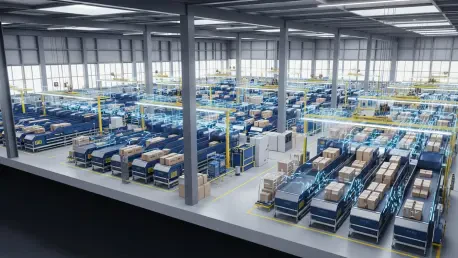
It is all about the synergy between the clanking strength of pallet systems and the intricate, fast-paced requirements of order fulfillment. By weaving together the automated storage technologies used for bulk pallets with advanced expertise in box handling, a company can manage the entire lifecycle of a product under one roof. This comprehensive approach means that an industrial facility can optimize its entire footprint, ensuring that the movement of materials is not just fast, but also intelligently prioritized. You aren’t just moving weight; you are managing the subtle nuances of order preparation and execution. This allows for a much more robust portfolio that handles everything from the raw materials arriving at the dock to the final box being shipped to a customer’s door.
Considering the strategic push into regions like the U.S. mid-market and Latin America, what specific challenges do these areas face that make advanced intralogistics solutions particularly attractive right now?
These markets are at a tipping point where they need to scale rapidly, yet they often struggle with the sheer complexity of modern distribution requirements and the vibrant energy of expanding hubs. In Latin America, the boots-on-the-ground reality is that local players are growing and need access to global resources and industrial expertise to compete on a larger stage. Meanwhile, the U.S. mid-market is feeling the heat of accelerating demand for automation, yet these companies require flexible solutions that don’t demand a total overhaul of their existing leadership or identity. By providing a global reach while maintaining the innovative spirit of local teams, companies can bridge the gap between regional agility and worldwide efficiency. It’s about bringing world-class technology to areas that are ready for a profound transformation but need the right partner to de-risk the investment.
In the context of the shift toward digitalization, how crucial is software-driven warehouse orchestration compared to the physical robotics used in these facilities?
The physical robots are the limbs, but the software is the nervous system that makes the entire body functional and intelligent. Without advanced orchestration, even the fastest robot is just an expensive machine that doesn’t know where to go next or how to react to a sudden change in order volume. As supply chains become more dynamic, the ability to optimize processes in real-time through software allows for a level of flexibility that hardware alone simply cannot achieve. This digital backbone acts as the nerve center, enabling a facility to pivot during peak seasons or shift its material flow to accommodate new product lines without a complete physical reconfiguration. It provides the visibility and responsiveness that modern managers crave to keep their operations lean and efficient.
What is your forecast for the future of the intralogistics market?
I anticipate a future where the distinction between manufacturing and distribution disappears entirely, leading to a smart ecosystem that effectively manages itself. Over the next three to five years, we will see a massive influx of software-driven solutions that connect production, warehousing, and material handling into one unified, intelligent platform. This will allow companies to achieve a level of end-to-end visibility that was previously impossible, dramatically reducing lead times and operational waste. As these technologies become more accessible to the mid-market, we are going to see a democratization of high-level automation that transforms the global economy. The organizations that succeed will be the ones that view their material flow as a single, integrated journey rather than a series of disconnected tasks.