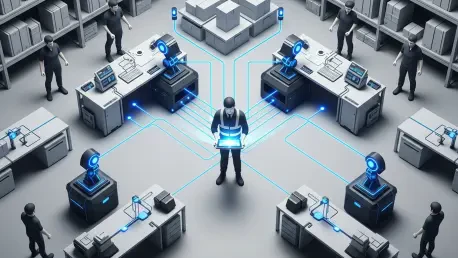

A massive fulfillment center might deploy five hundred autonomous mobile robots (AMRs) only to find that the expected twenty-percent efficiency gain never actually materializes because the team lacks a cohesive leadership strategy on the warehouse floor. While corporate boardrooms are eager to authorize multi-million dollar expenditures on artificial intelligence and automated sorting systems, the actual success of these initiatives rests heavily on the shoulders of the frontline supervisor. These managers act as the indispensable link between high-level business objectives and the minute-by-minute execution of tasks by the workforce. Without a supervisor who can translate complex data into actionable steps, even the most advanced machinery becomes little more than an expensive obstacle. The supervisor serves as the “human interface” of the operation, ensuring that the flow of goods remains steady despite the unpredictable nature of labor availability and equipment downtime. By recognizing that these leaders are the connective tissue of the supply chain, organizations can pivot away from perpetual crisis management toward a more predictable and profitable operational model. The current technological landscape demands more than just smart machines; it requires leaders who can bridge the gap between digital potential and human performance. This dynamic is particularly evident in large-scale logistics hubs where the sheer volume of activity requires constant, localized decision-making that no centralized algorithm can yet replicate with total accuracy. Consequently, the supervisor’s role has transitioned from a simple taskmaster to a critical strategic coordinator within the modern industrial environment.
The Critical Link: Retaining Talent Through Effective Supervision
While Human Resources departments facilitate the administrative entry of new hires, it is the daily interaction with a supervisor that ultimately dictates whether a seasonal picker or a permanent packer remains with the organization. The first forty-eight hours of a new employee’s tenure are notoriously the most stressful, as individuals navigate unfamiliar floor layouts, complex handheld scanners, and demanding speed quotas. A supportive manager who offers real-time coaching and sets a welcoming tone acts as a stabilizing force, preventing the catastrophic turnover rates that plague modern logistics centers. When workers feel heard and supported, they are significantly more likely to push through the initial learning curve, which directly reduces the exorbitant costs associated with constant recruiting and retraining. This human-centric approach transforms the warehouse from a revolving door into a stable community where skills are retained and built upon. By prioritizing the supervisor-employee relationship, companies create a culture of accountability that serves as a natural defense against the labor shortages currently affecting the global supply chain. This stability is essential for maintaining consistent throughput and meeting the increasingly tight delivery windows demanded by e-commerce customers.
Unfortunately, the reality in many high-volume facilities is that supervisors are perpetually trapped in a “firefighting” mode, where their entire shift is consumed by reacting to minor crises rather than leading their teams. Instead of analyzing workflow patterns or mentoring underperforming staff, these managers are often forced to jump on forklifts or manually clear conveyor jams because they are understaffed or dealing with technical glitches. This reactive stance leaves zero room for the development of the people they oversee, leading to a disconnect between the floor and the management office. When a supervisor is too busy performing basic labor to meet immediate shipping deadlines, they lose the ability to detect early signs of employee burnout or identify which new hires need additional technical guidance. This cycle of neglect creates a volatile work environment where errors go uncorrected and top performers feel unappreciated. To break this cycle, organizations must provide supervisors with the tools and authority to step back from the manual fray and reclaim their roles as strategic coordinators who can proactively address issues before they escalate into major disruptions. Providing this breathing room is not just a matter of comfort; it is a fundamental requirement for operational resilience in a market that rewards agility.
Reclaiming Managerial Capacity: The True Goal of Warehouse Software
The true return on investment for a warehouse management system (WMS) or an advanced labor management tool is not found in the reports themselves, but in the hours of time these systems save the supervisor. Effective technology should serve as a digital assistant that handles the monotonous, repetitive aspects of floor management, such as directing traffic flow and answering basic queries about inventory location. When a software interface is intuitive and accessible, associates become self-sufficient much faster, which drastically reduces the number of times a manager is interrupted to solve a simple problem. This newfound freedom allows supervisors to focus on high-impact activities, such as identifying the root causes of bottlenecks or optimizing the layout of the picking zone to reduce travel time. In essence, the software should do the heavy lifting of data processing so the human manager can do the heavy lifting of leadership. The shift toward more autonomous systems is not about replacing the manager, but rather about refining their focus to ensure that human intuition is applied where it is most needed to navigate complex operational challenges. By offloading clerical tasks to digital platforms, the facility ensures that its most expensive and versatile asset—human intelligence—is not wasted on data entry.
Beyond simple oversight, the modern supervisor is evolving into a performance coach, fueled by real-time data that provides a granular view of warehouse activity. Instead of using performance metrics as a disciplinary club to punish the slowest workers, forward-thinking organizations are leveraging this information to foster a culture of transparency and friendly competition. By utilizing gamification and instant feedback loops, supervisors can recognize high achievers in the moment, which has been shown to boost morale and productivity across the board. This data-driven approach allows for a more objective assessment of performance, moving away from favoritism and toward a merit-based environment that employees respect. When a supervisor uses technology to highlight successes rather than just pointing out failures, the entire dynamic of the warehouse floor shifts from one of fear to one of engagement. This transition is vital for lowering attrition rates, as employees who feel their hard work is being accurately tracked and rewarded are much less likely to seek employment elsewhere. Furthermore, this approach provides a clear roadmap for career advancement, as workers can see exactly what metrics they need to hit to move into higher-paying roles, creating a self-sustaining cycle of improvement.
Building the Bridge: Fostering Employee Buy-In for New Automation
Automation projects frequently stumble not because the technology is flawed, but because it is imposed on the workforce from the top down without considering the daily realities of the people using it. Supervisors serve as the “credibility bridge” in these high-stakes transitions; if they are not fully convinced of the benefits of a new system, the frontline associates will mirror their skepticism. Involving these mid-level leaders early in the procurement and testing phases ensures that the eventual rollout accounts for the specific nuances of the local operation. When a supervisor understands how a new robotic arm or an automated picking cart will make their team’s job safer or less physically taxing, they become the most effective advocates for change on the floor. Their buy-in is the catalyst that transforms a potentially threatening technological shift into a collaborative improvement project. Without this grassroots support, even the most sophisticated automation risks being sabotaged by a workforce that feels sidelined and undervalued. True integration requires that technology be viewed as a tool for empowerment rather than a replacement for human skill, a message that only a trusted supervisor can deliver effectively to a wary team.
Every single investment a warehouse makes, whether it is a fleet of drones for inventory counting or a simple digital signage system, relies on the supervisor to act as a force multiplier. No matter how many millions are spent on hardware, the efficiency of those assets is capped by the quality of the management overseeing their deployment. A well-trained supervisor can take a mediocre set of tools and achieve high levels of output through clever coordination and team motivation, whereas a poorly trained manager can hinder even the most advanced systems. This means that the return on investment for any new technology is inextricably linked to the training and support provided to the supervisors. Companies that view their managers as a static expense rather than a dynamic asset are missing a critical piece of the productivity puzzle. By investing in leadership development alongside technical upgrades, organizations ensure that their hardware reaches its full potential. The supervisor is the one who ensures that the robots are utilized correctly and that the human team remains synchronized with the digital workflow, ultimately determining the total cost-effectiveness of the facility’s capital expenditures and the longevity of the equipment itself.
Operational Excellence: Elevating the Role of the Frontline Leader
To achieve a state of lasting operational excellence, companies must transition away from the outdated practice of viewing warehouse supervision as a secondary or incidental task. For too long, the industry standard has been to promote the fastest pickers or the most reliable operators into management roles without providing them with the necessary leadership training. This often results in a supervisor who is technically proficient but lacks the soft skills required to manage a diverse, high-pressure workforce effectively. True success requires a strategic shift where supervision is treated as a professional discipline that demands its own specific set of competencies and resources. This includes reducing the administrative burden on these leaders by automating reporting and paperwork, allowing them to spend at least eighty percent of their shift on the floor engaging with their teams. When the management layer is robust and well-supported, the entire organization becomes more resilient to market fluctuations and labor volatility. Moving toward this model allows the facility to move beyond the reactive “firefighting” stage and focus on long-term sustainability and the continuous optimization of automated workflows.
The path toward maximizing warehouse technology ROI was paved by organizations that recognized the supervisor as the central figure in the modern supply chain. Leaders moved away from purely reactive models, instead choosing to empower their floor managers with real-time data and the autonomy to make strategic adjustments. They prioritized the reduction of administrative burdens, which allowed supervisors to focus on high-value coaching and the physical safety of their staff members. By integrating these frontline leaders into the early design phases of automation, companies successfully navigated the social and technical complexities of human-machine collaboration. It became clear that the human element was not a hurdle to be bypassed, but rather the primary catalyst that made sophisticated technology work in the real world. The most successful facilities were those that professionalized the supervisory role, ensuring that every technological upgrade was supported by an equivalent investment in management training. These businesses treated their supervisors as a core strategic asset, which ultimately stabilized their workforce and protected their bottom line. This comprehensive approach ensured that the warehouse remained resilient during the rapid shifts in consumer demand and labor availability.