
When a local homeowner discovers a burst pipe on a Tuesday evening, the ability of a neighborhood hardware store to deliver a specialized valve within ninety minutes often determines whether that business retains a customer for life or loses them to a global digital marketplace. The modern retail landscape has shifted dramatically, with consumers no longer viewing rapid home delivery as a luxury but as a standard requirement for any successful transaction. As e-commerce continues to absorb a larger percentage of total retail sales throughout the late 2020s, the pressure on independent retailers to bridge the architectural gap between their physical storefronts and the doorsteps of their customers has reached a critical tipping point. This environment demands a fundamental rethink of the last-mile logistics process, which represents the final and often most expensive leg of the supply chain. For local businesses, this challenge actually presents a unique opportunity to leverage their geographic proximity and deep community ties to offer a level of speed and personalization that massive national warehouses simply cannot replicate. By mastering the complexities of local delivery, these retailers are moving beyond simple survival and are instead establishing a new standard for what it means to be a modern merchant in an increasingly decentralized economy.
The Strategic Shift: Transitioning Delivery from a Perk to a Necessity
Leading independent retailers have collectively reached a consensus that providing delivery services is no longer an optional perk but a mandatory operational cost required to remain relevant in a saturated market. By reclassifying logistics as a core business function rather than a secondary add-on, these organizations are reclaiming market share from competitors who remain stubbornly tethered to outdated brick-and-mortar models. This shift requires a profound commitment to owning the entire customer journey, from the initial digital click to the physical hand-off at the front door. Businesses that embrace this reality are finding that the last-mile is where brand loyalty is either solidified or permanently lost. Consequently, the focus has moved away from merely having a product in stock to ensuring that the product can reach the consumer exactly when and where they need it. This transition involves significant changes in inventory management and store layouts, as backrooms are often converted into staging areas for outgoing orders. The most successful retailers are those that treat their delivery fleet, whether it consists of a single van or a team of couriers, with the same level of importance as their physical storefront displays.
Sustainability remains a primary concern for small businesses attempting to navigate the high costs associated with rapid delivery operations. To address this, many retailers are adopting innovative financial strategies that avoid passing exorbitant shipping fees directly onto the consumer, which often serves as a deterrent to sales. Some have successfully adjusted their margins on high-demand or bulky items, while others implement tiered delivery structures that incentivize larger basket sizes through free shipping thresholds. This strategic approach solves the most common consumer pain points, such as the logistical nightmare of transporting large appliances or heavy garden supplies, while simultaneously protecting the bottom line of the business. By carefully analyzing delivery data, owners can identify the most profitable routes and optimize their delivery schedules to maximize efficiency. This financial gymnastics is necessary to ensure that the convenience offered to the shopper does not come at the expense of the company’s long-term viability. As retailers refine these models from 2026 through the end of the decade, they are discovering that the increased volume of orders generated by a reliable delivery service often compensates for the initial investment in vehicles and personnel.
Building Resilience: Strengthening Customer Loyalty Through Service Reliability
A “deliver or die” philosophy is rapidly taking hold among retailers who understand that superior customer service is their most valuable asset in an age of automated interactions. The ultimate goal is to maximize the lifetime value of a shopper by providing a level of reliability that rivals or even beats the performance of global online giants. When a local store can confirm an order and complete the delivery faster than a national warehouse can even process the shipping label, they build a bond of trust that is remarkably difficult for larger competitors to break. This reliability serves as a powerful differentiator, transforming a one-time purchaser into a dedicated brand advocate. In this context, the delivery driver becomes the face of the company, representing the store’s values and commitment to the community with every interaction. For the independent retailer, every successful drop-off is an opportunity to reinforce their reputation for excellence and responsiveness. By focusing on the quality of the delivery experience, local shops can create a defensive moat around their business that is built on personal connection rather than just price or selection.
Integrating delivery into a store’s daily workflow is essential to maintain these high service standards without causing internal friction or burning out the staff. Successful managers are increasingly utilizing sophisticated scheduling techniques to ensure that delivery routes do not conflict with other critical tasks, such as receiving new inventory or assisting in-store shoppers. By carefully timing deliveries to coincide with off-peak hours, retailers can maintain a consistent professional image both in the aisles and on the road. This synchronization allows the business to function as a well-oiled machine, where the transition from an in-store sale to a home delivery is seamless and transparent. Furthermore, involving the entire team in the delivery mission helps to foster a culture of collective responsibility, where every employee understands how their role contributes to the final delivery outcome. This internal alignment is crucial for scaling delivery operations without sacrificing the personalized touch that defines the independent retail experience. As stores perfect these workflows, they are better positioned to handle the seasonal fluctuations in demand that often cripple less organized operations.
Digital Transformation: Overcoming Logistics Challenges with Tailored Technology
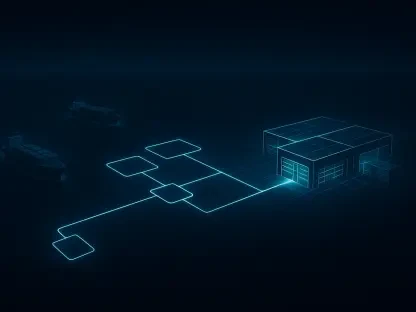
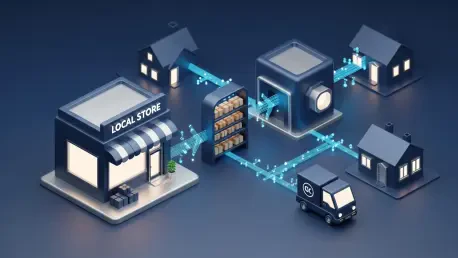
One of the most significant hurdles for local stores has historically been the lack of appropriate software to manage complex delivery schedules and real-time customer communications. Many standard retail point-of-sale systems were never designed for the modern omnichannel world, leaving glaring gaps in how orders are tracked, processed, and fulfilled. To bridge this digital divide, forward-thinking owners are increasingly developing or adopting specialized cloud-based platforms that keep every segment of the sales cycle organized in a single, accessible location. These technological tools allow staff to manage online sales, track vehicle locations, and automate customer notifications from a smartphone or tablet. By centralizing this information, retailers can eliminate the manual errors and communication breakdowns that often lead to delayed or incorrect deliveries. The adoption of these platforms is no longer a luxury but a fundamental requirement for any business that hopes to compete with the sophisticated logistics engines of major e-commerce platforms. This digital infrastructure provides the transparency and agility needed to respond to customer inquiries and logistical challenges in real time.
Utilizing specialized technology also enables retailers to gather and analyze vast amounts of data regarding their delivery performance and customer preferences. This level of digital organization ensures that no order is forgotten and that every promised milestone is met with precision. For example, automated notifications can alert a customer when their order is being loaded onto a truck and provide an accurate estimated time of arrival, significantly reducing the anxiety associated with home deliveries. Beyond the immediate logistical benefits, these systems allow retailers to identify trends in purchasing behavior, enabling more effective inventory planning and targeted marketing efforts. By embracing these technological tools, independent shops can operate with the same efficiency as large-scale e-commerce platforms while maintaining their unique local character. The integration of artificial intelligence and machine learning into these platforms starting in 2026 is further empowering small retailers to optimize their routes and predict demand with unprecedented accuracy. This technological evolution is leveling the playing field, allowing the most innovative local businesses to outmaneuver much larger rivals through data-driven decision-making.
Scalable Operations: Managing Labor and Expanding Reach with Hybrid Models
The human element of delivery, specifically the recruitment and retention of reliable drivers, remains one of the most persistent challenges for small businesses. To maintain operational flexibility, many stores are turning to a hybrid staffing model that combines dedicated in-house employees with external third-party delivery services like DoorDash or Roadie. This diversified approach allows a business to handle high-volume local routes personally, where the personal touch is most valued, while outsourcing deliveries that are further away or occur during periods of peak demand. By leveraging these external platforms, retailers can expand their geographic reach without the immediate need for a massive capital investment in a permanent fleet. This flexibility is particularly vital for small shops that may experience significant volatility in order volume throughout the week. A hybrid model provides a safety valve, ensuring that the store can always fulfill its promises to customers regardless of internal staffing levels. This strategic balance between internal control and external scalability is becoming the blueprint for sustainable growth in the modern retail sector.
Starting small and scaling gradually is a common strategy for retailers who are hesitant to commit heavily to a large-scale logistical operation right away. By cross-training existing staff and utilizing smaller, more fuel-efficient vehicles for light deliveries, a store can effectively test the market and refine its processes before investing in heavy-duty trucks or specialized equipment. This cautious yet steady expansion helps to mitigate financial risk while still allowing the business to meet the growing consumer demand for home delivery services. As the delivery operation proves its value and generates additional revenue, the retailer can then reinvest those profits into better vehicles, more advanced technology, and dedicated logistics personnel. This incremental approach also allows the store to build its delivery reputation slowly and surely, ensuring that every new customer receives the same high level of service as the last. By 2027 and into 2028, these scaled-up operations often become the primary growth engine for the business, reaching customers who may never have stepped foot inside the physical storefront. The ability to adapt and grow in this manner is a testament to the resilience and ingenuity of the independent retail community.
The Final Impression: Using Delivery to Enhance Brand Identity and Community Connection
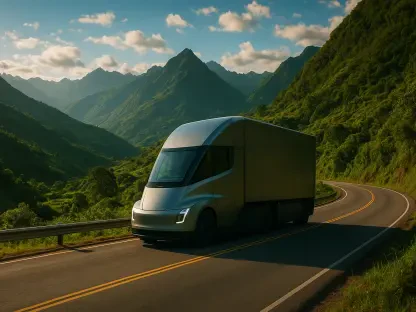
Beyond the logistical mechanics, delivery serves as a powerful marketing tool that reinforces a store’s unique identity within its local community. Whether it is a fleet of branded trucks serving professional contractors at a job site or a signature bicycle making summer deliveries in a quiet neighborhood, the physical presence of a store’s delivery operation says a lot about its values and its commitment to service. By adding a personal, “white-glove” touch to every drop-off, independent retailers can create a memorable experience that far exceeds the impersonal nature of a package left on a porch by a national carrier. This level of attention to detail might include unboxing an item for a customer, providing a brief demonstration of how a product works, or simply offering a friendly greeting by name. These small gestures build significant emotional capital, making it much more likely that the customer will return to the store for their next purchase. In an era where many retail interactions have become purely transactional, the delivery process offers a rare opportunity to humanize the brand and foster a genuine connection with the local population.
The most effective path forward was established by those who viewed the last-mile not as a logistical hurdle but as a fundamental pillar of their brand identity. Retailers that succeeded prioritized the integration of flexible staffing models and localized technology platforms to maintain a competitive edge over larger, more rigid corporations. It became clear that the true key to survival lay in the ability to humanize the delivery process, turning a routine drop-off into a high-touch interaction that reinforced community connections. Strategies that proved effective involved a transition from 2026 into a more data-centric approach where every delivery served as both a service and a marketing opportunity. Moving forward, the industry pointed toward an even greater reliance on hybrid delivery solutions that balanced internal control with the scalability of third-party logistics partners. The lessons learned during this period of rapid adaptation suggested that the last-mile would continue to evolve into a frontier where predictive analytics could anticipate customer needs before an order was even placed. Ultimately, the survival of the independent retail sector was secured by those who recognized that the distance between the store shelf and the customer’s home was the most important space in the modern economy.