
Spanish supermarket giant Mercadona has fundamentally restructured its online sales operation by transitioning from a traditional store-picking model to a highly specialized network of independent logistics hubs known as Hives. This strategic pivot addressed the inherent friction that occurred when professional order pickers shared narrow store aisles with traditional retail customers, a conflict that often resulted in depleted shelf inventory and a degraded shopping experience for both parties. By centralizing the digital fulfillment process within these dedicated warehouses, the organization has managed to transform a traditionally low-margin segment of the grocery industry into a streamlined and profitable enterprise. The implementation of this model in major urban centers such as Valencia, Madrid, and Barcelona has already demonstrated the scalability of the approach, allowing the company to process thousands of orders daily with significantly higher accuracy rates than were previously possible. As of late 2026, the success of these facilities has solidified the company’s position as a leader in the European digital grocery market, providing a blueprint for other retailers to follow.
Strategic Logistics: Implementation of the Colmena Model
Operational Efficiency: Centralizing Urban Fulfillment Centers
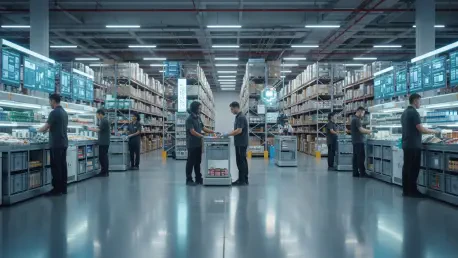
The primary advantage of the Hive, or Colmena, system lies in its ability to quadruple productivity compared to the antiquated method of picking items from standard supermarket shelves. Within these specialized environments, the entire architectural layout is optimized for speed, featuring wide aisles and ergonomic workstations that allow staff to assemble multiple orders simultaneously using specialized electric trolleys. This centralization ensures that the inventory is strictly reserved for online customers, which eliminates the frequent problem of out-of-stock items that plagues store-based fulfillment models. Furthermore, the proximity of these hubs to densely populated urban cores reduces the distance that delivery vans must travel, thereby lowering fuel costs and minimizing the environmental impact of the last-mile logistics chain. By 2027, the data collected from these operations will likely influence how the retailer handles perishables, as the centralized storage allows for tighter temperature control and superior quality oversight during the transition from warehouse to doorstep.
Regional Scaling: Adapting to Diverse Market Densities
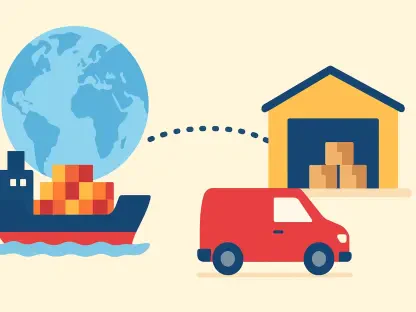
While the massive Hives serve high-density metropolises, the retailer has also introduced a more flexible approach to reach smaller cities and provincial capitals through a hub-and-spoke configuration. This strategy involves the use of smaller fulfillment units that act as satellite stations, receiving prepared orders from the larger Hives before distributing them to local neighborhoods. This tiered system ensures that the same level of service and delivery speed is maintained even in areas where the volume of orders might not justify the construction of a full-scale automated warehouse. Throughout the period from 2026 to 2028, the company plans to refine these smaller-scale operations, ensuring that the technology used in Valencia can be effectively downsized without losing its cost-saving benefits. This adaptable infrastructure allows for rapid expansion into new territories, effectively capturing market share by providing reliable same-day delivery windows that were previously unavailable to consumers outside of the largest Spanish urban industrial centers.
Technological Integration: Advanced Systems and Data Analytics
Robotics Deployment: Enhancing Throughput and Accuracy
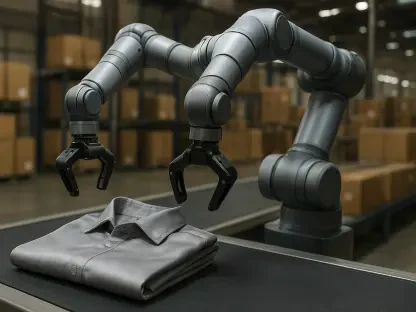
A critical component of this logistical evolution is the integration of high-speed automation technology provided by industry partners like Swisslog, which has transformed the way goods are moved and sorted. The use of automated storage and retrieval systems allows the facility to handle heavy and high-turnover products with minimal human intervention, reducing the physical strain on employees and accelerating the overall throughput of the warehouse. These robotic systems are particularly effective in the chilled and frozen sections, where they can operate in temperatures that are uncomfortable for human workers, ensuring that the cold chain remains unbroken from the moment an item is picked until it is loaded onto a climate-controlled delivery vehicle. By leveraging these mechanical advantages, the retailer has achieved a level of precision in order assembly that virtually eliminates the errors common in manual picking. The synergy between human operators and robotic assistants has created a hybrid workforce capable of meeting the surge in demand expected over the 2026-2028 operational cycle.
Future Roadmap: Sustainable Growth and Predictive Logistics
The transformation of the online grocery segment reached a critical milestone as management successfully integrated predictive analytics into the daily operations of the Hives. Retailers found that by analyzing historical purchasing data, they could anticipate regional demand spikes for specific items, allowing for more precise inventory replenishment and a significant reduction in food waste. This proactive approach to supply chain management proved essential for maintaining profitability in a competitive market where consumer expectations for freshness and speed continue to rise. Managers identified that the next logical step involves the further refinement of delivery routes using real-time traffic data and AI-driven navigation systems to maximize the number of stops per hour. To remain competitive, organizations should prioritize the adoption of modular automation that can be scaled according to seasonal demand. It is recommended that stakeholders invest in flexible software architectures that allow for the seamless integration of new robotics as they become commercially viable in the coming years.