
Global commerce has reached a point where manual logistics systems can no longer satisfy the explosive demand for rapid shipping and accurate inventory tracking across diverse markets. Retailers and manufacturers alike have found that the old ways of managing stock—relying on spreadsheets and human memory—simply fail when order volumes spike unexpectedly or supply lines tighten. This shift has forced a massive re-evaluation of the warehouse floor, turning it from a static storage space into a dynamic, tech-driven engine of the economy. In this environment, facilities that fail to adopt advanced systems risk becoming obsolete as competitors leverage speed as their primary competitive advantage. The transition to highly automated environments is no longer a choice reserved for the giants of industry; it has become the standard for any business that intends to remain profitable and responsive. These technological shifts represent a significant turning point in how physical goods are managed, moving away from reactive labor-intensive models toward proactive and resilient digital frameworks.
Adapting to Modern Supply Chain Pressures
Strategic Moves: Automated Infrastructure
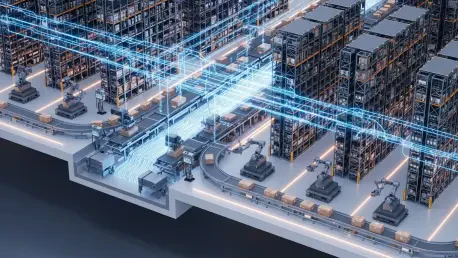
Persistent labor shortages combined with the rising cost of manual operations have pushed logistics providers to view automation as a permanent infrastructure requirement. Instead of treating machinery as a temporary patch for staffing gaps, forward-thinking managers are integrating automated storage and retrieval systems (AS/RS) as the literal backbone of their facilities. These systems allow for vertical expansion, maximizing the use of existing footprints without the need for costly real estate acquisitions. The goal has shifted from merely moving boxes to creating a seamless, uninterrupted flow of information and physical goods. By investing in robust hardware like high-speed sorters and heavy-duty conveyor systems, warehouses are building the capacity to handle significant throughput increases without a proportional increase in overhead. This strategic shift ensures that the facility remains operational 24/7, providing a level of reliability that human shifts alone cannot match in speed.
Safety and Precision: Human-Centric Automation
Beyond the physical movement of goods, the push for automated infrastructure is deeply tied to the necessity for absolute inventory accuracy and employee safety. Traditional picking methods often involve high error rates and physical strain, leading to costly returns and frequent workplace injuries that disrupt the workflow. Modern automated solutions, such as pick-to-light systems and voice-directed picking, significantly reduce the cognitive load on workers while ensuring that the correct item is selected every single time. This precision is vital in a market where consumers expect perfect orders and immediate delivery. Furthermore, by automating the most hazardous or repetitive tasks—such as heavy lifting or long-distance transport within the warehouse—companies are creating a safer environment that fosters better employee retention. This approach creates a virtuous cycle where high-tech tools enhance human productivity, allowing the workforce to focus on quality control rather than manual labor.
Intelligent Technologies and Autonomous Systems
Artificial Intelligence: Predictive Data Analysis
Artificial intelligence has emerged as the central brain of the modern warehouse, transforming massive streams of data into actionable insights for inventory optimization. Rather than guessing which items will be in high demand, logistics managers now use AI algorithms to analyze historical patterns and real-time market signals to position stock strategically. From 2026 to 2029, these predictive models are anticipated to become even more granular, incorporating local weather events and social media trends to refine stock levels. This capability is essential for avoiding the dual traps of overstocking, which ties up capital, and stockouts, which alienate customers. Additionally, AI-driven predictive maintenance systems monitor the acoustic and thermal signatures of critical machinery to detect early signs of wear. By scheduling repairs before a breakdown occurs, facilities can eliminate the chaos of unplanned downtime. This move toward self-diagnostic equipment protects the capital investments.
Collaborative Robotics: Scaling Operations
Robotics technology has evolved past the era of fixed cages and isolated machines into a collaborative age defined by the rise of Autonomous Mobile Robots. These AMRs navigate the warehouse floor using sophisticated sensors and mapping software, allowing them to safely move alongside human workers without the need for expensive structural modifications. Their primary role involves transporting materials from receiving docks to storage zones or from picking stations to packing areas, which effectively eliminates miles of walking for the human staff. Because these systems are modular and cloud-connected, managers can scale their fleet size up or down in response to seasonal peaks, such as holiday shopping rushes or specialized promotions. This flexibility allows for a robotics-as-a-service model that provides smaller warehouses with access to the same technological advantages as larger distribution centers. The result is a much more agile operation that can pivot quickly as consumer habits and market conditions continue to evolve.
Optimizing the Fulfillment Cycle and Environmental Impact
Visibility and Speed: End-of-Line Efficiency
Achieving true operational efficiency requires a focus on the final stages of the fulfillment cycle, where bottlenecks often occur during packaging and loading. Automating the end-of-line processes ensures that every package is perfectly weighed, labeled, and wrapped for transit, reducing the likelihood of shipping errors or damage during transport. Modern stretch-wrapping systems utilize precise tension controls to stabilize heavy loads while using the minimum amount of plastic film required. When these systems are integrated with the broader warehouse management software, they provide a continuous stream of data regarding outbound flow and shipping readiness. This level of visibility is further enhanced by the Internet of Things, which connects every sensor and device into a unified network. Managers can monitor the real-time status of any order, seeing exactly where it is in the facility and its expected departure time. This transparency allows for proactive problem-solving, ensuring that any delays are addressed quickly.
Sustainable Logistics: Material Waste Reduction
Sustainability has become a core metric for evaluating warehouse performance, and automation provides the precision needed to meet aggressive environmental targets. AI-optimized palletizing algorithms now calculate the most efficient way to stack goods, maximizing space utilization and reducing the number of truck trips required to move products. This directly lowers the carbon footprint associated with transportation while also cutting fuel costs for the entire logistics network. Within the facility itself, high-efficiency motors and automated lighting systems reduce energy consumption by activating only when and where they are needed. Furthermore, on-demand packaging technology creates custom-sized boxes for each order, which eliminates the need for excessive filler materials and reduces waste. These green initiatives have proven that operational speed does not have to come at the expense of environmental responsibility. Organizations that integrated these practices observed a simultaneous improvement in both reputation and the bottom line.
Institutional Evolution: Lessons for Long-Term Readiness
The successful adoption of these technologies was not merely about purchasing new hardware; it required a fundamental shift in organizational culture and digital literacy. Leaders who thrived during this transition began by conducting comprehensive audits of their existing workflows to identify the specific points of friction that hindered throughput. They prioritized interoperability, ensuring that new robotic systems could communicate seamlessly with legacy warehouse management software through standardized APIs. Training programs were established to upskill the existing workforce, shifting them from manual tasks to roles involving system oversight and data analysis. This proactive approach turned the warehouse from a cost center into a strategic asset that provided a clear competitive advantage. By focusing on scalability and data integrity, businesses positioned themselves to handle the complexities of a modern global market. These steps ensured that the infrastructure remained flexible enough to adapt to future innovations.