
Rohit Laila brings a wealth of knowledge from decades on the front lines of global logistics, where he has witnessed the shifting tides of supply chain management first-hand. His background in integrating technology with traditional shipping practices provides a unique perspective on the South Carolina Ports Authority’s recent decision to pause operations at the Leatherman Terminal. As the industry grapples with fluctuating volumes and rising overhead, Rohit offers deep insights into the strategic maneuvers required to keep a port competitive in a volatile global market. Throughout our discussion, we explore the complexities of terminal consolidation, the impact of labor disputes on infrastructure longevity, and the delicate balance between maintaining state-of-the-art facilities and managing the harsh realities of a down market.
When a port consolidates operations from three terminals down to two, what specific logistical challenges arise during this transition?
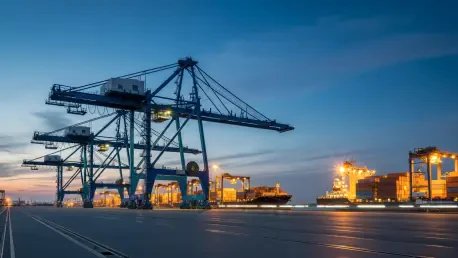
Transitioning operations is never as simple as flipping a switch, especially when you are moving five weekly services from a major player like MSC. You have to account for the physical relocation of equipment and the sudden densification of traffic at the North Charleston and Wando Welch terminals. Even though Leatherman only accounts for 5% of the port’s total volumes, that volume represents hundreds of containers that now need to be slotted into an already complex schedule. It creates a palpable tension on the ground as dockworkers and logistics planners scramble to ensure that “tempered volumes” don’t lead to bottlenecked gates or delayed departures. The goal is to maintain a seamless flow, but the reality involves a high-stakes game of Tetris to fit those relocated services into terminals that are already managing their own daily workloads.
Given that the Leatherman Terminal is a modern facility that only opened in 2021, how does the pressure of cost control outweigh the potential of such a significant asset?
The financial weight of maintaining a state-of-the-art facility is immense when the trade forecast remains as uncertain as it is today. When shipping lines are getting hit with higher fuel rates and rising operational costs, the port has to respond with extreme agility to remain a “competitive service” provider. Shutting down a terminal that has already seen a rollercoaster of openings and closures—including a significant labor dispute that halted work from 2023 until its reopening in 2024—is a heartbreaking but necessary business decision. It is all about the bottom line; if you have ample capacity at two sites, paying the overhead for a third just doesn’t make sense during a period of low demand. Managers have to look past the “newness” of the cranes and focus on the immediate need to rein in costs to protect the broader health of the port authority.
In terms of terminal infrastructure and regional trade, what does this pause signal about the current state of the global shipping environment?
This pause is a loud signal that the industry is in a period of heavy recalibration after years of unpredictability. We are seeing a shift where “ample capacity” is actually becoming a financial burden rather than a strategic asset because the expected volumes simply haven’t materialized. The fact that the transition is set to wrap up by August indicates a sense of urgency to stop the financial bleed immediately and streamline the workflow. For the workers and the shipping lines involved, there is a lingering sense of frustration, especially considering how recently the labor agreement was reached to get the terminal back on its feet. It shows that even the most modern infrastructure cannot withstand the pressure of a “down market” if the volume isn’t there to support the daily operational expenses.
What specific indicators are port operators looking for before they feel confident enough to bring a mothballed terminal back online?
Reopening the gates at a facility like Leatherman isn’t just about waiting for a single ship to arrive; it requires a sustained upward trend in returning volumes across the entire port industry. The authority is specifically looking for a shift in capacity needs that justifies the high cost of staffing and powering a dedicated container terminal once again. They need to see that the cost-saving measures currently in place have successfully stabilized the port’s finances enough to take on the risk of expansion. Until the trade forecast looks less “tempered” and significantly more robust, those MSC services will likely stay right where they are at Wando and North Charleston. It is a waiting game that depends on global economic factors that are often far beyond the control of the local port authority.
What is your forecast for the future of terminal utilization in the Southeast?
My forecast is that we will see a much more conservative approach to terminal expansion and a heavy focus on maximizing existing footprints before reopening sidelined assets. Ports will likely keep their “flex” capacity like Leatherman in a state of ready-reserve, but they won’t pull the trigger on a full reopening until they see at least two or three quarters of consistent, high-volume growth. We are entering an era of “just-in-case” infrastructure management where being able to scale down is just as important as being able to scale up. Expect to see more of these tactical pauses as port authorities prioritize lean operations to protect their margins against fluctuating global demand and volatile fuel rates. The industry will become much more disciplined, favoring operational efficiency and cost-competitiveness over the prestige of running multiple underutilized terminals simultaneously.