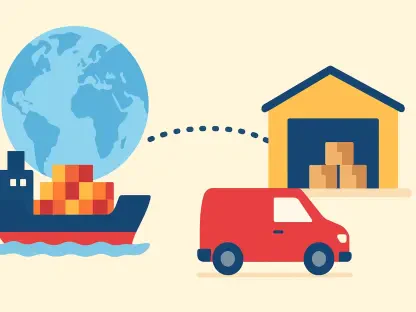

The traditional boundaries of maritime commerce across East Africa are dissolving as Kenya pioneers a digital mandate that intertwines insurance directly with national customs clearance protocols. By mid-2026, the transition toward a mandatory and centralized Marine Cargo Insurance (MCI) system has fundamentally altered the logistical landscape, moving away from fragmented, optional coverage toward a digitally unified model. Spearheaded by the Kenya Revenue Authority and the Insurance Regulatory Authority, this initiative bridges the persistent gap between shipment planning and border security. The move represents a decisive effort to digitize trade while ensuring that the financial benefits of cargo protection remain within the regional economy. Previously, the insurance of goods entering the country was often handled as an afterthought or through offshore providers, but the current framework necessitates local coverage as a strict prerequisite for importing commodities across national borders.
Digital Infrastructure: Linking Customs and Insurance Systems
At the core of this systemic transformation is a sophisticated digital interface that facilitates real-time communication between the national customs management system and local insurance providers. This integration ensures that insurance is no longer a peripheral contract negotiated through manual channels; instead, it is an automated requirement triggered at the moment an import declaration is generated. By utilizing standardized cargo codes to calculate premiums instantly, the platform eliminates the inconsistencies and delays common in traditional paper-based insurance deals. This shift embeds financial risk management directly into the administrative workflow, fostering a higher degree of transparency for all stakeholders. This technological leap serves as a blueprint for how bureaucratic procedures can be streamlined through the adoption of interconnected digital services that reduce human error.
Furthermore, the automation of these processes has drastically reduced the time required for administrative approval, allowing for a more fluid movement of goods through major entry points like the Port of Mombasa. The system requires that every cargo entry be matched with a valid insurance certificate before a customs officer can proceed with clearing the shipment. This synchronous relationship between financial security and physical logistics ensures that every dollar of value entering the country is accounted for within a regulated framework. Beyond simple compliance, the platform provides a wealth of data that authorities can use to monitor trade volumes and risk profiles more accurately. By centralizing these records, the government can identify trends in maritime traffic and insurance claims, which ultimately leads to more informed policy decisions regarding national trade security and logistical infrastructure.
Economic Sovereignty: The Role of Local Insurance Consortiums
A primary objective of the current mandate is the localization of the marine insurance market to prevent the capital flight that historically occurred when premiums were paid to foreign underwriters. In the past, many importers relied on global shipping agreements where insurance was bundled with freight costs and paid to offshore entities, leaving the local financial sector on the sidelines. Now, a consortium of major domestic insurance providers handles the bulk of these transactions, ensuring that premium payments remain within the Kenyan financial ecosystem. This strategy not only strengthens the local economy but also empowers domestic insurers to build the technical and financial capacity needed to cover large-scale industrial trade. By keeping these funds within the country, the government facilitates a more robust internal investment environment that supports various secondary sectors.
This push for economic sovereignty also encourages a more competitive domestic market, where local insurers are motivated to offer better terms and specialized products tailored to the needs of regional importers. As these insurance firms manage larger pools of capital, they are increasingly able to participate in significant trade financing projects, further integrating the financial and logistical sectors. This collective approach has established a safety net that protects the interests of small and medium-sized enterprises, which previously struggled to navigate the complex world of international maritime insurance. By mandating local participation, the state has effectively created a structured market where risk is distributed among established domestic players, thereby enhancing the overall stability of the trade environment and reinforcing the national financial infrastructure against global volatility.
Data Integrity: Avoiding Bottlenecks in the Logistics Chain
For clearing agents and importers, the practical application of the MCI system is built for speed, utilizing centralized portals such as eCitizen for immediate premium payment and certificate issuance. Once a transaction is completed, a digital insurance certificate is instantly transmitted to the customs system, allowing the cargo clearance process to continue without the need for manual document verification. However, this high-speed environment demands an unprecedented level of data precision from all users involved in the declaration process. Since insurance costs and policy validity are tied to specific commodity codes and weights, even minor clerical errors during the initial filing phase can lead to significant bottlenecks. A mismatch between the declared cargo and the insurance coverage can halt the entire clearing process, highlighting the critical importance of technical accuracy.
Logistics professionals are finding that their roles are shifting from simple coordination to a more technical focus on data management and digital compliance. Industry leaders view this integration as a necessary milestone that brings structure to a historically disorganized process, yet it also requires a higher level of literacy regarding customs law and insurance mandates. Agents must now navigate a single interface that manages both the financial and regulatory aspects of trade, making them vital consultants for businesses looking to minimize dwell time at the port. The dependency on digital accuracy means that businesses must invest in training and better software to ensure their data matches the requirements of the integrated platform. This shift toward precision is not just about avoiding penalties; it is about maintaining a competitive edge in a trade environment where time is the most valuable currency.
Strategic Adaptation: Restructuring Contracts for Regional Compliance
The implementation of the mandatory MCI system has created complex challenges regarding international commercial terms, particularly for those accustomed to using Cost, Insurance, and Freight (CIF) agreements. Under the current legal framework, foreign insurance is often no longer recognized for customs clearance, creating a high risk of double insurance for businesses that do not update their contracts. As a result, many organizations have restructured their agreements to use Free On Board (FOB) terms, which shift the responsibility for insurance to the importer. This change ensures that insurance obligations align with national laws while helping businesses avoid redundant costs and logistical confusion. Adapting to these new standards was a critical step for maintaining profitable trade routes and ensuring that international suppliers understand the specific requirements of the Kenyan market.
The move toward integrated insurance was successfully finalized as a collective effort that stabilized the regional trade landscape and set a new standard for neighboring nations. Authorities recognized that the transition required clear communication between the insurance industry and the shipping community, which eventually smoothed the initial friction caused by the shift from CIF to FOB terms. Looking back, the initiative proved to be an effective tool for formalizing the informal trade sectors and creating a verifiable trail for cargo security across the East African Community. Businesses that moved quickly to adopt these digital workflows gained a significant advantage in operational speed and reliability. Moving forward, the focus remained on refining the platform to handle more complex scenarios, such as split shipments and consolidated cargo, ensuring that the system continued to evolve alongside the growing demands of global maritime commerce.