
The rapid evolution of autonomous systems has historically been hindered by the inability of machines to perceive their surroundings with the same nuance and adaptability as the human workers they are designed to support. Traditional light-based sensors, such as LiDAR and 2D laser scanners, often struggle in environments where dust, glare, or transparent obstacles create visual noise, leading to frequent safety-related stoppages and reduced operational efficiency. However, a significant shift is occurring in the industrial landscape as the focus moves toward acoustic sensing technologies that utilize sound waves rather than light to map three-dimensional space. By integrating sophisticated ultrasonic capabilities, manufacturers are creating a new layer of spatial awareness that functions effectively in conditions where optical solutions traditionally fail, paving the way for a more seamless integration of robots into human-centric workspaces. This change ensures that the next generation of automation is both smarter and fundamentally safer for every operator on the factory floor.
Meeting International Safety Standards
Establishing Trust Through Rigorous Certification
The transition from experimental sensing technology to a deployable industrial safety tool requires more than just high performance; it demands a foundation of trust built on international regulatory compliance. The ADAR One sensor by Sonair represents a significant milestone in this regard, as it has achieved formal safety certification, marking it as a globally recognized device for human protection. By meeting the stringent requirements of IEC 61496 and ISO 13849, this ultrasonic system provides the necessary reliability for Safety Integrity Level 2 and Performance Level d. These ratings are not merely bureaucratic checkboxes but are essential indicators that the hardware and software have undergone exhaustive testing to ensure a remarkably low probability of failure during critical interactions. In high-stakes manufacturing environments, this level of validation allows safety engineers to integrate autonomous mobile robots with the confidence that the systems will react predictably when humans enter their path.
Achieving Stability with Reliable Software
Achieving such certifications is a complex process that involves rigorous scrutiny of the entire system architecture, including both the physical sensor and the underlying logic that processes acoustic data. The certification process verifies that the 3D ultrasonic technology can consistently detect obstacles and trigger safety protocols within defined timeframes, regardless of the environmental challenges present. This rigorous approach effectively addresses the liability concerns that often haunt factory managers when deploying advanced automation alongside human labor. By adhering to these global standards from 2026 through the next decade, industrial facilities can streamline their risk assessment protocols and accelerate the adoption of collaborative robotics. This shift from proprietary safety claims to third-party verified performance ensures that the technology serves as a robust shield, reducing the likelihood of accidents and fostering a workplace culture where human-machine collaboration is perceived as safe and productive across various sectors.
Advancing Spatial Awareness Technology
Surpassing the Limitations of Optical Sensors
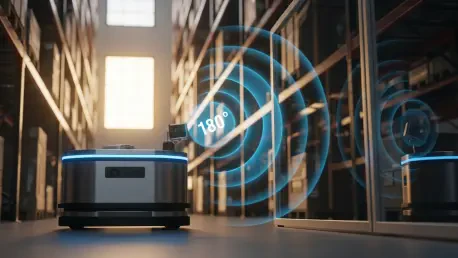
While laser-based 2D scanners have been the industry standard for years, their inherent limitations often restrict the operational flexibility of autonomous guided vehicles and mobile platforms. These scanners typically operate on a single horizontal plane, creating blind spots above and below the laser line that can lead to collisions with protruding objects or uneven surfaces. In contrast, the 3D ultrasonic sensor creates a comprehensive 180-degree safety bubble that captures the entire volume of space in front of the robot, rather than just a thin slice. Sound waves possess physical properties that make them uniquely suited for industrial environments where light-based systems frequently falter. For instance, ultrasonic pulses are completely unaffected by intense sunlight, welding sparks, or thick clouds of dust that can blind traditional cameras and LiDAR. Furthermore, sound can easily detect glass partitions and transparent plastic wrap—materials that are often invisible to light-based sensors—ensuring that robots navigate safely.
Redefining Spatial Awareness with 3D Ultrasound
The robustness of this acoustic sensing approach is further enhanced by the strategic use of modern software engineering practices, such as the implementation of the Rust programming language. By utilizing a language known for its memory safety and high-performance execution, developers ensure that the data processed from the ultrasonic echoes is handled with extreme precision and minimal latency. This software-level reliability prevents common bugs and system crashes that could lead to dangerous delays in obstacle detection or emergency braking commands. The synergy between the physical resilience of sound waves and the logical stability of the software stack creates a sensing solution that is far more dependable than previous generations of safety equipment. As robots move into more complex and less controlled environments, such as construction sites or multi-level warehouses, the ability to maintain spatial awareness through non-optical means becomes a critical differentiator. This multi-layered reliability allows for the expansion of automation into areas once deemed too unpredictable.
Transforming the Global Robotics Ecosystem
Streamlining Integration for Machine Builders
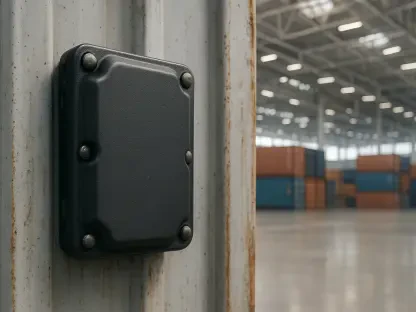
For manufacturers of industrial machinery, the arrival of pre-certified 3D ultrasonic sensors offers a path to simplify the engineering of complex robotic systems while simultaneously reducing production costs. Integrating safety features has traditionally required a patchwork of multiple 2D scanners and secondary proximity sensors, which increases the physical footprint of the machine and the complexity of its electrical architecture. The compact nature of the ADAR One allows it to be integrated directly into the chassis of robots, making it an ideal solution for the emerging category of humanoid machines where internal space is at a premium. Because the sensor is already certified to meet international safety standards, manufacturers can bypass the lengthy and expensive process of individual component testing for their own certification efforts. This plug-and-play capability dramatically shortens the development cycle, allowing companies to bring sophisticated, safety-compliant products to the global market much faster than was previously possible.
Realizing Commercial Potential and Safety Goals
The adoption of 3D sound sensing technology was a significant leap forward for industrial operators seeking to balance the need for high-speed automation with the absolute requirement for worker safety. Organizations that implemented these ultrasonic systems reported a noticeable reduction in false-positive emergency stops, which had previously plagued facilities relying solely on optical sensors sensitive to dust or lighting changes. This improvement in operational uptime directly translated to higher efficiency and a more predictable workflow for logistics and manufacturing hubs. Moving forward, the focus will likely shift toward the integration of these sensors with artificial intelligence to further refine object classification and trajectory prediction. Companies should evaluate their existing safety hardware and consider the long-term benefits of acoustic sensing for environments where visual clarity cannot be guaranteed. By prioritizing sensors that offer a complete volumetric view, industrial leaders established a foundation for safer, more resilient autonomous operations.