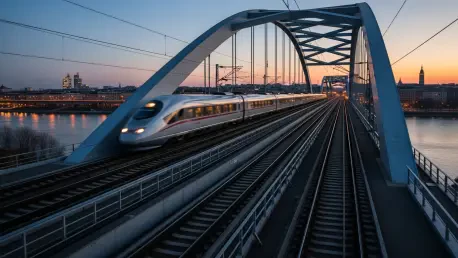

The dream of boarding a high-speed train in Lisbon and arriving in Warsaw without a single logistical hiccup remains one of the most ambitious engineering and political goals of the modern era. While the European Union has long championed the concept of a Single European Railway Area, the current reality is a complex mosaic of incompatible signaling systems, varying voltage requirements, and entrenched national interests. Achieving a fully integrated network by 2050 requires more than just laying down thousands of miles of new steel track; it demands a fundamental shift in how twenty-seven sovereign nations perceive their transport boundaries. Currently, the continent operates within a series of national silos, where domestic priorities often take precedence over the efficiency of international corridors. This fragmentation not only hampers the movement of passengers but also creates significant bottlenecks for the freight industry, which struggles to compete with the seamless flexibility of road transport. The transition to a unified system is a race against time and political apathy, where success depends on the ability of governments to harmonize their legal and technical frameworks into a single unit.
Infrastructure Resilience: Addressing Maintenance and Climate Threats
One of the most immediate hurdles to a unified rail network is the deteriorating state of existing infrastructure, which continues to suffer from decades of underinvestment in several key regions. Many tracks and stations are currently grappling with a massive backlog of maintenance work, resulting in enforced slow zones and frequent service disruptions that drive potential travelers back to short-haul flights. While new high-speed projects often capture the headlines, the less glamorous work of repairing and maintaining the core network is arguably more vital for long-term stability. Without a robust foundation, any attempt to layer a sophisticated, high-tech network across the continent will be undermined by the failure of aging components. Technical experts emphasize that modernizing the current footprint is a prerequisite for the high-frequency services required to meet carbon reduction targets. Addressing these maintenance deficits is not just about reliability; it is about restoring public confidence in rail as a primary mode of long-distance travel.
Beyond the physical decay of materials, climate change is emerging as a persistent threat to the structural integrity of the European rail system. Increasing occurrences of extreme heatwaves can cause steel tracks to buckle, while intensified flooding events often wash away embankments and damage sensitive electrical equipment. To prepare for the decades ahead, planners must focus on climate-proofing the entire network through the use of more resilient materials and advanced drainage systems. This proactive approach to adaptation is essential to prevent the ballooning costs of emergency repairs and the economic impact of sudden network closures. Success in building a network for 2050 depends on acknowledging that the weather patterns of the past can no longer guide the engineering standards of the present. Integrating environmental resilience into the planning phase ensures that the investment made today will remain functional and safe as climate volatility increases. Future-proofing the grid requires a shift from reactive fixes to a comprehensive strategy of structural reinforcement.
Border Efficiency: Solving Freight and Transit Bottlenecks
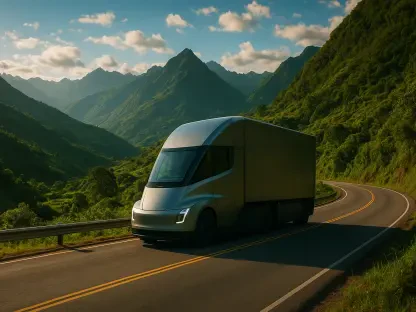
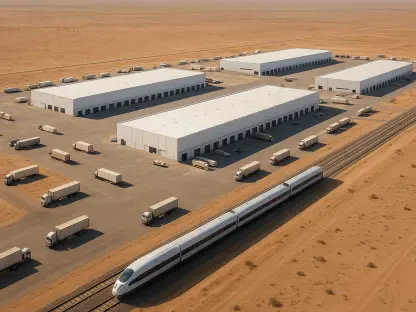
The difficulty of traveling or moving goods across national borders remains a significant deterrent for rail transport, particularly in the freight sector where efficiency is the primary metric of success. Currently, trucks dominate the logistics landscape because they offer a level of flexibility and speed that trains, hampered by complex cross-border rules, simply cannot match. When a freight train crosses a frontier, it often faces delays due to differing safety protocols, driver certification requirements, and the need to swap locomotives to match local power grids. These administrative and technical hurdles add significant time and cost to rail shipments, making them less competitive than road-based alternatives. If rail is to become the backbone of European trade, the system must prioritize the removal of these bottlenecks to ensure that cargo moves as freely as vehicles on a highway. Streamlining these processes is essential for achieving the modal shift from road to rail that is necessary for meeting continental sustainability goals and improving air quality.
To overcome these challenges, the European rail industry must dismantle the “national silo” mentality that continues to dictate infrastructure and operational planning. For too long, member states have prioritized domestic connectivity over the development of international corridors, leaving a patchwork of disconnected high-speed segments. This lack of coordination is especially evident at border crossings, where modern tracks often meet outdated systems, forcing trains to reduce speed or stop entirely. Moving toward a unified system requires a “European-first” approach to planning, where the efficiency of the entire network takes precedence over localized interests. This involves not only technical alignment but also a commitment to shared scheduling and standardized operations across all regions. By fostering greater cooperation between national rail authorities, the continent can begin to function as a truly integrated market. Removing these artificial barriers is the only way to unlock the full potential of high-speed rail and provide a viable alternative to the car-centric transport models of the twentieth century.
Digital Transformation: Implementing Proven Rail Technologies
Technology serves as the primary catalyst for unification, provided that investments are directed toward scalable solutions rather than experimental novelties. The implementation of the European Rail Traffic Management System stands as a cornerstone of this digital transformation, as it creates a common signaling language across all member states. Currently, trains must often carry multiple sets of equipment to navigate the various systems used in different countries, which increases maintenance costs and limits operational flexibility. By standardizing on a single digital platform, the network can accommodate higher traffic volumes while significantly improving safety and reliability. Furthermore, the introduction of automated freight coupling represents another critical “nuts and bolts” upgrade that can modernize the logistics chain. These digital improvements are essential for creating a modern, high-capacity system that allows trains to cross borders seamlessly without the time-consuming need for changing crews or specialized hardware.
While futuristic concepts like Hyperloop or Maglev technology frequently capture public attention, they often serve as a distraction from the more pressing need to optimize existing conventional networks. The astronomical costs and regulatory uncertainties associated with these niche technologies could potentially divert limited funding away from the urgent task of upgrading the tracks that are already in place. Instead of chasing unproven high-speed experiments, the most effective strategy involves perfecting and integrating the technologies that have already demonstrated their value in real-world environments. Enhancing the current high-speed rail portfolio with better connectivity and digital management tools offers a more predictable and cost-effective path toward the 2050 objectives. Focusing on proven engineering ensures that financial resources are utilized to maximize network capacity for the greatest number of people. True innovation in the rail sector lies in the seamless integration of digital systems that make international travel as effortless as a domestic commute.
Visionary Planning: Trajectories for Continental Growth
As planners look toward the mid-century mark, several distinct trajectories emerge regarding the future of the European rail network, ranging from incremental improvements to a complete overhaul. A “status quo” approach, characterized by slow and fragmented progress, would likely leave the continent with a mismatched collection of national systems that fail to provide a cohesive alternative to aviation. In contrast, a centralized model driven by strong European oversight could provide the harmony and standardization needed for true operational efficiency. The most ambitious vision involves a continent-wide, ultra-high-speed network that links all major urban centers, though this would require an unprecedented level of political cooperation. Deciding on a specific trajectory is a critical step, as it determines the allocation of billions in funding and shapes the long-term economic geography of the region. Establishing a clear, unified roadmap allows all stakeholders to align their investments and move toward a shared destination.
Turning these broad visions into reality requires a focus on specific policy pillars, starting with the completion of the existing core network projects that have been delayed by regional disputes. Leaders must move beyond national priorities to adopt an integrated mindset that emphasizes the creation of a high-speed backbone spanning the entire continent. Using digital tools to maximize the capacity of current tracks is equally important, as it allows for more frequent services without the need for extensive new construction in sensitive areas. Furthermore, the industry must focus on the user experience by implementing simplified cross-border ticketing and synchronized schedules that eliminate long wait times at transfer points. By making rail travel more convenient and accessible, it can finally become a more attractive option than short-haul flights for a majority of travelers. Success in this area is measured not just by the speed of the trains, but by the ease with which a passenger can navigate the entire journey from start to finish.
Fiscal Sustainability: Financing the Continental Network
None of these ambitious goals are achievable without a radical transformation in how rail infrastructure is funded and managed across the continent. Building and maintaining modern tracks is an incredibly capital-intensive endeavor, and the access fees paid by operators are rarely sufficient to cover the total lifecycle costs. Current European Union funding instruments provide an essential starting point, but they currently fall short of the massive investment required to meet the comprehensive 2050 targets. To bridge this gap, a significant increase in European fiscal capacity and long-term public support is necessary to prevent the rail system from falling further behind road and air travel. This requires a stable financial commitment that transcends short-term political cycles and recognizes rail as a vital public utility for the sustainable age. Without a clear and sustainable funding model, even the most technologically advanced plans will remain confined to the drafting table.
Ultimately, the challenge of building a unified network required a fundamental shift in political priority that surpassed mere technical ambition. Leaders recognized that the transition from twenty-seven separate systems to a single integrated backbone served as a test of regional cooperation. By aligning funding mechanisms with long-term ecological goals, stakeholders moved beyond the constraints of localized interests that once hindered progress. The integration of high-speed corridors was achieved only when individual nations accepted the necessity of a shared governance model for transport. This evolution proved that technical standardization alone was insufficient without a corresponding fiscal capacity to support it. As the network matured, the focus shifted from simple construction to the optimization of a seamless user experience that rivaled short-haul aviation. The project successfully established a global precedent for sustainable infrastructure, showing that cross-border barriers could be dismantled through persistent diplomatic and financial investment.