
The sudden and violent nature of mid-air turbulence has forced a major reckoning within the aviation industry as safety investigators finalize their reviews of high-altitude accidents. Following a series of investigations by the Transport Safety Investigation Bureau (TSIB), Singapore’s primary aviation carriers are overhauling their safety protocols to better protect crew and passengers from severe turbulence. The final reports, released in mid-2026, analyze two distinct accidents from June 2025 involving a Singapore Airlines (SIA) flight to Shanghai and a Scoot flight to Guangzhou. Collectively, these incidents resulted in injuries to eight cabin crew members, prompting a nationwide re-evaluation of how pilots interact with convective weather systems and how quickly they must secure the aircraft cabin during sudden atmospheric shifts. These findings underscore the critical need for more robust warning systems and stricter adherence to safety margins when navigating unpredictable weather in the region.
Analysis of Recent Atmospheric Accidents
Decision-Making During the Singapore Airlines Incident
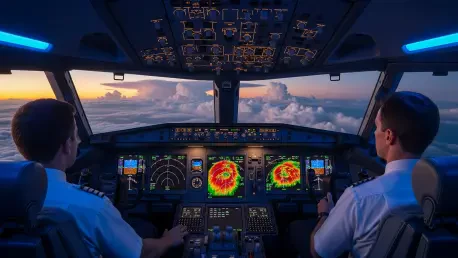
The first incident involved SIA Flight SQ836, an Airbus A350-900 that encountered severe weather while descending toward Shanghai. Pilots identified a narrow corridor of clear air between two intense weather cells on their radar and opted to navigate through it to maintain their flight path. However, the investigation revealed that this gap was only about 10 nautical miles wide, which violated the airline’s training manual recommendation to maintain a 20-mile buffer from the most dangerous parts of a storm. Because the aircraft was flying through a cloud layer at the time, the pilots could not see the actual structure of the clouds and relied entirely on their instruments to guide them through the unstable air. This reliance on digital data without visual confirmation highlights a growing challenge for modern flight crews who must interpret complex meteorological patterns while managing high-traffic descent paths in increasingly crowded regional airspaces across Asia.
The resulting encounter with turbulence was brief but violent, occurring as the aircraft reached 27,500 feet. Data showed that the plane experienced rapid fluctuations in vertical acceleration, swinging from near-weightlessness to forces nearly three times the pull of gravity within a matter of seconds. These extreme physical forces launched several cabin crew members toward the ceiling before slamming them back down. One crew member suffered a fractured ankle, while five others sustained various minor injuries, highlighting the extreme vulnerability of staff who are often mobile during the descent phase of a flight. This specific event served as a stark reminder that even a few seconds of atmospheric instability can result in life-altering physical trauma for those not secured. It also brought to light the inadequacy of existing g-force mitigation training for crew members who are often performing meal services or cabin checks during these critical moments of flight maneuvers.
Navigational Hurdles and Communication Gaps on Scoot
The second accident occurred aboard a Scoot Boeing 787-8 cruising over the Ho Chi Minh flight information region. In this instance, the pilots noticed a telltale increase in airspeed that often signals upcoming turbulence, but they were unable to request a flight path deviation immediately due to heavy congestion on the radio frequencies. While the captain activated the “fasten seat belt” sign as a precaution, he did not follow up with a verbal announcement to the cabin crew. This lack of immediate, direct communication meant the crew continued their duties unaware of the severity of the impending threat. The inability to clear a path through air traffic control created a dangerous bottleneck where the flight crew knew a hazard was approaching but felt constrained by the procedural requirements of international airspace management. This lag in communication proved to be a decisive factor in the injuries that followed, as the cabin crew remained focused on service tasks.
When the aircraft eventually hit the turbulence, it was buffeted for over thirty seconds and deviated 200 feet from its assigned altitude. Because the meal service had just finished, most passengers were safely buckled in, but the crew members were still in the aisles. Two staff members were injured when the vertical acceleration tossed them off the floor, with one suffering serious injuries. The investigation pointed to the fact that “light” weather returns on a radar can often be misleading, masking much more violent air currents that can catch a crew guard if they are not signaled to take their seats immediately. This incident highlighted the deceptive nature of modern radar signatures, which may not always reflect the true kinetic energy contained within a pocket of air. The resulting injuries necessitated a deep dive into how low-cost carriers manage the balance between customer service efficiency and the sudden, non-negotiable need for cabin lockdowns.
Institutional Reforms and Industry Trends
Key Safety Findings and Mechanical Realities
A synthesis of these two investigations reveals a recurring theme of communication latency between the cockpit and the cabin. The TSIB noted that even a two-minute warning could be the difference between a safe landing and a major injury. Furthermore, the reports shed light on the physical mechanics of turbulence-related injuries, noting that the most dangerous phase is the transition from “zero gravity” to high positive G-forces, which effectively doubles a person’s body weight as they hit the floor. The findings also reminded pilots that they have the ultimate authority to deviate from a flight path in an emergency, even if radio congestion prevents them from getting immediate clearance from air traffic control. This empowerment of the flight crew is central to the new safety paradigm, encouraging proactive decision-making over procedural adherence when safety is at risk. Such shifts are necessary to address the physical realities of modern flight through volatile atmospheres.
Beyond individual pilot decisions, the investigations highlighted systemic vulnerabilities in how airlines categorize weather threats. The TSIB discovered that current industry standards for defining “light” or “moderate” turbulence often fail to account for the localized intensity of convective cells. By analyzing flight data recorder information from both incidents, researchers were able to map out exactly how aircraft structures react to rapid vertical shifts. These insights have led to a re-evaluation of cabin interior designs, focusing on whether overhead handles or padding could mitigate injuries when crew members are thrown upward. While structural changes take time to implement across an entire fleet, the immediate focus has shifted toward predictive analytics and real-time data sharing between aircraft. This collaborative approach aims to create a more comprehensive picture of regional weather patterns, allowing carriers to share information about air pockets that might not be visible on standard radar displays.
Implementation of Proactive Crisis Management
In direct response to these findings, Singapore Airlines has adopted a significantly more conservative approach to navigating near weather cells. Pilots are now instructed to secure the cabin much earlier in the flight and have been equipped with new cloud-identification software that can detect rapidly growing storm clouds that traditional radar might miss. This shift moves the airline’s philosophy away from simply managing turbulence and toward an “aggressive avoidance” strategy that prioritizes the safety of mobile crew members over minor flight path delays. By expanding the required buffer zones around storm cells from 10 miles back to the recommended 20 miles, the airline is essentially trading small amounts of fuel efficiency for a drastic reduction in injury risk. This transition is supported by a new suite of meteorological tools that provide high-resolution imagery of moisture density and vertical wind shear, allowing for more precise routing and safer passages.
The industry eventually recognized that the safety of cabin staff required a fundamental shift in how pilots and ground control coordinated their efforts during the most volatile parts of a flight. It became clear that technological solutions, such as the integration of real-time satellite weather feeds and automated alerting systems, had to be paired with rigorous behavioral training for all staff members. The carriers moved toward a model where the cabin was secured as a default during any proximity to convective weather, rather than waiting for signs of actual instability. This proactive stance significantly reduced the frequency of crew injuries and set a new benchmark for global aviation safety standards. Future considerations included the implementation of wearable sensors for crew members that could provide haptic feedback when severe turbulence was detected by the aircraft’s sensors. These steps ensured that the lessons learned from the 2025 incidents were translated into concrete, life-saving operational improvements.