
Rohit Laila brings decades of hard-earned experience from the front lines of the logistics world, moving between the grit of physical warehouses and the precision of modern supply chain architecture. As we transition into an era where a software glitch can be more devastating than a strike at a major port, Rohit offers a vital perspective on how digital systems have become the very backbone of global commerce. Our discussion centers on the shifting nature of logistics bottlenecks—moving away from congested seaports toward the invisible vulnerabilities hidden within data streams and interconnected platforms. We explore the paradox of digital maturity, where increased efficiency often expands the attack surface for cyber threats, and delve into why cybersecurity must now be treated as a core logistics function rather than an isolated technical concern. This conversation highlights the need for robust business continuity protocols that ensure cargo keeps moving even when the screens go dark.
Modern logistics depends heavily on electronic invoicing and digital customs platforms, meaning a system outage can bring global trade to a standstill; how do these digital failures compare to traditional physical disruptions?
In the modern landscape, a digital failure is operationally equivalent to closing a major highway or physically blocking a seaport. When mandatory systems like electronic invoicing or single window platforms go offline, the flow of goods stops just as surely as if a bridge had collapsed. You can feel the tension in a warehouse when the system hangs; the hum of activity vanishes, replaced by the sight of idle forklifts and mounting stacks of unprocessed paperwork. This isn’t just a technical glitch; it is a total breakdown of business continuity that impacts every regulatory entry and tax filing required to keep cargo moving. We have to realize that the digital layer is now just as critical as the asphalt we drive on.
With the rapid adoption of artificial intelligence, IoT devices, and cloud-based warehouse management systems, how is the “attack surface” of a typical logistics company evolving?
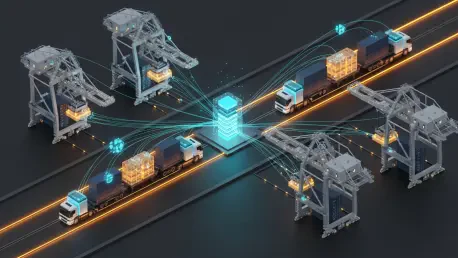
The risk surface grows in direct proportion to your digital maturity, creating a paradox where more advanced companies are often the most exposed if they lack a commensurate defense strategy. Every new connected node you add—whether it is a cloud-based WMS, a smart IoT device on a pallet, or an EDI integration with a supplier—creates a potential entry point for a malicious actor. These interdependencies mean that a single ransomware attack or a simple API outage does not just sit in one corner of the office. It cascades through the system, hitting inventory management, order processing, and shipment traceability all at once, leaving the operation completely paralyzed. The efficiency we gain from hyperconnectivity is real, but it comes with a hidden vulnerability that can lead to multi-day disruptions if not managed properly.
The World Economic Forum identifies several converging forces that make the modern digital environment harder to protect. How do these factors impact a company’s ability to maintain visibility and control?
The Global Cybersecurity Outlook 2025 points to four specific forces: the fragmentation of supply chains, the adoption of emerging tech, the rise of cybercrime, and mounting regulatory demands. These forces act like a tightening vice, making the digital environment vastly more complex and significantly harder to protect for the average logistics firm. We are no longer just moving boxes; we are managing a fragile web of data that requires constant vigilance to maintain any semblance of control. Without a resilience strategy that matches the level of automation, digital efficiency cannot create any real, sustainable value. This complexity means that visibility isn’t just about knowing where a truck is, but knowing exactly how secure the data transmitting that location truly is.
You emphasize that cybersecurity is no longer just for the IT department but a core logistics function. What does this look like in practice for operational teams on the ground?
It starts with the understanding that a phishing email sent to a single traffic coordinator can compromise an entire global operation. We have to move past the idea that security is just for the IT department and begin integrating it into the onboarding and continuous training of every employee with system access. Human error remains the primary entry point for incidents, which is why your operations team must be as savvy as your tech team. Imagine the frustration and the heavy cost of a multi-day disruption caused simply because one person clicked a suspicious link. Cybersecurity must be woven into the daily habits of anyone who interacts with the TMS or WMS.
Mapping digital dependencies seems like a massive undertaking. Where should a logistics leader begin when trying to identify their most critical vulnerabilities?
Leaders need to start by mapping their digital dependencies with the same rigor they use for physical shipping routes. You need a comprehensive inventory of all critical systems—from your TMS and WMS to tracking platforms and supplier integrations—to identify which ones would stop your heart. I always suggest the “24-hour test”: if a specific system fails and your operations halt in less than a day, that system is part of your perimeter of maximum protection. This mapping allows you to focus your defensive resources where they are most needed, ensuring you are not blindsided when a critical digital node goes dark. It is about knowing your digital terrain before an attacker has the chance to explore it for you.
If a company’s security is only as strong as its weakest link, how should they manage the risks introduced by external software providers and logistics partners?
You have to accept that a weak link in your digital ecosystem is your vulnerability, even if the system does not actually belong to your company. This is why it is essential to include rigorous security clauses in contracts with software providers, platform operators, and any logistics partner who touches your data. We also advocate for the principle of least privilege, ensuring that drivers, suppliers, and customers only have access to the specific data they need to do their jobs. By segmenting your networks and limiting access levels, you can significantly shrink the impact radius if one of those external partners suffers a breach. It is a matter of building walls within your digital house to ensure one fire doesn’t burn down the whole structure.
What is your forecast for the future of digital supply chain resilience?
I forecast that digital resilience will shift from being viewed as an IT expense to becoming one of the most valuable commercial and operational assets a logistics company can own. In the very near future, the ability to guarantee continuity through digital strength will be a decisive competitive advantage in major bids and high-stakes partnerships. Customers will no longer just ask about your fleet size or warehouse capacity; they will demand proof of your digital business continuity protocols and your ability to operate for 48 hours without a TMS. The companies that invest in these layers of protection today will be the only ones still moving when the next system-based disruption inevitably strikes.