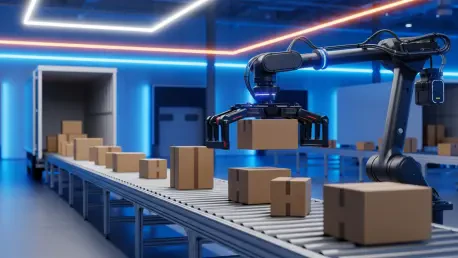

The sudden convergence of advanced machine vision and tactile physical AI is currently redefining the operational limits of the modern loading dock. As global retailers struggle with persistent labor shortages and rising throughput demands, the strategic integration between Ambi Robotics and Pickle Robot offers a cohesive solution for inbound logistics. This partnership marks a significant shift from isolated hardware to unified ecosystems where specialized machines handle the transition from trailer to warehouse floor. By streamlining the “dock door challenge,” these firms are providing a scalable model for end-to-end automation.
The Persistent Challenges of Traditional Inbound Logistics
Loading docks have long been considered the final frontier of warehouse automation due to the unpredictable nature of trailer interiors. Packages are often wedged in haphazardly, featuring varying weights, sizes, and structural integrity that baffle standard robotic systems. Traditionally, this variability necessitated high levels of manual labor, leading to significant turnover and safety risks for human operators. Historical attempts at solving this problem often resulted in “automation islands” where machines performed one task but required human intervention to move items to the next stage.
Bridging the Gap: How Physical AI Connects the Dock to the Aisle
The synergy between these two technologies creates a continuous flow of goods that eliminates idle time in the receiving process.
Mastering the Flow: From Unloading to AmbiStack Processing
Pickle Robot’s automated unloading technology serves as the primary point of entry, using sophisticated sensors to extract cases directly from trailers. These items are placed onto conveyors that feed into the AmbiStack system, which uses its own intelligence to sort and palletize them. This handoff represents a critical breakthrough in material handling, as it replaces the most grueling manual tasks with a synchronized robotic sequence, ensuring accuracy even at high speeds.
Prioritizing Interoperability: Moving Beyond Single-Vendor Ecosystems
Industry leaders are increasingly moving away from closed-loop systems that lock facilities into one provider’s proprietary hardware. By integrating disparate platforms, companies can adopt specialized technologies for specific tasks like unloading or sorting. This modular approach ensures that the entire facility does not require a total overhaul if a new advancement emerges in one area. Interoperability fosters a more resilient supply chain where machines from different manufacturers communicate seamlessly.
Overcoming Infrastructure Barriers: The Power of Retrofit Compatibility
Many operators hesitate to automate because of the perceived need for massive construction and operational downtime. However, these new systems are designed to fit within existing footprints, utilizing standard dock configurations and conveyor layouts. This focus on “plug-and-play” deployment allows regional distribution centers to modernize without the capital-intensive requirement of building brand-new facilities, proving that innovation does not always require a disruptive installation process.
The Future of Autonomous Material Handling and Warehouse Resilience
Looking ahead, the evolution of Physical AI suggests a trend where machines become increasingly self-correcting and capable of learning from their environment. As these systems process more diverse SKUs, the underlying models learn to navigate edge cases—such as crushed boxes or slippery packaging—without human help. This shift toward total autonomy will likely be supported by new regulatory standards for robotic communication, making multi-robot workflows the industry norm.
Strategic Considerations for Implementing Next-Generation Automation
Businesses looking to capitalize on these advancements should first identify specific bottlenecks within the receiving process before committing to large-scale projects. Prioritizing high-volume, predictable flows allows for a faster return on investment and provides a testing ground for more complex integrations. Furthermore, focusing on data capture during the unloading phase can yield insights into vendor shipping performance and packaging quality, offering a hidden layer of supply chain optimization.
Redefining Efficiency in the Modern Supply Chain
The integration successfully addressed the most labor-intensive segment of the inbound process by merging two specialized AI systems. This collaboration demonstrated that robots could work in harmony to solve the complex dock challenge without requiring massive site modifications. Firms established a new benchmark for operational flexibility by moving toward interoperable intelligence. The industry recognized that future success depended on machines that communicated and adapted within existing environments, leading to more resilient supply chains that remained agile under pressure.