
The recent inauguration of the Naples-Cancello high-speed rail segment represents a monumental shift in the infrastructure landscape of Southern Italy, finally bridging a historical gap. This 15.6-kilometer link integrates the future Naples-Bari line with the existing national network, creating the first high-speed corridor connecting the Tyrrhenian and Adriatic coasts. For decades, the Mezzogiorno suffered from fragmented logistics compared to the industrialized north, but the efforts spearheaded by the Webuild Group are now serving as a catalyst for genuine unification. This project is much more than a localized improvement in track geometry; it signifies a fundamental shift in how people and goods traverse the southern peninsula. By laying a technological foundation for a revolutionary mobility landscape, the initiative addresses long-standing isolation and systemic inefficiencies. This activation marks the start of an era where the south becomes a central participant in the nation’s economic engine.
Enhancing Regional Mobility and Travel Times
A Rapid Shift in Commuter Dynamics
The immediate impact of the Naples-Cancello line is most visible through the dramatic reduction in travel times, offering direct services between Campania and Puglia without the need for multiple intermediate transfers. Currently, journeys between Naples and Bari have dropped significantly, and as the final segments of the high-speed project reach completion between 2026 and 2028, that duration will eventually settle at just two hours. This efficiency ripples across the entire national network, making it possible for travelers to reach Rome from Bari in three hours. Such a drastic shift effectively shrinks the geography of the south, making inter-regional travel far more accessible for the average citizen. This newfound speed does not just benefit tourists; it fundamentally alters the daily lives of thousands of commuters who previously faced grueling hours on aging regional tracks or congested highways. By providing a reliable alternative, the rail network is fostering a more integrated social ecosystem.
The Strategic Hub of Naples Afragola
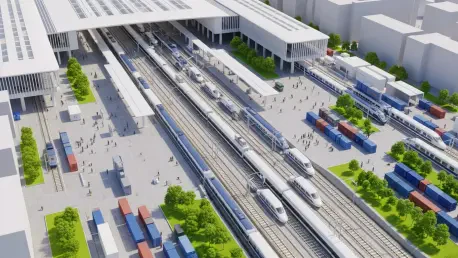
Central to this infrastructure overhaul is the Naples Afragola station, a stunning architectural landmark designed by Zaha Hadid that serves as the primary gateway to the south. This facility functions as a high-tech multimodal hub, synchronizing high-speed rail services with regional lines and urban metro systems to provide a seamless transit experience for millions of passengers. By centralizing these connections, the station reduces the traditional reliance on road transport, which has historically been the primary mode of travel in the region. The hub is designed to handle high volumes of traffic while acting as an anchor for urban development in the surrounding area. Its strategic placement allows for the fluid movement of people across various transit modes, ensuring that the transition from a long-distance train to a local shuttle is as efficient as possible. This connectivity is vital for supporting both the burgeoning tourism sector and the daily needs of local workers, acting as a symbol of modernized mobility.
Overcoming Technical Challenges and European Integration
Pioneering Engineering in Densely Populated Areas
Constructing the Naples-Cancello segment required the engineering teams to navigate incredibly complex urban environments while overcoming unique geological hurdles that had stalled previous efforts. One of the most notable technical achievements was the first use of hyperbaric excavation in Italy, a method employed to manage high water tables and unstable soil during the construction of the Casalnuovo tunnel. This innovative approach allowed engineers to work safely and efficiently under high pressure, ensuring the structural integrity of the tunnel without disturbing the densely populated areas above. Beyond the technicalities of the rails, the initiative integrated extensive urban regeneration efforts to minimize the footprint of the construction on local communities. This included the removal of dangerous level crossings and the construction of entirely new stations designed to improve local safety and aesthetic appeal. By prioritizing engineering precision alongside community well-being, the project demonstrated how large-scale infrastructure can harmonize with existing urban fabrics.
Aligning with Continental Trade Routes
The Naples-Bari high-speed line is far more than a domestic priority; it represents a vital component of the Scandinavian-Mediterranean Corridor, a major pillar of the European Union’s Trans-European Transport Network. This alignment ensures that Southern Italy is fully integrated into a strategic trade axis that links Northern Europe directly to the Mediterranean basin, facilitating the smooth transit of international goods and services. With a massive €16 billion investment covering multiple interconnected projects across the southern provinces, the region is being repositioned as a central player in the broader continental economy. This integration allows local businesses to access international markets more easily, reducing the logistical costs that once hindered the south’s competitiveness. Furthermore, being part of a larger European network ensures that the infrastructure adheres to the highest standards of safety and interoperability. As the corridor becomes fully operational, the strategic importance of the Mezzogiorno as a logistics hub for the entire Mediterranean will continue to expand.
Driving Economic and Environmental Prosperity
Catalyzing Growth and Workforce Development
Beyond the physical laying of tracks, the rail project serves as a massive employment engine and a primary driver of socioeconomic growth for a region that has historically struggled with high unemployment. Reliable estimates suggest that the completed high-speed line will generate over €4 billion in added value, creating approximately 62,000 jobs through direct construction and induced economic activities in the services and supply sectors. This influx of capital and opportunity is essential for the long-term revitalization of the southern economy, providing a stable foundation for future industrial and commercial expansion. The development of specialized labor for high-tech railway engineering also leaves behind a more skilled workforce, capable of maintaining and expanding this infrastructure for years to come. Local businesses, from hospitality to logistics, are already seeing the benefits of being situated near high-velocity transport nodes. This ripple effect helps to diversify the local economy, moving it away from traditional sectors toward a modern, service-oriented model.
Advancing a Green Future for the South
Environmental sustainability sits at the core of this infrastructure transformation, as the massive shift from road-based transport to rail significantly lowers the region’s total carbon footprint. The completed project is projected to reduce carbon dioxide emissions by approximately 141,000 tons annually, aligning Southern Italy with global climate objectives and promoting a greener model for regional development. By offering a high-capacity, low-emission alternative to heavy freight trucks and private automobiles, the new rail network ensures that economic progress does not come at the expense of the delicate Mediterranean environment. This transition is supported by the implementation of advanced energy-saving technologies along the line, including regenerative braking systems and energy-efficient lighting in new stations. Promoting rail as the primary mode of transit for both people and cargo is a crucial step in modernizing the Italian transport sector. As the region moves away from carbon-intensive habits, the rail network will serve as a blueprint for sustainable infrastructure development.
Implementing a Sustainable Strategic Roadmap
The successful implementation of the Naples-Cancello segment established a definitive roadmap for the continued modernization of the entire southern Italian peninsula. Looking ahead, the focus shifted toward optimizing the last-mile logistics and ensuring that smaller regional municipalities were integrated into the primary high-speed trunk. It became clear that the physical rails were only part of the solution; digital integration and unified ticketing systems were necessary to maximize the utility of the new network. Stakeholders recognized that maintaining this momentum required a commitment to ongoing maintenance and the adoption of autonomous monitoring technologies to ensure the system’s longevity. By prioritizing the expansion of local feeder lines, the project avoided the pitfall of creating isolated corridors. The commitment to a holistic transit strategy ensured that the benefits of the investment reached every corner of the Mezzogiorno, turning a regional rail project into a national success story that offered practical lessons for other Mediterranean nations seeking to bridge their own internal development gaps.