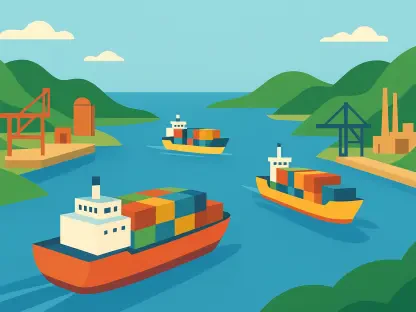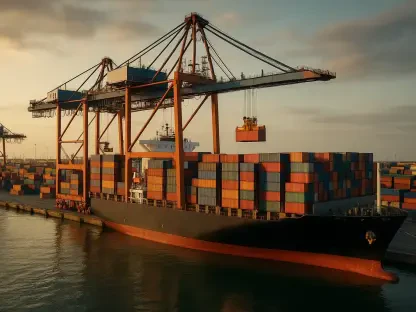

The vast blue expanses of the global oceans now serve as the primary conduits for a massive invisible stream of data that far exceeds the processing capacity of even the most sophisticated traditional logistics systems. Maritime commerce currently finds itself in a paradoxical state where multi-million dollar decisions are frequently executed based on seasoned intuition despite the availability of granular datasets that could illuminate the path forward. Recent industry gatherings in major commercial hubs like New York and Boston confirmed that the focus has shifted away from debating the necessity of artificial intelligence and toward determining the pace at which it can be embedded into the professional identity of the maritime deal-maker.
Beyond the Horizon: Navigating the Maritime World’s Digital Transformation
This digital transformation is not merely a technical upgrade but a philosophical pivot for an industry that has historically valued the “gut instinct” of its captains and veteran charterers. As markets become increasingly interconnected and volatile, the traditional reliance on subjective experience is meeting its match in the form of high-velocity data. The integration of advanced algorithms marks the beginning of a voyage where human expertise and machine precision coexist to navigate the complexities of modern commerce. By digitizing the toolkit of the shipping professional, the sector seeks to ensure that high-stakes choices are backed by more than just anecdotal evidence.
Industry analysis indicates that the sector generates more raw information than most traditional legacy systems can realistically process. From ship valuations to complex demurrage calculations, the sheer volume of data has reached a critical tipping point. Consequently, the adoption of artificial intelligence has become a strategic necessity rather than a technological luxury. This shift allows executives to validate their experience-based insights with objective, model-driven data, providing a stabilizing force in the often-turbulent dry bulk and tanker markets.
Bridging the Gap Between Traditional Instinct and High-Volume Data
For decades, shipping executives relied on a mixture of experience and market hearsay to navigate chartering agreements and fleet expansions. However, the modern landscape requires a level of precision that human analysis alone can no longer provide. The transition to AI represents a focused response to global trends that demand greater efficiency in every aspect of ship management and financial planning. By bridging the gap between historical intuition and real-time data analysis, firms can significantly reduce the margin of error in their most critical operations.
The move toward machine learning ensures that every component of the maritime value chain, from fuel procurement to cargo scheduling, is optimized for peak performance. This systematic approach allows for more accurate cash flow projections, which are vital during high-stakes takeover battles or fleet acquisitions. Instead of replacing the professional judgment that has guided the industry for centuries, these new tools serve to augment it, providing a more robust foundation for navigating the financial uncertainties of global trade.
Mapping the Milestones of AI Integration From Deal-Making to Operations
The pathway for shipping companies to move from technological curiosity to full-scale execution involves several clearly defined milestones. This journey begins with the identification of specific organizational goals and the selection of practical enhancements, such as automating demurrage calculations to avoid costly delays. Organizations must then gather diverse datasets to feed into major models like Gemini or OpenAI, ensuring that the information is relevant to the unique constraints of maritime law and international shipping routes.
Following the data collection phase, a rigorous process of fine-tuning and validation is required to ensure the reliability of the outputs. By comparing AI-generated results against human solutions in controlled environments, companies can build the necessary confidence to use these tools during high-pressure market analysis. This iterative approach allows firms to refine their models until they provide actionable insights that are both accurate and contextually relevant to the specific needs of the shipping market.
Voices From the Bridge: Industry Leaders on the Reality of Machine Learning
Prominent figures in the maritime sector emphasize that the transition to artificial intelligence is as much about people and policy as it is about the software itself. Experts from Marsoft and Veson Nautical suggest that AI should be viewed as a sophisticated tool to enhance preparation for actual negotiations rather than a total replacement for human judgment. Insights from shipowners like TMS and cargo providers like Moeve highlight the importance of pursuing “small wins” to demonstrate immediate value. These practical use cases provide the momentum needed to sustain long-term digital transformation efforts.
The consensus among these leaders is that organizations cannot afford to wait for technological perfection before beginning their AI journey. Those who establish clear policies and embrace a culture of continuous learning today will secure a decisive competitive advantage in the coming years. By focusing on practical applications that solve real-world business problems, shipping firms can demystify the technology and encourage wider adoption across their entire workforce. This human-centric approach ensures that the technology serves the needs of the business, rather than the other way around.
A Practical Framework for Implementing AI Governance and Strategy
To successfully deploy these advanced tools without descending into technological anarchy, shipping firms must adopt a structured implementation strategy. This framework starts with the formation of a dedicated AI committee or a group of internal “AI champions” tasked with defining a cohesive corporate vision. Organizations should focus on small-scale pilots to build trust among stakeholders before scaling up to more complex operational tasks. Essential to this process is the establishment of strict governance and the use of Key Performance Indicators to measure the objective success of each initiative.
The maritime sector finally recognized that the most effective way to address the complexities of the future was to integrate machine intelligence into the very fabric of daily operations. Leaders prioritized continuous learning and ensured that their staff remained educated on evolving tools. This proactive stance allowed the industry to secure a decisive competitive advantage while maintaining the human oversight necessary for high-stakes maritime commerce. By setting up these guardrails, companies successfully turned raw data into a reliable navigational compass that guided them toward sustainable growth.