
Rohit Laila has spent decades navigating the intricate web of global logistics, witnessing firsthand the transition from manual labor to high-octane automation. As a veteran in the supply chain sector with a deep-seated passion for technological disruption, he brings a nuanced perspective on how digital intelligence is reshaping the physical movement of goods. In this conversation, we explore the paradigm shift from isolated warehouse efficiency to integrated, end-to-end network optimization, examining how data-driven ecosystems are redefining the value chain for retailers worldwide. We delve into the move from simple automated picking to a holistic strategy that harmonizes distribution centers, transport routes, and retail storefronts to identify the ultimate operational “sweet spot.”
Traditional logistics often focuses on the internal efficiency of a single distribution center, but how does shifting the focus to a broader network change the way a company perceives its overall value chain?
The shift toward an Order Picking Network, or OPN, represents a fundamental paradigm shift where we stop looking at the warehouse as an isolated island of automation. For a long time, the industry was obsessed with the sheer performance of individual machines—the speed of a shuttle or the throughput of a conveyor—but OPN forces us to look at the interaction across the warehouse, transport, store, and enterprise levels. When you transition to this end-to-end, data-based optimization, the distribution center is no longer just a technical unit; it becomes a dynamic component of a larger ecosystem designed to maximize overall value. It is about moving away from local silos to find that “sweet spot” where the entire system performs at its peak, ensuring that high efficiency in one area doesn’t inadvertently cause a bottleneck or a “suboptimal outcome” in another. We have seen this evolution over more than 25 years of delivering projects, and it changes the internal culture from one of simple replenishment to one where logistics is a strategic enabler of new services.
You mentioned that many customers are now demanding a “next step” beyond standard automation. What specific pressures or market changes are driving this need for a more integrated, “omni-channel” approach?
The pressure comes from the sheer complexity of modern retail, where the lines between a physical store and home shopping have almost entirely blurred. We started by revolutionizing grocery retail logistics with highly automated machinery, then moved to Omni Channel Machinery which combined store replenishment and home shopping under one roof, but even that isn’t enough anymore. Customers are feeling the strain of varying demand patterns—the difference between an average Tuesday and a frantic seasonal peak or a massive promotion day can be staggering. They need a system that doesn’t just react but moves with a dynamic control logic, handling store orders intelligently and balancing the network across multiple levels. This demand for the “next step” is really a cry for better end-to-end inventory management because, in the high-stakes world of modern retail, having the right product in the right place at the right time is the only way to survive.
At the heart of this strategy is the concept of a “cross-functional network logic.” How does this approach actually break down the silos between logistics, transport, and retail stores in a practical sense?
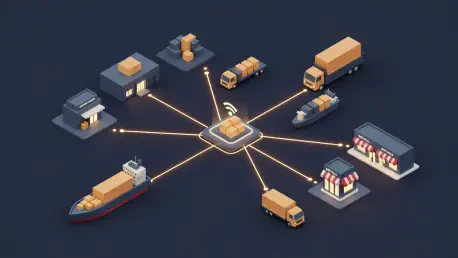
It starts by expanding the perspective to three distinct levels, moving horizontally from the producer through every warehouse and transport leg all the way to the end customer. Practically, this involves creating a “heat map” of the entire network to identify exactly where a specific optimization will generate the most real value—whether that’s for the store manager on the floor or the CFO in the boardroom. Instead of sticking to fixed delivery dates and rigid, standardized packaging logic, we use recurring data patterns interactively to manage the flow based on real-world demand cycles. This means the warehouse is no longer just “shipping boxes” in the dark; it is perfectly synced with the transport fleet’s capacity and the store’s shelf-stocking needs. By leveraging data and intelligence broadly across these old silos, we eliminate the friction that usually happens at the interfaces, allowing the entire enterprise to breathe and react as a single, coordinated organism.
High-performance logistics is often described as an “enabler” rather than just a cost center. How does dynamic control over delivery patterns and packaging logic provide a tangible competitive edge?
When logistics is executed at this high-performance level, it stops being a drain on resources and starts creating capabilities that were previously impossible for a retailer. Think about “Premium Store Service”—if you can ensure that products arrive in the exact quantity and quality needed, precisely when the store is ready for them, you are providing the strongest driver for customer satisfaction. This dynamic control allows for a differentiated network management where promotions and weekly cycles are handled with surgical precision rather than blunt force. It transforms the supply chain into a competitive weapon because you can offer better availability and fresher products while your competitors are still struggling with rigid, outdated order patterns. Ultimately, it’s about answering the one question that truly matters in business: Does this technology allow the customer to differentiate themselves and win in their specific market?
Sustainability and ergonomics are increasingly critical in modern supply chains. How does the “Preservation” principle within this framework balance long-term performance with responsible resource use?
Preservation is the third pillar of our guiding principles because we realize that a system is only truly efficient if it is sustainable and future-ready. This extends beyond just “green” initiatives; it incorporates ergonomics for the workforce and the long-term reliability of the equipment to ensure that the “engine room” doesn’t burn out. By optimizing the interaction between transport and distribution centers, we reduce wasted miles and ensure that resources are used responsibly, which is both an environmental and an economic win. We aren’t just looking for a quick spike in productivity; we are looking to increase the longevity of the entire operation so it can perform at a high level for decades. This holistic view of preservation ensures that as the system scales and evolves, it does so in a way that is stable, reliable, and respectful of both human and natural resources.
Scaling a logistics network often involves massive amounts of data. How do standardized processes and shared learning across different countries accelerate the optimization process for a global enterprise?
The beauty of a network-based approach is that it becomes a learning system where every distribution center contributes to the collective intelligence of the organization. If a company operates multiple sites across North America, Europe, or Australia, we can integrate these into a customer-specific OPN that identifies standardized patterns in packaging or machine parameters. This means we don’t have to repeat the same optimization efforts at every single site; once we validate a successful pattern in one region, it can be scaled across the entire enterprise. While competitive advantages and specific data remain strictly separated and secure, the synergies gained from aligning coding or machine logic across different environments are massive. It allows the entire network to evolve continuously, getting smarter and more efficient with every pilot project and every piece of data analyzed.
Even with advanced software and predictive algorithms, the physical machinery remains the foundation. How do you ensure that the “engine room” stays reliable while the digital layers become increasingly complex?
As much as we talk about data and software, you still need a well-functioning physical engine or the ship simply won’t move forward; the platform remains the absolute prerequisite. We ensure reliability by seamlessly integrating mechanics, sensor technology, and actuators with the digital intelligence layer, so they work in harmony rather than in conflict. The physical platform must operate with consistently high performance and durability, acting as the bedrock upon which the more complex forecasting and simulation logic is built. We never chase technology trends for the sake of novelty; instead, we prioritize technical excellence and precise project execution to ensure the mechanical systems can handle the demands of the digital control logic. It is a marriage of physical platform expertise and digital analytics, where the machine provides the power and the software provides the direction.
Looking at the implementation of these networks in regions like North America and Australia, what is your forecast for the future of predictive control in the retail sector?
My forecast is that we are moving toward a state of “anticipatory logistics,” where the system no longer waits for an order but prepares for it based on deep predictive control logic. By integrating store orders, delivery patterns, and historical trends into a single time-series analysis, OPN will allow companies to move beyond the current state and predict seasonal peaks or promotional impacts with incredible accuracy. We are already seeing pilot customers in major regions who are eager to identify these levers and prioritize them to gain a faster, more cost-efficient performance at an enterprise level. In the coming years, the ability to use recurring data patterns interactively and dynamically will become the standard, making the supply chain the most intelligent part of any retail business. The “sweet spot” will no longer be a static goal, but a moving target that the system identifies and hits in real-time, every single day.