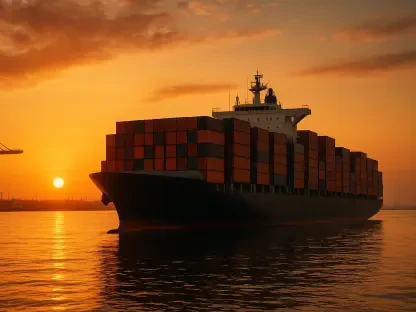

The intricate network of oceanic trade routes currently sustains nearly ninety percent of the entire global economy, ensuring that raw materials and consumer goods reach their destinations with remarkable efficiency. While these massive vessels are often perceived as outdated behemoths of the industrial age, they represent one of the most carbon-efficient methods of transport per ton of cargo. However, the sheer volume of maritime traffic translates into a significant environmental footprint, accounting for roughly three percent of total global greenhouse gas emissions. As international pressure mounts to align with the Paris Agreement, the shipping sector faces a radical transformation that necessitates a departure from heavy fuel oils. This transition is not merely a technical challenge but a complete reconfiguration of the maritime industrial complex, demanding billions in investment and a synchronized shift in global policy. By moving toward a net-zero future by 2050, the industry aims to decouple economic growth from environmental degradation, ensuring that the backbone of global trade remains resilient in a climate-conscious world.
Capital Mobilization and Inclusive Financing
Transitioning to a sustainable fleet requires a fundamental shift in how maritime assets are financed and managed across their entire life cycle. Traditional bank lending, which has long been the mainstay of ship financing, is increasingly being supplemented or replaced by specialized green investment funds and private equity firms that prioritize environmental, social, and governance (ESG) criteria. These financial entities provide the necessary risk capital to pilot experimental propulsion systems and alternative fuel technologies that might otherwise struggle to secure funding. By establishing dedicated sustainability-linked loans, investors can incentivize shipowners to exceed baseline regulatory requirements, offering lower interest rates in exchange for verified emissions reductions. This influx of capital is essential for bridging the “innovation valley of death,” where promising laboratory technologies often fail to reach commercial scale due to a lack of early-stage support. Consequently, the role of finance has evolved from a passive provider of credit to an active driver of technological adoption, shaping the future composition of the global fleet through strategic capital allocation.
A critical aspect of this financial evolution involves addressing the disparities between the industry’s titans and its smaller, independent operators. While major container lines and energy transport companies possess the deep pockets necessary to commission hydrogen-ready vessels or invest in large-scale carbon capture prototypes, small and medium-sized enterprises (SMEs) often operate on razor-thin margins. These smaller players risk being left behind, tethered to aging, high-emission ships that could soon face restrictive port levies or total bans in certain jurisdictions. To prevent a fractured two-tier market, modern investment strategies are focusing on providing liquidity and leasing arrangements specifically tailored for secondary market upgrades. This inclusive approach ensures that the entire maritime ecosystem moves toward decarbonization in a synchronized manner, rather than allowing a few leaders to thrive while the rest of the industry continues to rely on legacy hardware. By democratizing access to green capital, the sector can avoid bottlenecks in the supply chain and maintain the competitive diversity that keeps global shipping efficient and cost-effective for all participants.
Fleet Lifespan and Immediate Efficiency Solutions
The temporal challenge of maritime decarbonization is underscored by the exceptional longevity of commercial vessels, which typically remain in service for approximately twenty-five to thirty years. Because a ship ordered today will likely still be navigating international waters in 2050, every new construction project represents a potential carbon lock-in if it does not account for future fuel flexibility. Shipbuilders and designers have responded by developing “future-proof” hulls capable of being retrofitted as new energy sources become commercially viable. For instance, many current orders now feature dual-fuel engines that can operate on liquefied natural gas today while remaining compatible with bio-methane or synthetic e-methane tomorrow. This strategic foresight is vital for preventing the premature obsolescence of multi-million-dollar assets. By integrating modular engine rooms and reinforced fuel tanks into contemporary designs, the industry is creating a bridge between the fossil-fuel era and a net-zero future, allowing for a phased transition that minimizes economic disruption while maximizing environmental gains over the coming decades.
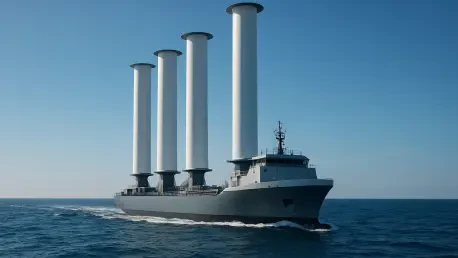
While the search for the ultimate zero-emission fuel continues, the industry is finding significant success through immediate, incremental efficiency gains that reduce the total energy demand of existing fleets. Advanced hull coatings inspired by biomimicry are reducing frictional resistance, while wind-assisted propulsion systems, such as giant rotor sails or automated kites, are making a significant comeback on modern bulk carriers. These technologies can slash fuel consumption by up to twenty percent on favorable routes, providing an immediate return on investment while lowering the overall carbon intensity of the journey. Furthermore, the integration of sophisticated digital twins and real-time voyage optimization software allows captains to adjust speeds and routes based on weather patterns and port congestion, effectively enabling “just-in-time” arrivals that eliminate the need for ships to idle outside harbors. These operational improvements serve as a vital interim measure, buying the industry valuable time to scale up the production of green fuels while demonstrating that substantial progress can be made with the hardware already in operation across the globe.
Diversified Fuels and Global Regulatory Pressure
The future of maritime energy will not be dictated by a single silver bullet but rather by a diverse portfolio of fuels tailored to specific vessel types and route lengths. For short-sea shipping, such as regional ferries and coastal tugs, electric battery technology and hydrogen fuel cells have already proven their efficacy, offering zero-emission operations for predictable, shorter durations. However, deep-sea transoceanic shipping requires high-density energy carriers that can sustain massive vessels for weeks at a time without occupying excessive cargo space. Ammonia and methanol have emerged as leading candidates for these long-haul routes, as they can be produced using renewable energy and existing industrial processes. While ammonia offers a completely carbon-free profile, it presents significant safety and toxicity challenges that require specialized handling and crew training. Methanol, conversely, is easier to handle and can utilize much of the existing liquid fuel infrastructure, though its net-zero status depends entirely on the source of the carbon used in its production. This fragmented landscape means that port infrastructure must become multi-fuel hubs capable of servicing a variety of technological pathways.
Technological innovation must be supported by a robust and harmonized global regulatory framework to ensure that early adopters of green technology are not economically penalized. The implementation of a global carbon tax or a market-based levy on maritime emissions is increasingly viewed as an essential tool for narrowing the price gap between traditional heavy fuel oil and more expensive sustainable alternatives. Such a mechanism would generate substantial revenue that could be reinvested into port infrastructure in developing nations, ensuring a truly global and equitable transition. Moreover, international bodies are working to establish clear standards for fuel safety and emission reporting, providing shipowners with the regulatory certainty needed to commit to long-term capital investments. Without these mandatory global rules, the industry faces a patchwork of regional regulations that could lead to “carbon leakage,” where ships simply avoid ports with strict environmental standards. A unified approach ensures that the cost of decarbonization is shared across the global supply chain, making sustainability a prerequisite for doing business rather than an optional luxury for the few.
Strategic Implementation and Future Resilience
The path toward a net-zero maritime sector was paved through a series of decisive actions that successfully aligned technological innovation with financial pragmatism. Stakeholders recognized that the transition required more than just new engines; it demanded a complete rethinking of the relationship between shipowners, cargo providers, and energy producers. By establishing green corridors—specific trade routes where the necessary infrastructure for zero-emission fuels was prioritized—the industry demonstrated that large-scale decarbonization was achievable in a controlled environment before expanding globally. These corridors served as real-world laboratories where safety protocols for ammonia and methanol were refined and where the economic viability of new propulsion systems was proven. Collaborative platforms facilitated the sharing of operational data, allowing the entire sector to learn from early successes and failures. This transparent approach reduced the perceived risk for conservative investors and accelerated the deployment of capital into the next generation of maritime technology.
Ultimately, the success of the shipping industry in reaching its climate milestones relied on a commitment to systemic change rather than isolated improvements. Port authorities transformed themselves into clean energy hubs, providing not only bunkering for new fuels but also shore-side power to eliminate emissions while ships were berthed. Cargo owners, driven by consumer demand for sustainable products, increasingly opted for “green freight” options, providing the guaranteed demand necessary for fuel producers to scale up production. This synergy across the maritime value chain ensured that the transition was both economically sustainable and environmentally effective. Moving forward, the focus shifted toward maintaining this resilience by continuously integrating emerging technologies like autonomous navigation and advanced materials. By treating decarbonization as a continuous process of evolution rather than a final destination, the maritime world secured its place as a clean, efficient, and indispensable component of the global economy, proving that even the most hard-to-abate sectors could rise to meet the challenge of a changing climate.