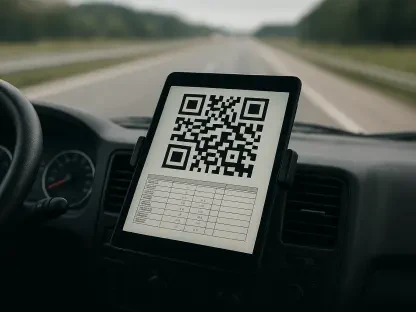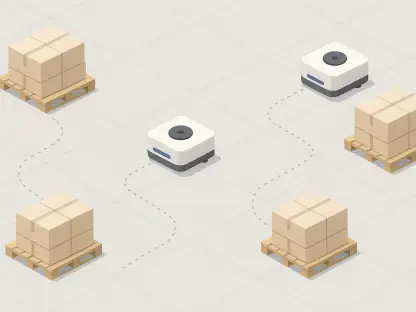

Automation in warehouses and industrial environments drove the transportation segment to a 21% increase, totaling 117,500 units delivered to logistics providers worldwide. This surge represents just one facet of a broader transformation detailed in the World Robotics 2026 report, which indicates that the global market for professional service robots expanded by 24% over the last year. With nearly 250,000 units shipped to various industries, the sector has transitioned from a period of experimental prototyping into a phase of deep operational integration. This shift suggests that automation is no longer viewed as a peripheral luxury but as a core component of modern economic infrastructure. Companies are increasingly moving away from trial runs toward full-scale deployments to address labor shortages and efficiency gaps. The rise of these technologies across professional, consumer, and medical sectors highlights a new era where robotic systems are becoming standard tools for global businesses.
Professional Segments: Logistics and Humanoid Development
Logistics Leadership: The Rise of the RaaS Model
Logistics remains the undisputed leader in the professional sector, accounting for 47% of the total market as organizations strive to streamline material flows and warehouse deliveries. A significant development within this segment is the shift in how organizations acquire these technologies; while direct purchasing remains common, the “Robots-as-a-Service” model has emerged as a dominant strategy. This model allows enterprises to bypass high initial capital expenditures by paying for robotic capabilities through operational budgets, leveling the playing field for smaller firms. Beyond the warehouse floor, the hospitality industry has established itself as the second-largest application, driven by a demand for autonomous guidance systems in public spaces. Close behind is the professional cleaning category, where autonomous floor-cleaners have become the standard for large-scale facilities. These diversified applications demonstrate that service robots are moving into visible roles across society.
The Humanoid Frontier: Overcoming Operational Hurdles
For the first time in industry history, humanoid robots have been classified as a distinct market segment, with global sales reaching approximately 7,000 units during the last annual cycle. These machines are defined by their human-like form and are designed to function in environments specifically built for people, yet their transition to mass adoption faces significant hurdles. Many current applications still rely heavily on human teleoperation to navigate complex scenarios or perform delicate tasks, which limits their immediate autonomy. Furthermore, high maintenance costs and the intensive training required to manage these systems have restricted their use to specialized pilot programs. To bridge the gap between novelty and utility, manufacturers must develop more robust safety protocols and demonstrate a definitive business case for the humanoid form factor. Achieving economic scaling will require better physical manipulation and more intuitive programming interfaces to ensure their future commercial success.
Emerging Markets: Consumer Adoption and Medical Precision
Domestic Integration: Smart Homes and AI Assistants
The consumer service robot market experienced a massive volume increase of 37% over the past year, totaling nearly 34.2 million units shipped to households worldwide. This segment is currently the largest by volume, as domestic robots become increasingly integrated into smart home ecosystems to automate chores like vacuuming, lawn care, and pool maintenance. The integration of advanced artificial intelligence has allowed these devices to navigate complex indoor environments with greater autonomy and precision than ever before. Consumers are showing a greater willingness to invest in higher-end models that offer seamless connectivity with other smart home devices, indicating that the domestic environment is a significant testing ground for mass-market AI interaction. As the technology matures, these robots are evolving from simple utility tools into central components of the connected home, setting the stage for more complex assistants that handle a wider variety of domestic duties.
Strategic Integration: Surgical Precision and Future Deployment
In the medical sector, surgical robots saw a 57% growth rate with 8,400 units sold, marking a shift from clinical research to full-scale commercial deployment. To navigate this landscape, organizations prioritized the development of interoperable software layers that allowed disparate robotic systems to communicate within a single facility. Business leaders recognized that the successful integration of these systems required a cultural shift alongside technological upgrades, emphasizing staff retraining and new safety workflows. They moved away from viewing robots as stand-alone replacements and instead treated them as modular assets that could be redeployed as operational needs changed. By adopting a security-first approach to the data generated by these machines, companies protected their proprietary information while leveraging performance metrics to optimize throughput. These proactive measures ensured that the record growth observed in the 2026 report translated into sustainable and long-term operational gains.