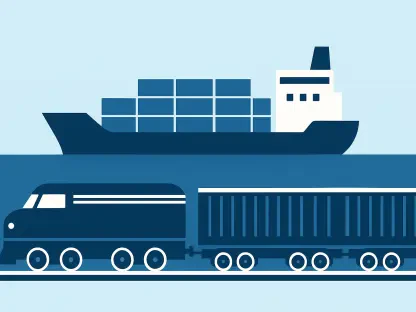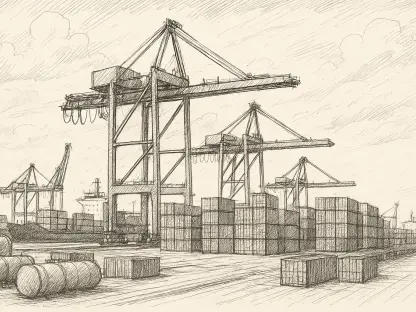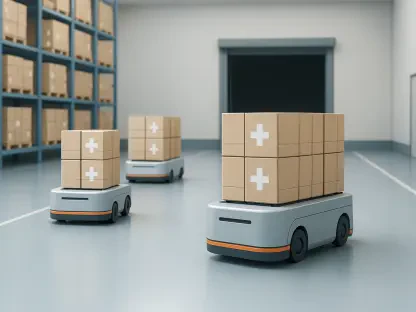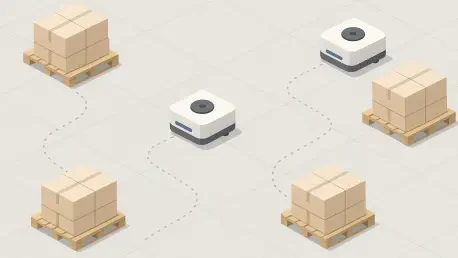

Brooklyn-based startup Destro AI has secured eight million dollars in seed funding to address the persistent lack of cohesion between diverse hardware systems in modern logistics facilities. This significant capital injection, led by Base10 Partners and Bonfire Ventures with participation from CoFound Partners, arrives as global supply chains face mounting pressure to increase speed while reducing operational costs. For years, the robotics industry has focused on perfecting individual machines, yet the integration of these disparate systems has remained a secondary concern. This neglect has resulted in warehouses filled with islands of automation that cannot communicate effectively, leading to manual workarounds that negate the benefits of high-tech investments. By developing an agnostic intelligence layer, the company aims to unify these technologies into a single ecosystem. This seed round will accelerate the refinement of their core software, ensuring it can handle the complexities of modern logistics floors without the need for expensive hardware-specific modifications or lengthy downtime.
The Strategy: Overcoming Hardware Fragmentation in Warehouses
Unified Control: The Logic of a Robot-Agnostic Intelligence Layer
The central challenge in today’s logistics environment is the sheer diversity of hardware required to move goods from receiving to shipping. Most facilities employ a mix of autonomous mobile robots, static conveyor systems, and specialized picking arms, each operating on proprietary software. This fragmentation often prevents a cohesive workflow, as different machines fail to synchronize their tasks or share spatial data. Destro AI’s solution involves a robot-agnostic platform that acts as a universal translator and coordinator. By shifting the focus away from individual hardware capabilities and toward total facility throughput, the software allows operators to maximize the utility of every asset regardless of the manufacturer. This approach ensures that automation strategies are no longer tethered to a single vendor, providing the flexibility needed to scale operations in a rapidly changing market. This agnostic framework ultimately allows for a more competitive and adaptable supply chain that can pivot to new hardware as technology evolves.
Practical Application: Validating AI in Active Production Environments
Transitioning from a controlled laboratory setting to a high-volume production environment is a hurdle that many startups fail to clear. However, this company has already moved into active use cases, notably partnering with Yusen Logistics (Americas) to enhance human-robot collaboration. By deploying their technology on active warehouse floors, the engineering team has been able to observe how AI models react to the unpredictable nature of daily operations. These real-world variables, such as fluctuating inventory levels and varying aisle widths, provide the essential data needed to refine the software’s reliability. Working alongside warehouse staff also allows for the continuous improvement of safety protocols and communication interfaces. These early deployments serve as a critical proof of concept, demonstrating that software-led orchestration can deliver immediate improvements in service quality and operational stability for global logistics leaders who require consistent performance across their automated fleets.
Operational Architecture: Orchestrating the Modern Automated Facility
Strategic Management: Centralized Coordination Through MothershipOS
The company’s technological framework is built on two distinct but interconnected pillars that manage every aspect of warehouse movement. The first, MothershipOS, functions as a high-level orchestration system that serves as the facility’s central brain. It is responsible for the complex task of labor distribution, determining the most efficient way to assign work across various robot types and human personnel. This system integrates directly with existing enterprise resource planning software, ensuring that every movement on the floor is aligned with broader business objectives. By maintaining a global view of facility operations, MothershipOS prevents the bottlenecks and task redundancies that typically plague uncoordinated automated systems. This level of oversight is essential for maintaining high-speed fulfillment cycles, particularly during seasonal demand peaks when the margin for error is non-existent and the pressure on logistics infrastructure reaches its absolute maximum, requiring flawless execution.
Future Resilience: Actionable Steps for Interoperable Infrastructure
To prepare for the next phase of logistics evolution, organizations sought to prioritize software interoperability as a foundational requirement for all new equipment purchases. Executives began moving away from closed-loop ecosystems in favor of open, agnostic platforms that allowed for the seamless integration of third-party robotics. This strategic shift enabled facilities to upgrade individual components without needing to overhaul their entire software architecture, preserving capital and reducing long-term technical debt. Furthermore, companies focused on training their workforce to operate alongside these intelligent systems, fostering a culture of technical literacy and collaboration. By standardizing communication protocols between human-led and automated tasks, the industry successfully mitigated the risks of hardware obsolescence. This proactive approach turned automation from a series of isolated experiments into a cohesive engine for growth, ensuring that facilities remained resilient against future shifts in the global economy.