
Craft distillers and small producers face a disproportionate burden because they lack the network flexibility to postpone final bottling or processing within U.S. borders. This reality became starkly apparent on September 29, 2026, when the United States government transitioned from a regime of high tariffs to one of absolute import prohibitions on a specific range of Canadian goods. While previous trade tensions often involved financial penalties that companies could eventually navigate or pass through the value chain, the current measures targeting alcoholic beverages, heavy motorcycles, and select dairy products have triggered a fundamental logistics execution crisis. The situation has shifted from a boardroom debate over profit margins to a frantic operational scramble within distribution centers and at border crossings. Supply chain managers are no longer just calculating the landed cost of their goods; they are fighting to determine whether their inventory can legally exist within the physical confines of their American networks. This regulatory shift has fundamentally altered the predictable flow of commerce between these two deeply integrated economies, replacing long-standing stability with a binary landscape where shipments are either compliant or contraband.
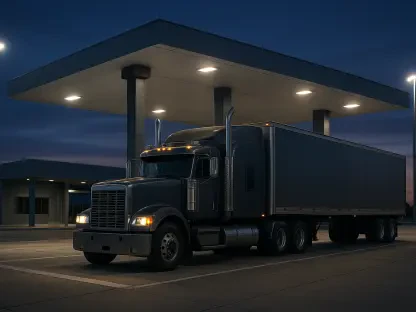
The emergence of this crisis highlights the growing gap between high-level trade policy and the ground-level reality of moving freight across a modern border. For decades, the North American trade relationship was built on the assumption of frictionless movement, underpinned by treaties that favored integration over isolation. However, the recent escalation proves that even the most established supply chains are vulnerable to sudden geopolitical pivots. As logistics organizations attempt to reconcile their existing purchase orders with the new restrictions, they are finding that their legacy systems are ill-equipped to handle the immediate cessation of trade in specific categories. This is not a gradual transition that allows for the depletion of safety stock or the slow identification of new vendors. Instead, it is an abrupt halt that demands real-time intelligence and the ability to pivot entire logistics strategies within hours. The impact is felt most acutely at the “seams” of the network—at the customs plazas in Windsor and Detroit, and within the digital manifests of thousands of trucks currently idling in the Great Lakes region.
Binary Realities: Tariffs versus Absolute Prohibitions
To navigate the current disruption, it is essential to distinguish between the operational friction caused by a tariff and the total network stoppage created by a ban. Historically, a 50 percent tariff—while undeniably painful—functioned as a financial variable. It represented a “landed-cost problem” that offered a spectrum of business responses. Importers could choose to absorb the added expense, renegotiate supplier contracts to split the burden, or move their price points higher for the end consumer. Throughout this process, the flow of goods remained legal and continuous. The logistics network continued to function as designed, provided the financial premium was paid at the point of entry. In that environment, the supply chain was a mechanism for moving value, and the tariff was simply a tax on that value. The fundamental legality of the transportation plan was never in question, allowing logistics managers to focus on efficiency rather than compliance-driven existential threats.
In contrast, the import prohibitions implemented this September have created a “logistics execution problem” that removes all room for financial negotiation. When a product is banned, the options for a logistics manager narrow to a single, absolute requirement: the immediate cessation of movement for the prohibited items. There is no cost-benefit analysis that can justify moving a banned motorcycle or a crate of Canadian whiskey across the border. The supply chain must halt or redirect these specific goods instantly, or risk severe legal penalties and the potential seizure of equipment. This impacts every facet of the operation, from the automated triggers in procurement systems to the physical routing instructions sent to carrier fleets. The friction caused by a ban is much more abrasive than the financial friction of a tariff because it invalidates the legality of the entire transportation architecture. It forces a move from strategic planning to tactical survival, where the primary objective is preventing “illegal” inventory from entering the network.
The Aggregate Data Fallacy: A Granular Logistics Nightmare
At the macro level, the trade dispute between the U.S. and Canada can appear deceptive to those looking only at national statistics. Total bilateral trade remains a massive engine, with goods and services expected to exceed $870 billion by the end of 2026. Within this context, the specific bans implemented on September 29 affect approximately $1 billion in annual imports—a figure that represents less than one percent of the total trade volume between the two nations. For policymakers, this may seem like a targeted and manageable surgical strike intended to apply pressure without collapsing the broader economy. However, this macro-level perspective completely ignores the granular reality of logistics execution. Supply chains do not move “aggregate trade data”; they move specific Stock Keeping Units (SKUs) that are often irreplaceable within a highly specialized manufacturing or distribution environment. A ban that affects a tiny percentage of national trade can represent a total shutdown for a specific company if that prohibited item is a critical component or a signature product line.
The true logistical vulnerability of a firm is found at the SKU and Harmonized Tariff Schedule (HTS) level, where there is no such thing as a “small percentage.” If a manufacturing plant in the Midwest relies on a specific Canadian dairy derivative for its food processing line, or if a dealership network is built around motorcycles with engine capacities exceeding 800cc, the ban is 100 percent impactful. The dollar value of the prohibited item is often irrelevant compared to the value of the production that ceases because that item cannot cross the border. Narrow trade actions create disproportionate crises because they strike at the highly integrated “seams” of the North American economy. When a single component is removed from a Just-In-Time assembly process, the entire line stalls, leading to labor disruptions and unfulfilled customer contracts. This reality exposes the danger of relying on macro-economic summaries to judge the health of a supply chain; the crisis is found in the details of the manifest, not the summaries of the trade office.
Managing Inventory in Transit: The Search for Visibility
One of the most pressing logistical hurdles of the current trade crisis involves the status of “ghost freight”—goods that were already moving through the network when the September 29 deadline arrived. The U.S. government provided a specific grace period, allowing goods that were imported before the deadline but not yet “entered for consumption” to be subject to the previous duty rates rather than the total ban. While this was intended as a reasonable legal compromise to prevent immediate chaos, it has inadvertently created a massive visibility crisis for logistics organizations. To remain compliant and avoid the total loss of inventory, a company must know precisely where every unit of freight is located at any given second. This requires a level of detail that many legacy systems simply cannot provide, leading to a frantic effort to reconcile digital records with physical reality on both sides of the border.
Determining whether a truck physically crossed the border at 11:59 PM or 12:01 AM requires more than just standard GPS tracking; it requires a synchronization of Transportation Management Systems with real-time customs filing data. This is not a situation that can be resolved through weekly planning meetings or retrospective audits. It requires shipment-level visibility that can be verified against government timestamps. Without this precision, loads are being held in legal limbo, with carriers refusing to move freight that might be subject to seizure. This leads to “stuck” inventory, significant legal risks for the shippers, and a massive waste of transportation capacity as drivers wait for clearance that may never come. The inability to manage in-transit inventory during a regulatory pivot is perhaps the clearest indicator of a logistics execution crisis, as it turns a moving supply chain into a static collection of high-risk liabilities.
Strategic Postponement and the Resilience Divide
The impact of these trade restrictions is not felt equally across all sectors, and the primary differentiator is the architectural design of a company’s supply chain. Larger multinational producers often utilize “postponement” strategies, where goods are shipped in bulk and the final processing or packaging occurs within the destination country. In the alcoholic beverage industry, for example, a company might ship bulk spirits to be bottled in the United States. This practice allows them to change the customs classification and the origin status of the finished product, effectively shielding it from certain import bans that target finished Canadian goods. By moving the “transformation” step across the border, these firms have built a logistics shield that allows them to maintain their market presence even during intense trade volatility. This flexibility is a hallmark of sophisticated network design, where the supply chain is treated as a series of modular steps rather than a rigid, linear path.
Smaller producers, particularly craft distillers and specialized dairy farmers, do not have the luxury of this network flexibility. They typically perform all production, processing, and bottling within their local Canadian facilities, meaning their products are finished goods the moment they reach the border. They lack the capital to establish satellite bottling plants in the U.S. or the volume to justify bulk shipping. For these organizations, the trade ban is an absolute barrier with no logistical workaround. This highlights a critical lesson in modern supply chain management: proximity does not necessarily equal resilience. Being “nearshore” in Canada provides short lead times, but it offers no protection against regulatory shocks if the network lacks “optionality.” The divide between those who can postpone final production and those who cannot has created two different classes of competitors, with the former able to survive the crisis while the latter faces potential insolvency.
The Economic Impact: Ghost Freight and Secondary Costs
A common misconception in trade policy is that freight simply disappears once a new rule makes its movement illegal. In reality, physical goods remain stuck in the system, tied to issued purchase orders, active carrier contracts, and scheduled warehouse appointments. When a product is suddenly banned, the logistics network faces a difficult “disposition decision” for every single unit of affected inventory. This inventory must be returned to the supplier at great expense, moved to a third-country market that may not have been prepared for the volume, held indefinitely in an expensive bonded facility, or destroyed. None of these options are efficient, and all of them represent a significant loss of working capital. This “ghost freight” clogs the network, occupying warehouse space and tying up transportation assets that should be used for compliant cargo.
Beyond the loss of the goods themselves, the secondary costs associated with these disposition decisions can be financially devastating. Detention and demurrage fees accumulate rapidly when trailers are stuck at the border or idling in distribution center yards. Additional handling charges, redelivery fees, and the administrative burden of filing corrected customs paperwork add layers of cost that are rarely captured in trade policy headlines. The logistical effort required to “unwind” a committed shipment is often more complex and costly than the effort required to send it in the first place. For many companies, these hidden expenses are more damaging than the loss of sales, as they drain cash reserves during a period of high uncertainty. This highlights why trade bans are a logistics execution crisis: the cost of stopping a supply chain is often higher than the cost of keeping it running, even under the pressure of high tariffs.
Technological Integration: Reducing Decision Latency with Artificial Intelligence
The current environment serves as a powerful validation for companies that have invested in advanced supply chain intelligence. Traditional visibility platforms that focus solely on the physical location of a truck are no longer sufficient to manage the multi-layered risks of modern trade. A contemporary “control tower” must integrate real-time regulatory data with SKU-level physical shipment data. This allows an organization to map a sudden government announcement to an HTS classification, then to a specific purchase order, and finally to a physical truck on the road. The goal of this integration is to reduce “decision latency”—the time it takes for a company to move from receiving news of a ban to taking corrective operational action. In a crisis where every hour matters, the ability to react in minutes rather than days is the ultimate competitive advantage.
Emerging AI-driven solutions, particularly those utilizing Retrieval-Augmented Generation and graph-based reasoning, have become essential tools for managing this complexity. These systems can digest thousands of pages of trade regulations and instantly identify which products in a company’s catalog are affected. Graph-based structures then map how these changes propagate through the network, showing how a ban on one component might affect the production schedule of a seemingly unrelated product or disrupt a specific customer’s delivery sequence. By providing this level of granular intelligence, technology allows logistics managers to see around the corner of regulatory change. Those who have embraced these tools are able to redirect freight before it reaches the border, avoiding the detention fees and legal risks that plague their less-prepared competitors. The crisis of 2026 has proven that supply chain resilience is no longer about physical assets alone; it is about the speed and accuracy of the data used to manage them.
Moving Forward: Establishing the Legally Agile Network
The crisis prompted a fundamental reevaluation of cross-border operations and the inherent risks of deep integration without operational flexibility. Successful firms moved away from static logistics models and integrated regulatory intelligence directly into their core transportation management systems. This transition ensured that trade compliance was no longer treated as a separate back-office function, but as a front-line priority that informed every procurement and routing decision. Companies that prioritized SKU-level visibility gained a significant advantage, allowing them to pivot their sourcing strategies long before their competitors could even identify the scope of the problem. This shift allowed organizations to treat regulatory volatility as a data challenge rather than a series of unforeseen disasters, fostering a more proactive approach to risk management.
Looking ahead, the goal for any robust supply chain must be the creation of a “legally agile” network that can adapt to sudden political shifts as easily as it adapts to weather disruptions. This requires diversifying supplier bases across different regulatory jurisdictions and investing in the “optionality” of production locations. The distinction between a logistics manager and a trade compliance expert has largely vanished, as the two roles have become inextricably linked by the need for real-time execution. Organizations that developed the ability to answer critical questions about their inventory status and regulatory exposure in minutes secured their place in the market. By the time the trade landscape stabilized, the industry had learned that true resilience was found in the combination of physical flexibility and digital intelligence. The winners of this era were those who recognized that in a world of shifting borders, the most valuable asset was the ability to execute a plan that remained compliant under any circumstances.