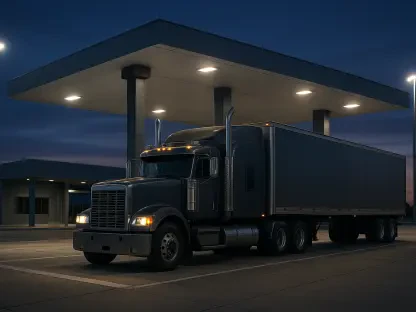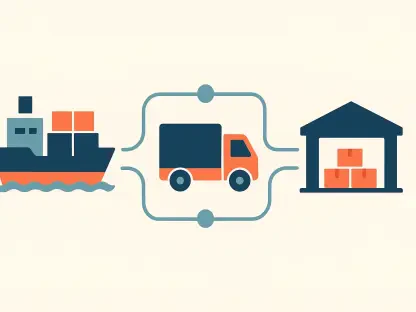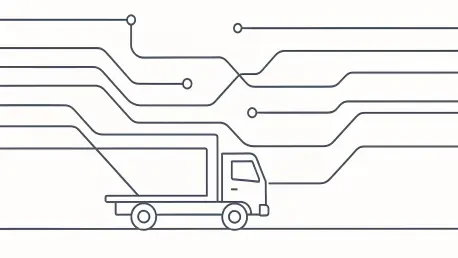

Effective decarbonization in the transport sector is being driven by AI-optimized routing that ensures fewer unnecessary trucks are dispatched onto the roads. This shift represents a broader movement within the logistics industry, which has moved away from the complex and often cumbersome digital overhauls seen in the past. Instead of chasing vague, multi-year transformation goals, businesses are now prioritizing specific, problem-oriented applications of Artificial Intelligence that offer immediate results. By focusing on the automation of “office knowledge work,” companies can address the administrative friction that traditionally slowed down the movement of freight. This pragmatic approach allows carriers of all sizes to integrate sophisticated technology without needing to rebuild their entire infrastructure from the ground up. The focus remains on identifying localized bottlenecks where AI can intervene effectively, providing a clear path to increased productivity and measurable operational success for modern transport businesses.
Streamlining Operations Through Autonomous Tools
Enhancing Procurement: The Power of Autonomy
The introduction of autonomous quotation features has fundamentally changed how carriers interact with the volatile spot market. By establishing specific business rules or “guardrails,” such as preferred lanes, minimum pricing tiers, and capacity limits, companies can allow AI agents to find and bid on loads independently. This automation eliminates the need for manual monitoring of freight marketplaces, which often consumed hours of a planner’s day. The AI can process vast amounts of data in seconds, identifying profitable opportunities that align with the carrier’s specific operational needs. As these agents secure loads with minimal human intervention, the business can maintain a more consistent flow of revenue. This level of autonomy ensures that assets are utilized to their maximum potential, reducing the time vehicles sit idle and maximizing the profitability of every trip. The system works tirelessly to ensure that no viable load is missed due to human oversight in a fast-moving market environment.
Beyond simply securing loads, this technological shift serves as a powerful equalizer for smaller, independent fleets that have historically lacked the massive IT budgets of industry giants. For an operator managing only ten to thirty trucks, an AI agent acts as a virtual planning assistant, providing the same level of market insight that was once reserved for the largest logistics firms. These tools can scan various marketplaces simultaneously, identifying part-loads or backhaul opportunities that a human planner might overlook due to simple time constraints. By lowering the technological barrier to entry, AI allows smaller carriers to compete more effectively on a global stage. The software-as-a-service model ensures that these sophisticated capabilities are accessible via subscription, removing the need for significant upfront capital investment. This democratization of technology means that efficiency and scale are no longer strictly tied to the size of a company’s physical fleet or its internal administrative staff.
Reducing Waste: A Path to Greener Logistics
Operational efficiency is now inextricably linked to environmental sustainability, particularly through the aggressive reduction of “empty miles.” AI-driven platforms are capable of analyzing complex variables to combine part-loads and optimize routing in ways that traditional manual planning could never achieve. By ensuring that every vehicle on the road is carrying a near-capacity load for the duration of its journey, companies can significantly lower their carbon footprint while simultaneously reducing fuel costs. This level of precision planning is increasingly recognized as the most effective form of decarbonization available to the transport sector today. Rather than waiting for a complete transition to new fuel sources, the industry is finding that simply dispatching fewer unnecessary trucks provides an immediate and substantial environmental benefit. The ability to visualize and eliminate waste in real-time allows logistics managers to align their commercial interests with global sustainability mandates without sacrificing their margins.
The integration of these intelligent routing systems also allows for better coordination between shippers and carriers, reducing the time spent at loading docks and minimizing engine idling. When AI manages dock scheduling and arrival windows, it creates a synchronized flow of traffic that prevents the bottlenecks that often lead to wasted fuel and driver frustration. These improvements in the logistical chain do more than just save money; they enhance the overall resilience of the transport network. By using predictive analytics to anticipate delays and suggest alternative routes, AI ensures that the most efficient path is always taken, even in the face of unexpected disruptions. This proactive approach to waste reduction transforms sustainability from a secondary corporate goal into a core component of daily operational strategy. As carriers adopt these tools, they move closer to a state where logistics is not only faster and cheaper but also fundamentally more responsible in its use of vital global resources.
Implementation Strategies and Human Oversight
Adopting Frameworks: The Modular Advantage
Modern AI implementation in the logistics sector is increasingly defined by a modular approach, often referred to as “micro-automation.” Instead of attempting to replace an entire legacy Transport Management System, businesses are choosing to subscribe to specific, interoperable solutions that address their most pressing needs. This strategy allows a company to start with a single fix, such as automated load matching or intelligent dock scheduling, and then scale their technological footprint as they observe tangible results. This phased rollout reduces the risk associated with large-scale digital transitions and ensures that each new tool provides a clear and rapid return on investment. Furthermore, this modularity ensures that the technology can be tailored to the specific nuances of different freight types and regional regulations. By picking and choosing the most relevant AI agents, logistics providers can build a customized digital ecosystem that enhances their existing workflows without causing a major disruption.
A critical aspect of this transition is the distinction between probabilistic AI and deterministic mathematical optimization. While AI excels at interpreting unstructured data, such as the thousands of emails that circulate within a logistics office, certain problems like route mapping are still best handled by classic mathematical models. The most effective logistics platforms today use AI as a specific tool within a broader digital framework, leveraging its ability to “read” intent and extract data while relying on traditional algorithms for hard calculations. This hybrid approach ensures that the technology remains reliable and grounded in physical reality. By using AI to bridge the gap between human communication and machine-readable data, companies can eliminate the manual entry tasks that currently account for nearly 40% of office-based work. This synergy between different types of technology creates a more robust and flexible system that can handle the complexities of modern transport without losing the accuracy required for planning.
Maintaining Control: The Human-in-the-Loop Model
Despite the rapid advancement of autonomous features, human oversight remains an indispensable component of successful logistics management. The most sophisticated AI agents are designed to support the transport professional rather than replace them, functioning as a high-powered assistant that handles the bulk of data processing. The “ultimate decision-maker” in this ecosystem is still a human who understands the subtle nuances of customer relationships and the unpredictable variables of the physical world. By providing a “harness” of business rules and commercial guardrails, companies ensure that AI operates within safe parameters that protect their interests. This collaboration between man and machine allows for a level of operational speed that neither could achieve alone. The human planner is freed from the drudgery of repetitive administrative tasks, allowing them to focus on strategic growth and solving the complex exceptions that still require a personal touch and expertise.
Real-world applications of this human-in-the-loop model demonstrate that AI can handle up to 70% of standard customer inquiries and administrative tasks without any loss in performance. For many transport businesses, this automation has not led to a reduction in headcount but has instead allowed existing teams to manage a significantly higher volume of work. This increase in capacity is vital in a competitive industry where margins are often thin and the demand for speed is constant. When employees are no longer bogged down by data entry, they can dedicate more time to proactive communication and building stronger partnerships with shippers. This shift in focus transforms the role of the logistics professional from a clerical worker into a strategic manager of technology. As the industry continues to evolve, the ability to effectively manage these AI “digital coworkers” will become a core competency for anyone working in the field, leading to a more resilient and versatile workforce.
Economic Viability: Cost-Effective Growth Strategies
The financial viability of integrating AI into transport logistics depends heavily on a rapid “time-to-value” window, which typically ranges from four to twelve weeks in the current market. For small and medium enterprises, the decision to adopt these tools is driven by the potential for productivity gains to outweigh the subscription and integration costs. By launching small, successful pilot programs, companies can prove the technology’s worth before committing to a larger rollout. The goal is to ensure that the reduction in administrative hours and the improvement in vehicle utilization provide a clear margin of profit over the initial investment. As the cost of entry continues to decrease, even margin-sensitive businesses are finding that the ROI of AI is becoming impossible to ignore. The shift toward targeted applications means that companies are no longer paying for broad, unused features, but are instead investing in specific outcomes that directly improve their bottom line and capacity.
The industry moved toward a landscape where the primary competitive advantage was found in the effective use of data and targeted automation. Logistics providers successfully identified the specific administrative bottlenecks where AI could deliver the most significant impact, leading to a period of unprecedented operational clarity. By integrating intelligent agents into their daily routines, carriers increased their capacity and profitability without the need for massive physical expansion. The most successful organizations were those that treated technology as a conversation with their operations, continuously refining their “harnesses” to match evolving market conditions. They prioritized actionable steps, starting with small-scale implementations that proved their value through improved asset use and reduced waste. This transition solidified the role of AI as a fundamental utility in the transport sector, rather than a luxury for the elite. Ultimately, the adoption of these tools empowered professionals to focus on the strategic relationships that drove growth.