
As the energy landscape shifts toward more integrated and complex offshore operations, the role of logistics hubs has transitioned from simple storage to becoming the heartbeat of upstream activity. Our expert today brings decades of deep-tier experience in supply chain management and industrial innovation, having witnessed the transformation of logistics into a high-tech, human-centric engine of economic growth. With a career spanning the evolution of global delivery systems and a profound passion for how technology bridges the gap between raw resources and market readiness, he provides a unique vantage point on the current offshore investment cycle. Today, we explore how strategic infrastructure, such as the major supply bases in Southern Africa, is adapting to unprecedented demand while setting new benchmarks for safety and local participation. We will delve into the technical sophistication required for modern subsea projects, the strategic expansion into regional corridors like Namibia’s Orange Basin, and the shift toward a sustainable, digitalized logistics ecosystem that prioritizes local expertise.
Container volumes at major supply bases have recently doubled while operational productivity has increased by 50%. How has the industry managed to scale so rapidly without compromising on safety or operational integrity?
This surge in activity is not just a matter of moving more boxes; it is the result of a massive shift in organizational maturity and discipline across the supply chain. We are currently supporting more than 60% of Angola’s daily oil production, and doing so requires a level of precision that simply didn’t exist a decade ago. When you see container volumes more than doubling compared to the previous year, the immediate concern is often a rise in incidents, yet we have seen a simultaneous 50% improvement in productivity alongside a significant reduction in lost-time injuries. This balance is achieved by moving away from reactive logistics and toward a proactive, engineering-led approach where every heavy lift and vessel mobilization is planned with digital precision. Our teams are doing more, but they are doing it with better tools and a more rigorous adherence to international safety standards, reflecting a discipline that is now ingrained in the workforce.
The industry is moving into a new cycle of upstream investment with major developments like Agogo. How have these projects pushed the boundaries of what local logistics bases can execute on the ground?
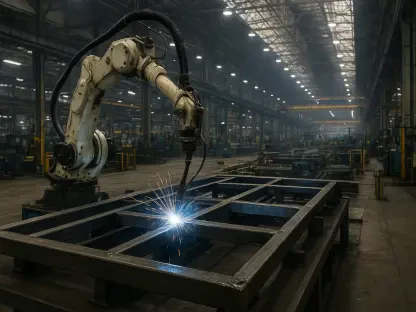
The Agogo project has been a true litmus test for local capability, forcing us to evolve from traditional warehousing into a sophisticated fabrication and staging partner. One of the most significant milestones we’ve achieved recently was the successful execution of the first flexible pipe transpooling operation conducted locally, a feat that requires immense technical coordination and specialized equipment. These types of operations demonstrate that the infrastructure is no longer just a stopping point for cargo but a site of complex industrial activity where subsea hardware is prepared for deployment. By integrating fabrication support and heavy lifting directly into the logistics chain, we are ensuring that every new project can find the capacity it needs right here in the country. It’s about proving that the technical complexity once reserved for international yards can now be handled safely and efficiently by Angolan professionals on our own soil.
With several major offshore developments such as Ndungu, Kaminho, and Greater PAJ on the horizon, how is the continuity of these projects changing the way supply bases plan for future demand?
The shift we are seeing is a move from sporadic, project-based activity to a model of sustained, long-term continuity that allows for much better strategic planning. Projects are becoming longer and more multifaceted, involving not just initial drilling but also extensive completion, workover, and intervention programs that stretch out the demand for our quay and operational areas. This visibility into the pipeline for the coming years allows us to invest in infrastructure and people with a five-to-ten-year perspective rather than just looking at the next quarter. We are no longer just counting tonnes; we are looking at the value generated per operation and how we can integrate more services—like tubular logistics and offshore mobilization—into a single, seamless platform. This long-term momentum is what gives us the confidence to scale our base and ensure that we are ready for the next generation of deepwater challenges before the demand even hits the docks.
Investment in specialized equipment is often the bottleneck in rapid expansion. What specific technological upgrades are being prioritized to support the current 2026–2028 investment cycle?
Our investment philosophy is built on the principle of anticipating demand and building the necessary capability before the industry catches up, which is why our current equipment program continues through 2028. We have significantly bolstered our lifting capacity by adding cranes capable of handling up to 350 tonnes, which is essential for the massive subsea modules being deployed in the new offshore blocks. Beyond just raw power, we are integrating a new generation of electric and rotating forklifts, alongside specialized units designed specifically for the delicate handling of tubulars and high-value components. These aren’t just hardware upgrades; they are part of a broader digitalization strategy that gives us real-time visibility over every asset on the base, making our interactions with clients faster and far more predictable. By combining heavy-duty capacity with smart, electric-powered technology, we are ensuring that our fleet is both high-performing and aligned with modern environmental expectations.
Digitalization and sustainability are often seen as separate goals, but how are they being merged within the logistics sector to improve overall efficiency?
In our view, modernization is a three-legged stool consisting of equipment, technology, and people; you simply cannot have one without the others. We are currently implementing digital solutions that streamline our planning and execution phases, which reduces vessel turnaround times and minimizes the carbon footprint of our onshore movements. Simultaneously, we are making a concerted effort to transition our power needs by increasing the role of solar energy and reducing our reliance on traditional diesel generators across the base. This dual focus on energy efficiency and digital transparency makes the base more attractive to international operators who have their own stringent ESG targets to meet. It’s about creating a business environment where the logistics are not just fast and safe, but also demonstrably cleaner and more data-driven than they were just a few years ago.
The concept of a “Centre of Excellence” has been mentioned as a way to bridge the skills gap. How is this center specifically preparing the workforce for a more technology-driven logistics environment?
The Centre of Excellence is the heartbeat of our human capital strategy because we recognize that a 350-tonne crane is only as good as the person operating it and the engineer planning the lift. We are focusing on both technical and behavioral competencies, ensuring that our team can manage the increasingly complex engineering requirements of modern subsea logistics. It’s not just about learning to drive a forklift; it’s about understanding the engineering behind a multi-point heavy lift and the safety protocols of a high-pressure mobilization campaign. We want our professionals to lead these operations, which is why we invest heavily in specialized training that meets international standards for quality and execution. By fostering this environment of continuous learning, we are building a workforce that is not just participating in the industry but is actively steering its technical evolution.
With the rapid development of the Orange Basin, how can the experience gained in mature markets like Angola be utilized to support the burgeoning energy sector in Namibia?
Namibia represents a natural and exciting progression for our regional strategy, and we see it as an opportunity to build a connected energy logistics corridor between our two nations. Angola has decades of deepwater experience and a mature ecosystem of service companies, and we believe much of that knowledge can be transferred to help Namibia accelerate its own offshore journey. Our approach is not to simply export a model, but to work with local Namibian partners to adapt our integrated supply-base management and cargo-handling expertise to their specific institutional needs. We want to avoid the common mistake of rebuilding the entire wheel from zero every time a new market emerges in Africa. Instead, by sharing infrastructure, specialized equipment, and operational standards, we can ensure that both markets complement each other and that the value stays within the regional economy.
Local content is a cornerstone of the industry’s social license to operate. How is the transition from “participation” to “capability” being managed to ensure long-term self-sufficiency?
The next phase of local content must move beyond simple quotas and focus on creating genuine, high-value technical capability among local companies and individuals. At our base, approximately 99% of our workforce is Angolan, but the real metric of success is the complexity of the tasks they are performing and the leadership roles they are stepping into. We are very proud of our mentorship programs, particularly those aimed at women in logistics, which are designed to break down traditional barriers and bring diverse talent into the technical core of the business. The goal is to build an ecosystem of “local champions”—companies that don’t just win contracts because of regulations, but because they are the most competitive and safe choice in the market. When local companies can meet or exceed international standards in technology and execution, that is when the energy sector becomes truly self-sustaining.
How does the creation of a dedicated Business Centre within a logistics hub change the way operators and service companies interact?
The Business Centre was explicitly designed to transform the supply base from a purely industrial site into a collaborative business ecosystem. By providing a professional environment where operators, international service providers, and local startups coexist, we are facilitating a level of knowledge exchange that doesn’t happen in a siloed warehouse. It creates a space for networking, collaboration, and the kind of informal interaction that often leads to innovative solutions for logistical bottlenecks. This setup allows smaller local companies to have direct access to the major players, giving them a platform to build partnerships and progressively scale their own capabilities. We want the base to be a place where the industry doesn’t just work, but where it grows together through shared infrastructure and a common drive for operational excellence.
Looking toward the future of the African energy industry, what is your vision for how logistics platforms will eventually integrate on a pan-African scale?
The vision is to move from being a national hub to a genuinely pan-African integrated logistics platform that connects the various emerging energy markets across the continent. We see a future where Angola acts as a center of expertise, where the lessons we’ve learned in the deepwater blocks of the Congo Basin are utilized to streamline operations from the Orange Basin to the Gulf of Guinea. This isn’t just about having a physical presence in multiple countries; it’s about creating a seamless network of equipment, technology, and certified professionals that can move across borders to meet demand wherever it arises. If we can connect these various markets through a shared logistics language and high operational standards, we can reduce costs for operators and maximize the participation of African companies in the global value chain. That is the evolution we are working toward—a stronger, more integrated, and technologically advanced African logistics network.
What is your forecast for the role of integrated supply bases in the global energy transition?
I believe that the supply bases of the future will no longer be seen as mere “oil and gas hubs” but as multi-energy logistics centers that are vital to the broader global energy transition. As we move through the rest of this decade, these bases will increasingly support offshore wind, green hydrogen projects, and carbon capture initiatives, utilizing the same heavy-lifting and vessel-mobilization expertise they honed in the petroleum sector. We will see a complete digital transformation where the entire supply chain is visible in real-time, allowing for a level of efficiency that drastically minimizes waste and carbon emissions. The bases that survive and thrive will be those that have already invested in their people and sustainable infrastructure, becoming the essential engines that power a more diverse and cleaner energy mix. Ultimately, the expertise we are building today in deepwater logistics is the same expertise that will be required to build the offshore energy systems of tomorrow.