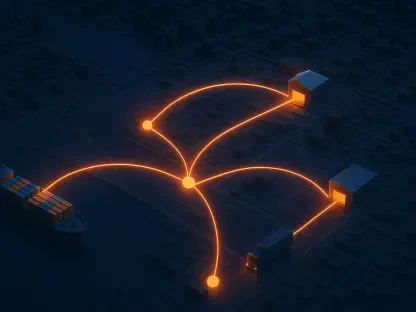

The persistent hum of rotors echoing above city skylines no longer signals a distant science fiction scenario but rather serves as a rhythmic pulse of a logistical revolution currently unfolding across the globe’s busiest economic corridors. Low-altitude Unmanned Aerial Vehicle (UAV) logistics has transitioned from a conceptual laboratory experiment to a tangible component of the modern industrial landscape. As urban centers become more congested and the demand for instantaneous delivery grows, the sky is increasingly viewed as the next frontier for the logistics sector. This transformation is not intended to replace traditional ground transport but rather to augment it, creating a multi-dimensional network that can bypass traffic and geographical barriers. This market analysis explores the current state of drone delivery, the major players driving innovation, and the systemic challenges that must be overcome to achieve full-scale commercial viability.
The significance of this sector lies in its ability to redefine the efficiency of the “last-mile” delivery, which remains the most expensive and time-consuming segment of the supply chain. By moving parcels from the crowded two-dimensional plane of city streets to the three-dimensional space of the low-altitude sky, companies are finding ways to reduce delivery times from hours to mere minutes. This analysis looks beyond the technical novelty and investigates the underlying economic structures and regulatory shifts that are making this possible. Understanding these factors is essential for any stakeholder looking to navigate a market that is rapidly maturing from pilot programs to standardized commercial operations.
Tracing the Flight Path: From Experimental Pilots to Regional Leadership
The evolution of UAV logistics is rooted in the need for “faster-than-road” delivery solutions, particularly in high-density economic zones where traditional infrastructure is reaching its capacity. Historically, drone applications were limited to military use or small-scale hobbyist photography, but a major shift occurred as e-commerce giants began seeking ways to solve the deep-seated inefficiencies of urban courier services. In regions like the Guangdong-Hong Kong-Macao Greater Bay Area, this shift has been particularly aggressive and well-documented. For instance, Shenzhen recently reported over 730,000 low-altitude logistics flights in a single eight-month period during 2026, a staggering 30% increase compared to the previous year. These developments matter because they signal that the industry is moving past the novelty phase and into a period of high-frequency operations where the aircraft are no longer just prototypes, but essential tools for commerce.
This transition was catalyzed by a combination of technological maturity and a supportive policy environment that favored the creation of a “low-altitude economy.” As battery density improved and autonomous flight algorithms became more reliable, the risk profile of operating drones in urban areas decreased significantly. This allowed regulators to grant more permissive flight authorizations, which in turn encouraged logistics firms to invest in the necessary ground infrastructure. The result is a burgeoning ecosystem where drone routes are beginning to mirror the complexity of established postal networks. These foundational developments have set the stage for a competitive environment where the focus has shifted from whether a drone can fly to how many parcels it can carry profitably in a single day.
Navigating the Competitive and Operational Landscape
Industry Titans: Divergent Strategic Approaches
The competitive landscape of UAV logistics is currently defined by how different companies leverage their existing strengths to claim market share. SF Express, through its subsidiary Fengyi, has taken a clear lead in urban integration, establishing over 1,100 routes in the Greater Bay Area and completing millions of deliveries by mid-2026. Their approach focuses on creating a dense network of takeoff and landing sites that allow for rapid transit between distribution centers and consumer hubs. In contrast, JD Logistics has carved out a niche in rural and mountainous terrain, focusing on bridging the gap for isolated communities where traditional vehicle access is nearly impossible or prohibitively expensive. This strategy not only serves a social good but also allows the company to test its technology in less crowded airspaces before attempting a full-scale urban rollout.
Meanwhile, national carriers like China Post are exploring how drones can fulfill universal service obligations in rugged environments where terrain makes ground delivery incredibly slow. These varying strategies highlight a common trend: the move toward an “air-ground integrated” model where drones and trucks operate as a synchronized team rather than as direct competitors. In this model, heavy trucks handle the long-haul transit to the city outskirts, while drones take over for the final leg, ensuring that the most difficult part of the journey is completed with maximum efficiency. This synergy is proving to be the most viable way to integrate UAVs into existing supply chains without requiring a total overhaul of traditional logistics infrastructure.
Shifting Gears: Moving from Urgent Niche Services to Normalized Delivery
Initially, drone logistics was a premium service reserved for extremely urgent items like legal documents or emergency medical supplies. However, the business model is maturing rapidly. Today, operational routes cover core economic hubs, transporting a diverse range of goods including fresh produce, medical samples, and industrial spare parts. In manufacturing corridors, deliveries that once took half a day via ground transport are now completed in under an hour. This shift from niche urgency to normalized service is critical because it builds the high-volume data necessary to refine flight safety and improve operational efficiency across the board. The more drones are in the air, the more the industry learns about weather patterns, battery performance, and optimal route planning.
Moreover, the normalization of these services is beginning to affect consumer expectations. As more people experience the speed of aerial delivery, the demand for such services is expected to increase, further driving down costs through economies of scale. Currently, the industry is seeing a diversification in aircraft types, ranging from small quadcopters for light documents to larger, fixed-wing vertical takeoff and landing (VTOL) craft capable of carrying heavier payloads over longer distances. This tier-based system allows logistics providers to match the right aircraft to the specific requirements of each route, optimizing fuel or battery consumption and reducing the overall carbon footprint of the delivery process.
Administrative Complexity: The Challenge of Cross-City Coordination
As UAV logistics expands, it faces a complex layer of regional and regulatory hurdles that are far more difficult to solve than the technical challenges of flight. Unlike public roads, “aerial highways” require constant coordination and digital filing with multiple governing bodies, including civil aviation authorities and local municipal governments. When a drone flight crosses a municipal boundary, the administrative complexity increases exponentially, as different jurisdictions may have different rules regarding noise levels, flight times, and emergency protocols. Furthermore, public perception remains a significant factor; noise pollution and safety concerns in residential areas can lead to restrictive local ordinances that stifle route expansion.
Addressing these misunderstandings is essential, as the growth of the industry depends as much on social acceptance and streamlined airspace management as it does on the technical capabilities of the drones themselves. There is also the issue of “invisible infrastructure,” such as high-precision mapping and low-altitude communication networks, which must be built out to support high-density traffic. Without these systems, the risk of mid-air collisions or signal interference remains too high for large-scale commercial operations. Consequently, the industry is seeing a push for more unified regulatory frameworks that can provide a single point of contact for flight approvals across different regions, reducing the red tape that currently slows down route deployment.
Future Horizons: Technological Shifts and Economic Evolution
Looking ahead, the period from 2026 to 2028 will be defined by rapid technological iteration and regulatory reform. Significant breakthroughs in battery density and weather-resistant flight technology are expected, allowing drones to operate in increasingly adverse conditions such as high winds or heavy rain. Economically, the industry is likely to shift toward “shared infrastructure” models where competing companies utilize the same landing pads and charging stations to reduce overhead. This would mirror the way airlines share airport terminals or telecommunications companies share cell towers. Such a shift would be a major milestone in reducing the capital expenditure required for new market entrants and would likely lead to a more competitive and diverse landscape.
Experts predict the emergence of “air express lanes”—dedicated corridors with automated scheduling—that will treat drone traffic much like air traffic control manages commercial aviation. These corridors would use sophisticated AI-driven software to manage thousands of flights simultaneously, ensuring that each aircraft maintains a safe distance from its neighbors while following the most efficient path. This level of automation will eventually lower the per-parcel cost to a point where drone delivery becomes a viable option for a broader range of consumer goods, not just high-value or urgent items. As the technology matures, we may even see the development of larger cargo drones capable of replacing some mid-range trucking routes, further transforming the global logistics network.
Strategic Paths: Navigating the Hurdles for Sustainable Commercialization
For businesses and policymakers to successfully navigate these hurdles, a disciplined approach is required. First, companies should focus on high-value scenarios—such as medical logistics and industrial manufacturing—where the speed premium is easily justified, rather than rushing to deliver low-cost e-commerce parcels where margins are razor-thin. Second, local governments must treat UAV landing sites as “new infrastructure,” integrating them into urban planning much like electric vehicle charging networks. This involves designating specific zones for takeoff and landing that are both accessible for couriers and far enough from residential buildings to minimize noise complaints.
Finally, industry-wide standardization of safety protocols, including redundant propulsion and emergency parachutes, is non-negotiable for winning public trust. Companies that prioritize safety over rapid expansion are likely to find more favor with both regulators and the general public. Furthermore, there is a need for investment in workforce development to ensure there are enough qualified technicians and remote pilots to manage these growing fleets. By focusing on these core areas, stakeholders can move away from small-scale demonstration pilots toward a profitable and sustainable business model that serves the needs of a modern, fast-paced economy.
Achieving Long-Term Viability in the Sky
The industry recognized that the journey toward a fully functional low-altitude logistics network required a marathon mindset rather than a sprint for immediate returns. Stakeholders identified that while the growth in flight hours and route numbers was impressive, the long-term significance of the technology rested on its ability to solve deep-seated inefficiencies in the global supply chain. Businesses found that the most successful paths involved high-value niches where the speed of aerial transit outweighed the higher initial capital costs. Policymakers eventually prioritized the creation of standardized safety protocols, which served to mitigate public anxiety regarding noise and privacy in densely populated urban centers.
Strategic insights emerged from the early adoption phases, highlighting that treating landing sites as essential new infrastructure was the only way to ensure seamless ground-to-air connectivity. Companies that invested in weather-resistant technology and redundant systems gained a competitive edge by maintaining operational consistency during adverse conditions. The movement toward shared infrastructure models helped lower the barrier to entry, fostering a more collaborative environment between traditional logistics giants and agile technology startups. Ultimately, the industry shifted its focus from merely proving that drones could fly to demonstrating that they could operate as a reliable, cost-effective, and safe utility for the broader economy. These collective actions provided the necessary foundation for the low-altitude economy to become a permanent and indispensable layer of the global transportation network.