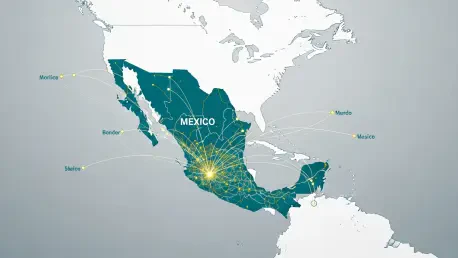

The dramatic acceleration of consumer expectations within the Mexican digital marketplace has fundamentally altered the standard for delivery precision, forcing logistics providers to abandon static warehousing models in favor of hyper-responsive, technology-driven ecosystems. This evolution marks a departure from traditional storage-based commerce toward a dynamic infrastructure where speed and visibility dictate market dominance. As the current landscape matures in 2026, the integration of physical distribution centers with high-level digital intelligence has become the primary differentiator for companies seeking to capture a share of the burgeoning regional trade.
Redefining the Logistics Ecosystem within the Mexican E-Commerce Market
The transition from traditional warehousing to dynamic supply chains represents a systemic shift in how the Mexican economy operates. Historically, warehouses served as simple repositories for surplus inventory; however, modern facilities now function as active processing hubs where data flows as quickly as the physical goods. This transformation is driven by the need to support a consumer base that demands rapid fulfillment and absolute transparency throughout the shipping process. Consequently, the logistics sector has moved away from isolated storage solutions toward integrated networks that prioritize the velocity of throughput over the volume of static inventory.
Major market participants like Onest SmartLogistics and Mercado Libre have been instrumental in reshaping this regional infrastructure. By establishing massive distribution centers strategically located near high-demand urban centers, these players have effectively created a new backbone for North and Central American trade. These facilities are no longer just buildings but are sophisticated technological nodes that facilitate the seamless movement of products across borders. This concentration of logistics power in the Mexican corridor has stabilized supply lines and provided a blueprint for how emerging markets can modernize their trade capabilities to meet global standards.
The integration of these advanced distribution hubs allows for a level of coordination that was previously unattainable in the region. By serving as central points for both domestic consumption and international export, these centers enable retailers to manage their stock with unprecedented precision. The synergy between physical proximity to major transport routes and the digital tracking of every unit ensures that the Mexican logistics ecosystem remains competitive on a global scale. This structural evolution has positioned the country as a vital link in the Western Hemisphere’s supply chain, supporting both local entrepreneurship and multinational expansion.
Strategic Catalysts and Growth Projections for Smart Infrastructure
Navigating Consumer Shifts via On-Demand and Flexible Logistics Models
The adoption of logistics-as-a-service has emerged as a critical strategy for managing the extreme volatility of modern consumer behavior. In the current market, businesses must navigate seasonal peaks and sudden product launches that can overwhelm traditional infrastructure. Flexible logistics models allow companies to scale their operational capacity up or down based on real-time demand, preventing the financial strain of maintaining underutilized space during slow periods. This on-demand approach provides even smaller retailers with the sophisticated fulfillment capabilities once reserved only for industry giants.
Evolving behaviors in the fashion and footwear sectors have specifically necessitated these flexible fulfillment strategies. Consumers now expect frequent collection updates and immediate availability, which places immense pressure on inventory management. To address this, providers have implemented advanced fulfillment protocols that prioritize the rapid sorting and shipping of high-turnover items. Moreover, the integration of real-time visibility and AI-driven insights has become a standard requirement, allowing brands to anticipate shifts in style preferences and adjust their distribution strategies before inventory imbalances occur.
Benchmarking Success through Performance Metrics and Investment Data
Reliability in the logistics sector is now quantified through rigorous performance metrics that highlight operational excellence. Onest SmartLogistics, for instance, maintains a 99.9% accuracy rate across its inventory and fulfillment processes, managing over 300 million units of footwear and garments annually. Processing approximately 25 million boxes per month requires not just physical space but a meticulous adherence to standardized workflows. These key performance indicators serve as a benchmark for the entire industry, proving that massive volume does not have to come at the expense of precision.
The significance of these operational achievements is bolstered by massive capital investments flowing into the Mexican fulfillment landscape. Multi-billion dollar commitments have funded the construction of high-capacity centers that utilize extreme automation to process hundreds of thousands of packages daily. Looking forward, the industry anticipates a continued expansion of capacity and a projected increase in AI adoption, which is expected to reach 41% across the retail sector by 2027. This influx of capital ensures that the infrastructure can keep pace with the double-digit growth of the digital economy, providing a stable foundation for future commercial activity.
Overcoming the Unique Challenges of Reverse Logistics and Market Volatility
Managing high return rates, particularly in the fashion and footwear industries, remains one of the most complex operational challenges in the current market. Data suggests that while general e-commerce returns are manageable, specific categories face return rates exceeding 30%. Handling these “reverse logistics” requires a specialized infrastructure capable of inspecting, refurbishing, and re-integrating products into the sales cycle without delay. Logistics providers have responded by developing dedicated return processing centers that minimize the time items spend out of circulation, thereby protecting the profit margins of retail partners.
The “bullwhip effect,” characterized by amplified fluctuations in demand as one moves up the supply chain, also presents a significant risk to stability. To mitigate this volatility, logistics firms have implemented responsive and scalable storage solutions that act as a buffer against unpredictable market swings. By utilizing data-driven forecasting and flexible warehousing, companies can avoid the pitfalls of overstocking or stockouts. This adaptability is essential for maintaining near-perfect accuracy amidst labor shortages and the increasing physical demands of high-volume delivery cycles, ensuring that the supply chain remains resilient under pressure.
Compliance Standards and the Evolution of Cross-Border Trade Regulations
The regulatory landscape governing the movement of goods between Mexico, the United States, and Central America has become increasingly sophisticated. Standardized processes and comprehensive traceability are now mandatory for meeting international security and customs requirements. Logistics providers must navigate a complex web of trade policies to ensure that cross-border operations remain seamless. This involves the implementation of advanced documentation systems and real-time reporting tools that satisfy the stringent oversight of multiple jurisdictions while maintaining the speed required for modern e-commerce.
Adapting to shifting trade policies requires a proactive approach to compliance that goes beyond basic legal requirements. Providers that invest in standardized security protocols and transparent data sharing are better positioned to avoid delays at border crossings. This focus on regulatory excellence not only facilitates smoother trade but also builds trust with international partners. By ensuring that every package is accounted for and every regulation is met, Mexican logistics firms are reinforcing the country’s role as a reliable and secure hub for international commerce, further integrating the North and Central American markets.
Pioneering the Future through Artificial Intelligence and International Corridors
Emerging technologies such as advanced automation and predictive analytics are set to disrupt traditional delivery models even further. The use of AI to optimize routing and inventory placement is already reducing transit times and operational costs. These innovations allow logistics providers to anticipate consumer needs with startling accuracy, moving products closer to the end-user before a purchase is even made. This shift toward predictive fulfillment represents the next frontier of retail, where the synergy between digital intelligence and physical scale creates a frictionless shopping experience.
The development of international logistics corridors is another critical trend shaping the next decade. By linking major maritime ports directly to inland distribution hubs through dedicated transportation networks, the region is improving the efficiency of global trade routes. These corridors serve as high-capacity arteries that move goods from ship to doorstep with minimal interference. The continued growth of these physical and digital networks will define the competitive landscape of the 2030s, ensuring that the infrastructure remains capable of supporting the next generation of retail innovation and international trade expansion.
Synthesizing Innovation to Foster Sustainable Supply Chain Growth
The evolution of the Mexican logistics sector demonstrated that flexibility and technological integration were no longer optional for maintaining market competitiveness. Strategic partnerships between retailers and integrated logistics providers proved to be the most effective way to navigate the complexities of a digital-first economy. Businesses that prioritized scalability and data transparency found themselves better equipped to handle the volatility of consumer demand. This collaborative approach allowed for the optimization of resources, ensuring that even during periods of high market turbulence, delivery standards remained uncompromised.
Investments in smart infrastructure and reverse logistics capabilities ultimately provided the resilience needed to support the expanding digital economy. Companies that embraced “logistics-as-a-service” achieved a higher degree of agility, allowing them to capitalize on growth opportunities without the burden of excessive capital expenditure. The move toward standardized cross-border regulations and the adoption of predictive AI tools further solidified the region’s standing in global trade. By synthesizing these innovations, the industry established a sustainable framework that balanced rapid growth with operational precision, setting a new standard for supply chain excellence in North America.