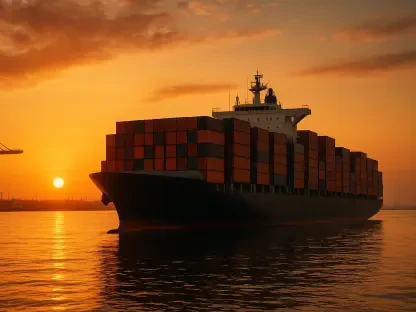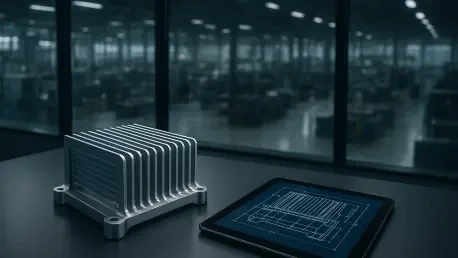

The global industrial landscape currently navigates a period of unprecedented volatility characterized by fluctuating container rates and the sudden imposition of regional trade barriers. While many manufacturers once relied on sprawling international networks to reduce costs, the inherent fragility of these systems has led to a strategic pivot toward more robust production methods like impact extrusion. This cold-forming process provides a significant buffer against external shocks by minimizing the reliance on raw material volume and simplifying the logistical path from raw aluminum or copper to finished technical components. By adopting this precision-oriented approach, engineering teams can protect their margins from the erratic pricing of global shipping while ensuring that production pipelines remain continuous even when transoceanic lanes are blocked. The transition to such high-efficiency manufacturing serves as a cornerstone for modern supply chain resilience, allowing for a level of predictability that traditional machining or casting cannot provide today.
Achieving Economic Efficiency: Resource Sustainability and Agile Logistics
Optimizing Material Utilization: Reducing Industrial Waste
One of the most significant advantages of the impact extrusion process is the drastic improvement in material utilization, which typically reaches approximately 95 percent in modern facilities. Traditional CNC machining is often incredibly wasteful, frequently turning over half of the raw metal into useless scrap that must be recycled at a loss, whereas impact extrusion simply shifts the material into the desired shape. This efficiency significantly lowers raw material expenses and protects companies from the price volatility often seen in global metal markets, where the cost of aluminum and copper can swing wildly. By using less material to produce the same number of units, manufacturers are less exposed to the rising costs of mining and smelting, which are increasingly influenced by international environmental regulations. This resource-conscious approach not only helps in maintaining a competitive price point for the end consumer but also ensures that the production cycle is far more resilient to raw material shortages.
The financial stability of manufacturing operations is heavily tied to the procurement of high-grade non-ferrous metals, which remain susceptible to sudden price hikes and supply shortages. By utilizing impact extrusion, companies can hedge against these risks because the process allows for the creation of near-net-shape components that require almost no secondary machining or finishing. This reduction in post-processing not only saves on labor costs but also minimizes the volume of metal that must be purchased and stored at any given time. Consequently, procurement departments can better predict their quarterly expenses and maintain consistent pricing for their own clients, even when global commodity markets are in turmoil. Furthermore, the ability to use standard metal slugs rather than complex pre-cast forms simplifies the upstream supply chain, allowing manufacturers to source raw materials from a wider variety of domestic vendors who can provide quick replenishment during periods of high demand.
Localizing Production: Enhancing Operational Agility
The localization of manufacturing serves as a critical defensive strategy for mitigating risks inherent in global logistics, particularly when dealing with specialized components. Partnering with a regional impact extrusion manufacturer creates a substantial domestic buffer that shields businesses from the chaos of port congestion, customs delays, and unpredictable tariff fluctuations that have become commonplace. This geographic proximity allows for real-time communication between design engineers and production managers, enabling faster engineering changes and prototyping without the months of delay associated with overseas transit. Furthermore, having a supplier within the same time zone and regulatory framework minimizes the administrative burden often found in managing diverse international vendors. By shortening the physical distance between the factory floor and the assembly line, companies can maintain a lean inventory model without the constant threat of a complete supply chain breakdown due to geopolitical tension.
Production agility is further enhanced by the incredible speed and repeatability of the impact extrusion process, which remains vastly superior to conventional methods. Unlike traditional subtractive techniques that require multiple setups and lengthy tool paths, this technology transforms a solid metal slug into a finished component with a single, high-pressure press stroke. This high-volume capability allows procurement teams to respond rapidly to sudden market shifts or spikes in demand while maintaining smaller, more efficient safety stock inventories that do not tie up excessive capital. The ability to churn out thousands of identical parts with minimal human intervention reduces the labor-related variables that often plague production schedules in developing markets. Consequently, manufacturers can pivot their product offerings or scale up existing lines with much greater confidence, knowing that their core component supply is grounded in a reliable, high-speed manufacturing ecosystem that prioritizes throughput and consistency.
Elevating Component Quality: Superior Performance and Design Scalability
Leveraging Superior Metallurgy: Enhancing Structural Integrity
Impact extrusion provides a level of structural integrity that traditional alternatives like casting or welding simply cannot match, particularly in high-stress applications. The process utilizes grain flow optimization, where the internal crystalline structure of the metal is physically reshaped to follow the specific contours of the finished part. This mechanical alignment eliminates common manufacturing defects such as internal porosity and air pockets, resulting in a seamless component that is far more reliable under high-pressure or high-vibration conditions. For industries like aerospace or automotive manufacturing, this reliability is paramount, as a single material failure can lead to catastrophic results and expensive recalls. The absence of joints or seams also means there are no localized weak points that could fail prematurely over the lifespan of the product. By starting with a superior metallurgical foundation, companies can design lighter and more compact parts without sacrificing the ruggedness required for demanding industrial environments.
The mechanical properties of these components are also significantly improved through work hardening, which occurs naturally during the intense press operation. This enhancement in tensile strength and hardness often removes the need for expensive secondary heat treatments, further simplifying the production cycle and reducing total lead times. Because the dies are manufactured with extreme precision using modern EDM technology, dimensional tolerances remain remarkably consistent even across massive production runs spanning hundreds of thousands of units. This consistency reduces the risk of downstream quality control failures, ensuring that every part integrates perfectly into the final assembly without the need for manual adjustments or rework. This precision is especially vital in sectors like medical device manufacturing and electronics, where even a microscopic deviation can render a component useless. By eliminating the variability associated with manual labor, impact extrusion provides a rock-solid foundation for high-quality production.
Streamlining Procurement: Consolidating Part Assemblies
Engineers are increasingly using impact extrusion to simplify their complex Bill of Materials by consolidating multi-part assemblies into single-piece units. For example, complex housings that once required separate base plates, gaskets, and various fasteners can now be manufactured as one seamless part through advanced tooling designs. This consolidation drastically reduces the inventory management burden, as procurement teams no longer need to track and source dozens of smaller sub-components from different vendors. Furthermore, it eliminates the labor costs and potential human errors associated with manual welding, riveting, and alignment on the assembly floor. A single-piece design also improves the thermal and electrical conductivity of the component, which is a critical factor in the development of modern electric vehicle battery cooling systems and high-performance computing heat sinks. By reducing the number of failure points in a design, companies can offer longer warranties and improve the overall perceived value of their products.
Finally, the scalability of regional metal-forming partners provides a level of reliability that large, distant overseas foundries often lack when demand spikes occur. These local facilities can handle both custom medium-sized batches and continuous high-volume production through versatile press lines that can be reconfigured relatively quickly. By sourcing from a closed-loop domestic ecosystem, companies can maintain a steady flow of high-grade alloys, effectively insulating themselves from international shipping shocks and the unpredictability of geopolitical instability. This localized approach allows for more collaborative relationships between the supplier and the manufacturer, often leading to co-innovation that improves the final product’s performance and manufacturability. In an environment where speed to market is a decisive factor for success, having a partner that can scale production overnight is an invaluable asset. This operational flexibility ensures that businesses remain competitive and capable of meeting customer expectations.
Actionable Strategy: Strengthening Industrial Operations
To maximize the benefits of this technology, organizations prioritized the early integration of impact extrusion specialists during the initial design phase of their product development lifecycle. By involving manufacturing experts before the design was finalized, engineers successfully identified opportunities for part consolidation and material optimization that would have been impossible later in the process. They also conducted thorough audits of their existing supply chains to determine which components were most vulnerable to international transit delays, subsequently transitioning those parts to regional cold-forming partners. This proactive shift not only reduced the total cost of ownership but also increased the overall agility of the procurement team when responding to market volatility. Moving forward, the focus remained on investing in long-term domestic partnerships and leveraging advanced simulation software to refine tooling geometries even further. These steps provided a clear roadmap for achieving a more sustainable and resilient manufacturing footprint.