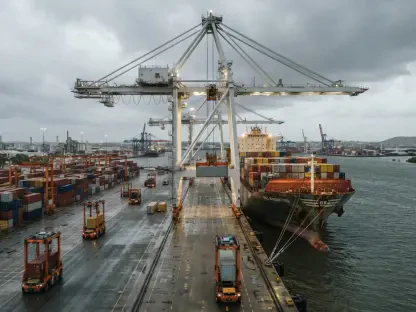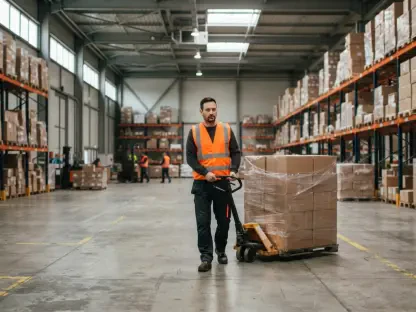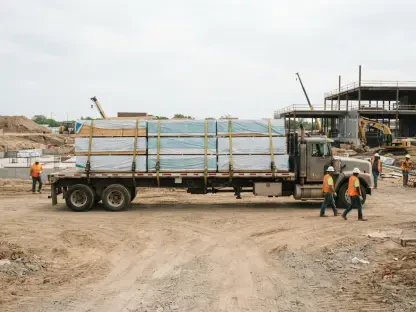

The entrance of Anthropic into the logistics market signifies a pivotal departure from the era of experimental digital tools toward a reality where cognitive intelligence serves as the foundational utility of global commerce. This structural shift allows logistics providers to move past simple automation, focusing instead on orchestration that manages both physical goods and complex digital streams simultaneously. The current industrial framework now recognizes that advanced reasoning models are no longer optional accessories but essential components for navigating the inherent volatility of international trade routes.
Integrating advanced large language models into the fabric of global trade creates a new industrial structure where digital intelligence is treated as a primary utility. By analyzing the current scope of the sector, it becomes clear that the significance of major market players rests on their ability to redefine the intersection of physical goods and digital data. This transition from traditional automation to cognitive orchestration represents a fundamental change in how international borders are managed and how supply chain resilience is calculated in a rapidly evolving economy.
The Transformation of Global Logistics through Generative Intelligence
The logistics industry is undergoing a radical transition from traditional automation to cognitive orchestration, marking an era where digital intelligence functions as a central power source. This shift is characterized by the integration of sophisticated reasoning models into every layer of the global supply chain, allowing for the automated management of complex shipping routes and inventory levels. By viewing intelligence as a utility, organizations can move away from siloed software applications toward a unified digital brain that oversees the entire flow of commerce.
Analyzing the current scope of the sector highlights how major market players are influencing the technological standards for global trade. The convergence of physical movement and digital logic ensures that every piece of freight is accompanied by a shadow of data that can be used to optimize its path in real time. This new industrial structure prioritizes the ability to interpret unstructured information, turning geopolitical events or weather patterns into actionable logistics strategies that maintain the flow of goods across international borders.
Mapping the Strategic Landscape of AI Integration
Dynamic Shifts in Supplier Ecosystems and Intelligent Infrastructure
The emergence of high-valuation AI developers is reshaping the traditional hierarchy of supply chain technology by creating new dependencies between intelligence and infrastructure. This evolution involves a convergence of semiconductor manufacturers, cloud providers, and enterprise software developers who now operate in an interdependent network. As market drivers force a shift toward more resilient operational models, the reliance on these specialized suppliers has become the primary factor in determining a company’s ability to adapt to real-time disruptions.
Evolving consumer behaviors are placing additional pressure on the infrastructure that supports global trade, requiring higher levels of transparency and speed. Traditional planning methods are being replaced by AI-driven models that can anticipate demand shifts before they manifest in order volume. This strategic shift ensures that the underlying technology is no longer just a supporting function but is instead the core driver of operational adaptability and competitive survival in a saturated market.
Growth Projections and the Industrialization of Digital Logic
Critical market data indicates that AI is becoming an intensely capital-intensive industrial asset, with massive computing commitments scheduled from 2026 to 2030. These growth projections emphasize that the physical requirements of data centers and specialized hardware will dictate the pace at which the logistics industry can adopt advanced intelligence. AI is transitioning from a peripheral experimental tool into a core industrial resource that requires significant long-term investment in energy and high-performance computing clusters.
The transition toward the industrialization of digital logic suggests that future scalability will be defined by the efficiency of turning hardware investments into operational performance. Performance indicators show that as computing capacity becomes more accessible, the focus will shift from the sheer power of the model to the cost-effectiveness of its application in the warehouse and on the road. The next phase of industrial growth will rely on the ability of organizations to secure the necessary hardware capacity to fuel their proprietary decision-making engines.
Navigating the Structural Obstacles of Advanced AI Adoption
As the industry moves toward widespread implementation, it faces significant technological and market-driven challenges that complicate the scaling of AI within fragmented global networks. The high cost of specialized hardware remains a primary barrier, often creating a divide between early adopters and those struggling with legacy systems. Furthermore, the risk of vendor lock-in poses a strategic threat to companies that must maintain the ability to swap digital providers as the market for reasoning models continues to mature.
Overcoming these hurdles requires the development of modular system architectures that can integrate diverse intelligence streams without sacrificing operational speed. The difficulty of translating AI-driven insights into measurable physical actions remains a persistent challenge for many logistics hubs. Success in this area depends on creating a seamless link between the digital reasoning of the model and the physical mechanics of the warehouse, ensuring that every insight results in a tangible improvement in efficiency.
The Regulatory Framework and Security Standards for Autonomous Trade
The move toward an AI-centric supply chain necessitates a more robust and unified regulatory landscape to govern the flow of sensitive information. Significant laws regarding data privacy and algorithmic transparency are currently shaping how logistics data is shared across international borders. These regulations ensure that the automation of procurement and fleet management remains safe and ethical, protecting proprietary data from unauthorized access while maintaining the integrity of global trade networks.
Compliance and security measures are becoming increasingly sophisticated as companies seek to protect their automated systems from cyber threats. The effect of emerging international regulations is most visible in how generative models are used for contract management and supplier selection. By establishing clear standards for autonomous trade, the industry can build a foundation of trust that allows for the continued expansion of intelligent systems into critical infrastructure and transportation management.
The Future Path of Intelligent Supply Chain Execution
Emerging Disruptors and the Shift to Execution-Based Value
The industry is headed toward a future where general-purpose intelligence becomes a commodity, shifting the competitive advantage to proprietary data and execution logic. Emerging disruptors, such as decentralized AI models and edge computing in logistics hubs, are beginning to challenge centralized cloud architectures. This trend highlights that the most significant value no longer comes from owning a large language model but from the ability to apply that model to the specific physical constraints of a local logistics network.
Innovation and global economic conditions will favor organizations that can bridge the gap between digital reasoning and the physical movement of freight. By processing data closer to the source of action, logistics providers can reduce latency and improve the accuracy of their predictive models. This shift toward execution-based value ensures that the most successful companies will be those that integrate intelligence directly into their hardware, from autonomous drones to automated sorting systems.
Strategic Evolution and Long-Term Innovation Trends
Looking ahead, the focus of supply chain AI will evolve toward autonomous decision-making and self-healing networks that require minimal human intervention. Future growth areas, such as predictive labor rebalancing and geopolitical risk mitigation, will be shaped by the continued maturation of reasoning models from 2026 to 2031. This evolution allows logistics networks to automatically adjust their capacity and routes in response to shifting global conditions, creating a level of flexibility that was previously unattainable.
The importance of interoperability will remain a central theme as the industry prepares for the next wave of technological breakthroughs. As different AI models and physical systems become more integrated, the ability to share intelligence seamlessly across the supply chain will become a critical differentiator. This forward-looking view emphasizes that the long-term success of the industry depends on the continued development of standards that allow for the fluid exchange of data and logic between all global trade participants.
Strategic Summary and the Path toward Operational Excellence
The market entrance of Anthropic served as a definitive marker for the logistics sector, indicating that the most significant value resided at the intersection of digital intelligence and physical execution. The findings suggested that while general-purpose models provided the necessary reasoning power, true differentiation occurred through the strategic integration of proprietary data. Successful organizations were those that moved beyond pilot programs to create deep, modular connections between their digital brains and their physical operations.
Strategic recommendations for future investment prioritized measurable outcomes and the ability to scale intelligence across global networks without incurring prohibitive costs. The transition toward cognitive orchestration required a shift in mindset that viewed AI not as a standalone software solution but as an industrial utility. By focusing on operational excellence and the tangible efficiency of moving goods, the industry established a new standard for how digital reasoning could solve the most complex challenges of a volatile global economy.