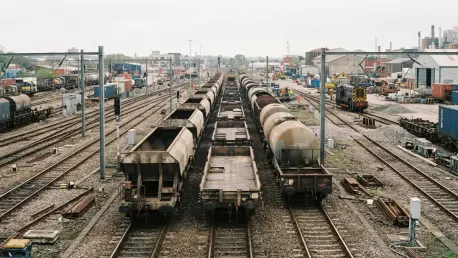

The Indian industrial landscape witnessed a profound transformation as private conglomerates increasingly seized control of their logistics chains to ensure operational resilience and efficiency. Jupiter Wagons Limited stands at the forefront of this shift, recently solidifying its position through a significant repeat contract valued at ₹128.61 crore from JSW (South) Rail Logistics Private Limited. This agreement, which involves the manufacture and delivery of five specialized BFNSM1 rakes comprising 302 wagons, underscores a growing reliance on private rolling stock for heavy industrial transport. By the mid-point of 2026, the company’s total order intake from the JSW Group alone surged to approximately ₹399 crore, signaling a robust appetite for customized logistics solutions among India’s premier industrial giants. This momentum highlights how specialized manufacturing can solve bottleneck issues that historically plagued the state-run railway infrastructure during peak demand.
Industrial Giants and Logistics Control
The transition toward private wagon ownership represents a fundamental pivot in how domestic steel and raw material majors manage their supply chains. Historically, these entities relied heavily on the general-purpose rolling stock provided by the government, which often led to unpredictable delivery schedules and logistical bottlenecks. However, the current trend favors dedicated fleets tailored to specific industrial requirements, such as the transport of heavy steel coils and bulk raw materials. Jupiter Wagons capitalized on this by offering high-performance BFNSM1 rakes that integrate seamlessly into the existing rail networks while providing superior durability for heavy-duty applications. This model allows private players to bypass the constraints of the public pool, ensuring that their production cycles are never stalled by a lack of transport capacity. Such strategic investments in logistics assets have become a hallmark of the most competitive industrial firms.
Specialized wagons like the BFNSM1 provide a technical edge that generic freight cars simply cannot match, particularly in the handling of specialized steel products. These rakes are engineered to maximize load efficiency while minimizing the risk of damage during transit, which is a critical factor for high-value industrial output. By securing these repeat orders, Jupiter Wagons demonstrates that its engineering capabilities meet the rigorous standards of sophisticated clients like JSW. The demand for these specialized units suggests that the Indian logistics landscape is maturing, with a clear focus on asset-specific performance over mere availability. As industrial output increases, the necessity for a reliable, privately managed fleet becomes even more pronounced, positioning wagon manufacturers as essential partners in the national infrastructure story. This synergy between manufacturing expertise and private capital creates a sustainable cycle of growth for the rolling stock sector.
Balancing Government and Private Portfolios
While the private sector provides high-margin growth opportunities, the company maintains a substantial footprint in government-led projects, creating a balanced and resilient order book. Jupiter Wagons holds a massive ₹1,140 crore commitment to the Ministry of Railways for the delivery of 2,583 wagons, providing a steady baseline of production activity. This dual-track strategy effectively mitigates the “single-buyer risk” that often hampers manufacturers who rely solely on state tenders. By diversifying its client base to include both the central government and private industrial leaders, the company ensures that its manufacturing facilities operate at optimal capacity regardless of shifts in public policy. The inclusion of contracts from the Central Warehousing Corporation, such as the recent ₹141.44 crore agreement, further illustrates this breadth of engagement. This multi-layered approach to market capture allows for consistent revenue visibility and helps the firm navigate the cyclical nature of the capital goods industry.
The strategic focus on high-value private contracts complements high-volume government orders, allowing for better margin management and operational flexibility. Private contracts often demand higher levels of customization and shorter delivery timelines, which permit the manufacturer to leverage its technical prowess for better pricing power. In contrast, large-scale government orders provide the necessary scale to negotiate better terms with raw material suppliers. This synergy was evident throughout 2026 as the company balanced the execution of standardized freight cars with the production of specialized rakes for steel logistics. The ability to manage these two distinct production streams simultaneously is a testament to the operational maturity of the organization. As a result, the firm is able to maintain high manufacturing standards while aggressively pursuing new market segments. This operational excellence has become a key differentiator in a competitive landscape where reliability and timely delivery are paramount.
Navigating Operational Risks and Market Volatility
Despite the impressive growth in order intake, the manufacturing sector faces persistent challenges related to the volatility of raw material costs. Steel prices, which constitute a major portion of the input costs for wagon production, remain a critical variable that can impact gross margins if not managed through rigorous procurement strategies. Jupiter Wagons must navigate these price fluctuations while fulfilling fixed-price contracts, a task that requires sophisticated hedging and efficient supply chain management. Furthermore, the concentration of orders within a few large conglomerates, such as the JSW Group, introduces a degree of customer dependency that requires careful monitoring. Any shifts in the capital expenditure plans of these major clients could potentially affect the long-term project pipeline. To address this, the company continuously explores new industry verticals and expands its geographic reach to ensure a more fragmented and stable client base. Maintaining this equilibrium is vital for sustaining investor confidence and long-term stability.
Execution risks also remain a focal point for management, especially as the volume of work surges across multiple high-value projects. Delivering hundreds of specialized wagons within tight deadlines requires not only advanced manufacturing technology but also a highly skilled workforce and seamless logistics coordination. Any delays in the supply of critical components or internal manufacturing bottlenecks could lead to penalty clauses or strained client relationships. Jupiter Wagons has invested heavily in automation and digital monitoring tools to enhance factory throughput and ensure that every unit meets the stringent quality benchmarks set by private logistics operators. These technological investments are essential for maintaining the company’s reputation for reliability, which serves as the foundation for its repeat business model. By proactively addressing these operational hurdles, the firm demonstrates its readiness to scale operations to meet the increasing demand for modern freight solutions. Internal efficiency remains the primary driver of sustainable profit growth.
Strategic Recommendations for Future Infrastructure Development
Industry stakeholders realize that the long-term success of the freight sector depends on a more integrated approach to digital logistics and sustainable manufacturing practices. Manufacturers are encouraged to adopt lightweight materials and energy-efficient designs to reduce the carbon footprint of rail transport, aligning with global climate goals. This transition requires substantial investment in research and development, particularly in the creation of smart wagons equipped with real-time tracking and health-monitoring sensors. By embedding technology directly into the rolling stock, companies offer more than just transportation assets; they provide data-driven insights that help clients optimize their supply chains. The move toward green logistics has become a prerequisite for securing international partnerships and green financing, making it a priority for future growth. Decision-makers emphasize that staying ahead of the technological curve is the only way to maintain a competitive advantage in a market that is rapidly evolving toward automation.
Future considerations center on the expansion of the private freight ecosystem through collaborative investment models and enhanced public-private partnerships. The government’s role has shifted toward providing a more conducive regulatory environment that incentivizes private ownership while maintaining high safety standards across the national grid. Industry experts suggest that expanding the scope of specialized wagons to include cold-chain logistics and hazardous material transport will unlock new revenue streams. Companies that move beyond traditional steel and coal transport to address the needs of the fast-moving consumer goods and chemical industries find themselves better positioned for the next phase of growth. The focus has transitioned from merely adding capacity to improving the intelligence and versatility of the fleet. Ultimately, the successful scaling of the sector requires a balanced focus on engineering excellence, financial discipline, and a forward-looking commitment to technological innovation. This holistic strategy ensures that the momentum gained in 2026 becomes a permanent fixture of the economy.