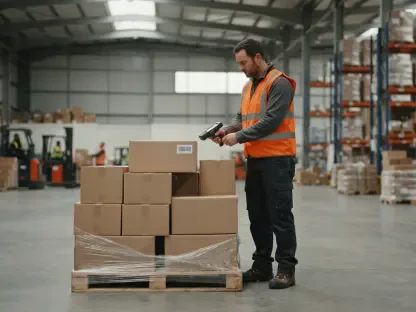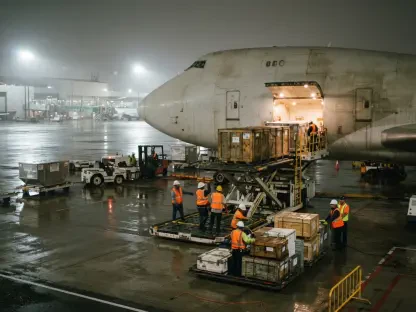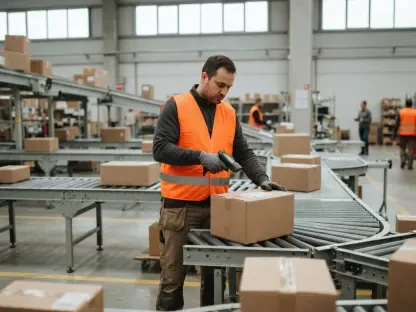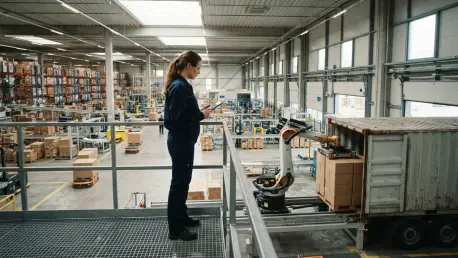

The global logistics industry faces a constant struggle with the spatial puzzle of container loading, where even a tiny percentage of wasted space translates into billions of dollars in lost revenue and excessive fuel consumption across international shipping lanes. Researchers at the Shibaura Institute of Technology have introduced a sophisticated deep reinforcement learning framework that fundamentally changes how automated systems handle the three-dimensional bin packing problem. Led by Thien Tran Van, Ngoc Tam Bui, and Hiroshi Hasegawa, this study focuses on the “online” version of the problem, where items arrive sequentially and decisions must be made without knowing the full list of cargo in advance. By optimizing space utilization in real-time, this technology promises to enhance throughput for parcel sorting centers and automated warehouses. The core innovation lies in its ability to process complex spatial constraints while anticipating future item arrivals, moving beyond the static algorithms that have historically limited the efficiency of logistical robotics.
Structural Innovations: The Dual-Stream Transformer
Traditional computational models often struggle with the sheer complexity of three-dimensional environments, frequently resulting in disorganized packing or slow processing speeds that bottleneck the entire supply chain. To overcome these hurdles, the research team developed a streamlined dual-stream Transformer backbone that effectively divides the decision-making logic into two distinct yet highly coordinated pathways. One path, designated as the Item Stream, utilizes Lookahead Cross-Attention to analyze the physical properties and arrival sequences of incoming packages. Simultaneously, the Space Stream employs Geometry Cross-Attention to maintain a precise understanding of the available volume within the container. This architectural separation allows the AI to manage spatial clutter and item dimensions with far greater granularity than previous monolithic designs. By isolating these variables, the framework can identify optimal placement coordinates without becoming overwhelmed by the compounding variables of high-volume logistics.
Beyond the backbone architecture, the framework integrates a dynamic HyperBiaffine decoder powered by an advanced Hypernetwork mechanism that allows the system to adapt its packing strategy on the fly. This component is crucial because the “online” nature of bin packing means that the environment is constantly changing, requiring a level of flexibility that rigid, rule-based systems simply cannot provide. The Hypernetwork analyzes current spatial configurations and predicts how different packing orientations will impact the remaining available space for future cargo. This allows the model to prioritize stability and density simultaneously, ensuring that items are not just packed tightly but also arranged in a way that minimizes the risk of shifting during transit. The implementation of this decoder represents a significant shift from static heuristic methods toward a more fluid, predictive approach to industrial automation. This adaptability is particularly valuable in modern fulfillment centers where item shapes are diverse.
Performance Benchmarks: Achieving Maximum Density
The efficacy of this deep reinforcement learning framework was subjected to rigorous evaluation against well-established benchmark datasets, specifically the RS, CUT-1, and CUT-2 sequences, to determine its real-world viability. A critical aspect of these tests involved measuring how the system responded to variations in buffer capacity—the number of items currently available for selection—and lookahead capacity, which represents information about items yet to arrive. In a baseline scenario where the system had a buffer of only one item and zero lookahead, the new model achieved a space utilization rate of 87.3 percent. This performance notably exceeded the state-of-the-art Packing Configuration Tree method, which reached only 86.0 percent under the same constraints. These results demonstrate that even with minimal data about the upcoming workload, the Transformer-based architecture manages space more effectively than previous industry-standard algorithms, proving that structural efficiency can compensate for limited visibility.
The researchers at the Shibaura Institute of Technology ultimately provided a blueprint for more sustainable and cost-effective logistics operations by solving some of the most persistent issues in automated packing. They proved that a specialized Transformer architecture could outperform traditional heuristic trees by effectively leveraging lookahead data and dynamic decoding strategies. This breakthrough suggested that future developments should prioritize the synthesis of predictive modeling with real-time physical constraints rather than simply increasing raw computing power. Engineers and data scientists in the logistics sector moved toward implementing these hybrid models to reduce the carbon footprint of global trade through improved density. The study validated that the clever application of deep reinforcement learning offered a robust solution for the evolving demands of a high-speed, data-driven economy. By moving the benchmark for space utilization significantly higher, the research team set a new standard that forced a reevaluation of how cargo was managed.