
Despite a projected EBITDA loss of approximately $40 million for the second half of 2026, the company continues to prioritize international expansion and technological scaling. This strategic posture is designed to cement a leading position within the autonomous logistics market, transitioning from a technology developer to a comprehensive service provider. By late 2026, the firm has demonstrated remarkable commercial traction, as evidenced by a 76 percent increase in contracted annual recurring revenue. This metric reached $167 million in November, up from $95 million earlier in the year, showcasing a rapid adoption rate among global enterprise clients. With over 40 major accounts now integrated into its ecosystem, the business is scaling its electric and autonomous operations across key European and North American corridors. This growth is underpinned by a long-term economic roadmap that anticipates annualized revenues exceeding $2 billion by 2030, driven by the mass rollout of driverless freight software and dedicated hardware.
Financial Trajectory and Market Expansion
Substantial Revenue Growth
Contracted annual recurring revenue has emerged as a primary indicator of the company’s increasing market penetration, with the total reaching $167 million by late 2026. This performance marks a sharp escalation from the figures reported in the middle of the year, driven by the acquisition of eight new major accounts and expanded volume from existing partners. Despite this revenue surge, the firm remains in a period of aggressive capital expenditure to support its infrastructure and technological development. During the third quarter of 2026, the company reported a sequential revenue increase of 27 percent on a constant currency basis, reaching $18.3 million. However, the adjusted EBITDA for the same period was negative $20.3 million, reflecting the heavy costs associated with scaling driverless technology and expanding international operational footprints. This financial strategy prioritizes long-term ecosystem dominance over immediate quarterly profits as the company builds out its presence.
Looking toward the end of 2027, the firm has established a target of $250 million in annualized run-rate revenue, a goal that appears increasingly attainable with over 65 percent of that figure already secured through existing contracts. The broader strategic objective is even more ambitious, aiming for a revenue milestone of $2 billion by 2030. Achieving this will require a transition from specialized pilot programs to the mass adoption of autonomous highway operations and the widespread licensing of proprietary fleet management software. To support this growth while maintaining fiscal responsibility, the company is shifting toward asset-backed financing models. By utilizing third-party capital to acquire vehicles, the firm preserves its internal cash reserves—which stood at $53 million in September 2026—for research and operational scaling. This capital-light approach is intended to guide the organization toward a cash flow breakeven point by 2028, coinciding with an operational fleet of up to 2,000 units.
Global Operational Deployments
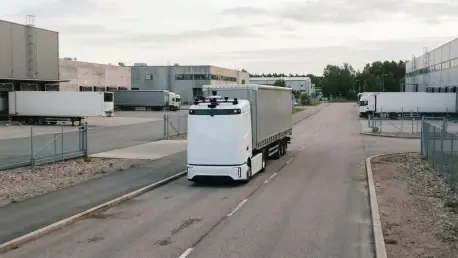
The transition from theoretical testing to practical, daily logistics has reached a critical turning point with the deployment of cabless SAE Level 4 autonomous trucks on public roads. In Germany, a major milestone was achieved through a partnership with the supermarket chain Lidl, utilizing a specific permit from the Federal Motor Transport Authority that allows for entirely driverless operations. This deployment is significant because it operates without any safety personnel on board, proving the reliability of the autonomous system in complex, real-world environments. Similar advancements are occurring in the United States, where the company has integrated autonomous electric vehicles into daily freight flows in Marysville, Ohio, through a collaboration with EASE Logistics. These projects represent a fundamental shift in the logistics industry, demonstrating that autonomous technology can handle the rigors of commercial shipping while meeting strict regulatory standards and maintaining safety.
The scale of these operations is reflected in the cumulative driverless operating hours, which increased from 5,400 to 8,500 over the course of a single quarter in 2026. This expansion is further supported by a five-year agreement with German manufacturer Lorenz Snacks, where autonomous vehicles are scheduled to move over 1,200 pallets per day at their Neunburg vorm Wald facility. Regulatory momentum has been equally impressive, as the company now holds permissions to operate without onboard safety drivers in four countries and across five U.S. states. This progress indicates that the legal and safety barriers that once hindered autonomous freight are rapidly dissolving as data-driven evidence of system safety accumulates. The consistent performance of these vehicles across diverse climates and traffic conditions has provided the necessary validation for government agencies to expand operating permits, paving the way for a broader rollout of driverless freight solutions across major international shipping lanes.
Advanced Systems and Economics
At the core of these operational successes is the Saga AI freight management platform, which functions as the central intelligence for the entire logistics network. By analyzing data from over 20 million miles of customer operations, Saga optimizes route planning, energy consumption, and preventive maintenance to maximize fleet efficiency. The company’s deep collaboration with NVIDIA has accelerated the development of the next-generation autonomous driving system, known as the Einride Driver. This system utilizes the Hyperion platform and advanced vision-language-action models to interpret and respond to complex road scenarios with high precision. The ultimate goal of this technological evolution is to enable autonomous highway operations by the first half of 2028. Since long-haul highway miles constitute the vast majority of the global logistics market, achieving this capability will allow the firm to capture a significantly larger share of the industry’s total freight volume while reducing reliance on human operators.
The integration of high-capacity hardware, such as the 500 Tesla Semi trucks planned for 2027, provided the physical capacity needed to meet growing demand. Financial analysis indicated that electric freight solutions already offered a total cost of ownership advantage of up to 10 percent compared to traditional diesel trucks. Once autonomous technology was fully integrated across the fleet, this advantage was projected to expand to nearly 30 percent, fundamentally altering the economic landscape of the shipping industry. Leadership focused on utilizing these efficiencies to drive a permanent shift toward sustainable logistics, ensuring that the transition was motivated by both environmental and financial incentives. Moving forward, the company established a framework for quarterly financial transparency to build further confidence among investors as it scaled. These strategic steps successfully positioned the firm as a dominant force in global freight, proving that the synergy between AI software and electric hardware was the key to transport.