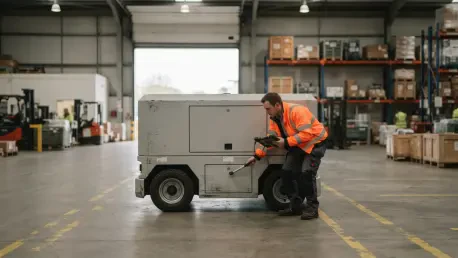

The sight of a forty-ton freight carrier navigating complex logistics loops without a physical driver in the cockpit has shifted from a futuristic spectacle to a fundamental component of today’s supply chain management systems. Current industry dynamics in 2026 reveal a significant pivot toward operationalizing these vehicles within controlled environments, particularly through third-party logistics providers. This evolution reflects a broader trend where companies no longer view self-driving technology as a distant dream but as a necessary tool for maintaining competitiveness in a high-demand market. By focusing on practical utility over experimental flashiness, the sector has created a stable bridge between software development and hardware deployment.
The logistics industry is currently navigating a systemic transformation as autonomous trucking moves into daily, practical application. This shift is characterized by a “human-led, technology-enabled” philosophy, where third-party providers and technology developers collaborate to close the gap between experimental prototypes and commercial scale. The current landscape involves a diverse ecosystem of stakeholders, ranging from established freight carriers to international technology firms like Einride, all working in concert with state-level regulatory bodies. These partnerships are essential for validating the reliability of autonomous systems in real-world scenarios.
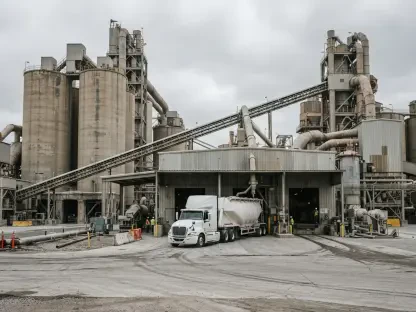
By focusing on specific use cases, such as micro-logistics loops and inter-warehouse shuttling, the industry has established a real-world laboratory for self-driving vehicles within the global supply chain. These controlled environments allow for the testing of autonomous fleets in high-frequency, repetitive cycles that would otherwise strain human labor resources. For instance, moving goods between local facilities in Marysville, Ohio, provides the necessary data to refine autonomous navigation without the risks associated with unpredictable long-haul routes. This incremental approach ensures that the technology matures in a safe and manageable fashion.
The Current Landscape of Autonomous Freight and Transportation
Current logistics operations are increasingly defined by strategic partnerships that prioritize integration over isolation. Companies like Ease Logistics have transitioned from theoretical exploration to the daily application of autonomous vehicles, serving as a blueprint for mid-sized firms. This transition is not merely a technical upgrade but a systemic shift that involves retraining human resources and coordinating with international tech partners. By serving as early adopters, these firms provide the “real-world reality” that software developers need to move beyond simulation and into heavy-duty freight movement.
The synergy between logistics providers and tech innovators has facilitated high-speed data gathering, which is critical for scaling these operations. The current focus remains on short-haul shuttling, where the complexity of dock management and loading can be monitored closely. This allows for the observation of autonomous vehicles in tandem with human-driven operations, creating a hybrid environment where both can coexist. As these trials continue, the industry is building the foundational knowledge required to transition toward more complex, multi-state transport networks.
Emergent Trends and the Economic Future of Automation
Technological Drivers and Shifting Labor Dynamics
Modern logistics is increasingly defined by the integration of cabless, fully electric autonomous trucks designed specifically for automated environments. These vehicles represent a radical departure from traditional truck design, as they lack a driver compartment entirely. This purposeful design underscores a primary trend in 2026: the strategic division of labor. By delegating mundane, repetitive cycles to autonomous fleets, companies can reallocate human drivers to complex, high-value assignments that require nuanced decision-making and human oversight.
This shift is turning initial workforce skepticism into proactive engagement. When automation is viewed as a tool for enhancing productivity rather than a mechanism for job displacement, employee buy-in increases significantly. In many facilities, the introduction of self-driving shuttles has alleviated the burden of repetitive cycles, allowing warehouse staff and drivers to focus on more rewarding tasks. Consequently, the narrative around automation has evolved into one of empowerment, where technology serves as a catalyst for professional growth within the logistics sector.
Market Projections and Financial Performance Indicators
The economic outlook for autonomous trucking suggests a transformative impact on carrier overhead and operational efficiency. Current industry data indicates that widespread adoption could reduce insurance costs by up to 40% due to improved road safety and automated precision. Moreover, the transition to optimized driving patterns and electric platforms is projected to slash fuel expenses by approximately 32%. While immediate rate reductions for shippers remain a secondary goal, the long-term financial stability provided by these efficiencies is a major driver for investment.
Leading firms are racing to scale these technologies, recognizing that the market is poised for significant growth as early adopters provide the data necessary for global expansion. The financial performance of these autonomous systems is tied to their ability to address persistent staffing shortages in the trucking industry. By handling high-turnover, short-haul routes, automation provides a resilient solution to labor volatility. As a result, the market value of autonomous freight services continues to climb, attracting capital from both traditional investors and tech-focused venture firms.
Overcoming Operational and Technological Complexities
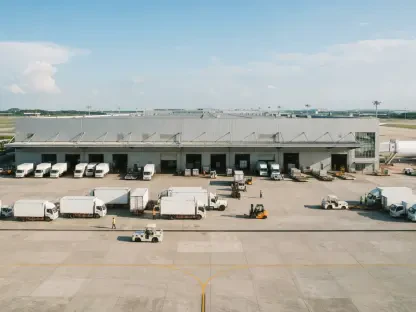
Transitioning to autonomous freight presents significant challenges, particularly in managing dock operations and loading processes in mixed-traffic environments. Interfacing autonomous systems with human-led warehouse activities requires high-speed data gathering and seamless communication between different technological platforms. To address these hurdles, companies are utilizing controlled loops to test the synergies between machines and humans. These trials allow firms to identify and resolve technical bottlenecks, such as sensor calibration in poor weather or docking precision, before attempting full-scale highway deployment.
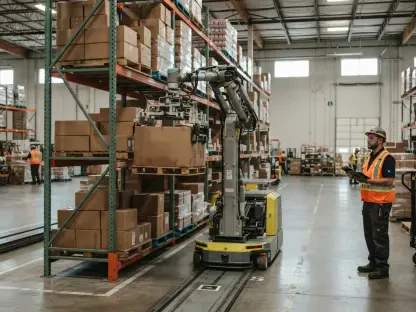
Furthermore, the complexity of loading and unloading in a facility where human-driven forklifts and autonomous trucks interact cannot be overstated. High-speed data links and sophisticated AI modeling are required to ensure that every movement is synchronized. These iterative trials in contained environments act as a safety net, allowing engineers to refine software logic without disrupting the broader supply chain. By mastering these micro-logistics challenges, the industry is preparing for the day when autonomous trucks can navigate any commercial hub with the same ease as a human operator.
The Regulatory Framework and Infrastructure Integration
The advancement of self-driving trucks is inextricably linked to proactive collaboration with government agencies through initiatives like the Truck Automation Corridor Project. These partnerships, involving departments of transportation in states like Ohio and Indiana, focus on creating the physical and legal infrastructure required for smart mobility. Regulatory bodies are currently harvesting data from real-world trials, such as platooning on public highways, to draft the standards that will govern autonomous vehicles. This collaborative approach ensures that safety protocols are built into the technology from the ground up.
Compliance and security measures are being integrated into these frameworks to align with public safety requirements and municipal policies. For example, testing electronically linked trucks on Interstate 70 has provided critical insights into how autonomous fleets interact with passenger vehicles. These efforts are scheduled to provide a comprehensive data set by the end of 2027, forming a blueprint for national regulations. This regulatory maturity is essential for moving beyond local loops and into the realm of cross-country autonomous freight transport.
Future Projections for the Global Logistics Industry
The future of freight is moving toward a sophisticated integration of human expertise and machine efficiency, fueled by rapid innovation in artificial intelligence. Emerging technologies will likely expand beyond simple shuttling to complex long-haul routes, supported by a resilient logistics network. Key growth areas include the expansion of electric autonomous fleets and the development of standardized global docking protocols. As global economic conditions demand higher efficiency, the industry will see a broader rollout of automated solutions, driven by the findings of current early-adopter programs.
Moreover, the shift toward electric platforms aligns with global sustainability goals, making autonomous trucking a double win for the industry. By reducing emissions and increasing safety, these vehicles are becoming the preferred choice for forward-thinking logistics firms. The integration of AI will also allow for more dynamic routing, enabling trucks to respond to real-time traffic and weather conditions with greater precision than ever before. This level of optimization will redefine the standards of reliability in the global movement of goods.
Synthesizing the Impact of Automation on Modern Freight
The aggregate findings from trials conducted through 2026 established that the most effective route toward full automation required cultural buy-in and regional regulatory support. Industry leaders viewed the initial integration of autonomous technology as a mechanism for long-term safety and operational resilience rather than a quick fix for labor costs. The success of the micro-logistics trials provided a blueprint that encouraged further investment in smart mobility infrastructure across North America. Stakeholders recognized that the value of these systems extended beyond simple savings, emphasizing the creation of a more scalable logistics network.
The data gathered from early adopters offered a pathway toward universal data-sharing protocols, which became an essential next step for the industry. It was determined that for autonomous trucks to operate across state lines seamlessly, a unified communication standard between different manufacturers was required. This realization led to the formation of new industry consortia dedicated to interoperability. Consequently, the focus shifted toward building a connected ecosystem where hardware from various tech firms could interact safely on the same infrastructure. These efforts solidified the role of autonomous vehicles as permanent, indispensable components of a modern and safe global supply chain.