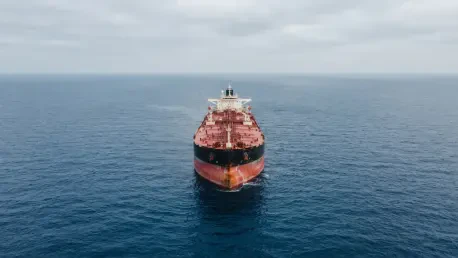

Navios Maritime Partners is expanding its dedicated VLCC program to eight vessels, bringing the total cumulative investment for this specific tanker class to roughly $967.5 million. This aggressive expansion strategy, detailed in the financial results for the third quarter of 2026, underscores a broader commitment to securing a dominant position within the global maritime landscape. By allocating more than $703.2 million toward seven newly commissioned vessels, the organization is not merely growing its numbers but fundamentally reshaping its operational profile. The decision to diversify the asset base while offloading older, less efficient units highlights a sophisticated approach to modern capital management. As the shipping industry faces pressure to balance profitability with environmental standards, this capital injection serves as a clear signal of intent to maintain a modern, technologically superior fleet that can withstand evolving global regulatory requirements.
Fleet Strategy: Asset Renewal
Tanker Assets: Modernization
The investment includes a strategic focus on energy transport, specifically through the acquisition of high-specification tankers designed for maximum operational efficiency. Beyond the expansion of the VLCC program, the firm has committed $91.2 million to the construction of two specialized MR product tankers. A single VLCC unit alone accounts for $124 million of the total expenditure, reflecting the premium placed on scale and reliability in the crude oil market. These vessels are being constructed at reputable facilities like Wuhu Shipyard, with deliveries expected to commence during the latter half of 2029. To complement these acquisitions, the company is actively divesting itself of legacy assets that no longer align with its long-term performance metrics. A prime example of this streamlining is the recent sale of a 2009-built Capesize bulk carrier for $30.8 million, a move that reduces maintenance overhead while generating immediate liquidity.
Container Capacity: Growth
Global logistics demands have also prompted a pivot toward high-capacity container solutions, as evidenced by a $488 million commitment for four 10,100 TEU container ships. These vessels, currently being developed by HJ Shipbuilding & Construction, are designed to meet the rigorous logistical needs of major international trade routes while adhering to the latest environmental directives. A distinguishing feature of these newbuilds is the inclusion of shore power capabilities, allowing them to minimize emissions while docked in sensitive ports. Furthermore, every vessel in this recent acquisition round will be equipped with advanced desulfurization systems, known as scrubbers, to ensure compliance with global sulfur cap regulations without sacrificing speed or fuel economy. This blend of capacity and foresight ensures that the fleet remains competitive, while the delivery of a 7,900 TEU ship further illustrates how the firm is translating strategy into revenue.
Financial Stability: Market Outlook
Revenue Backlog: Charter Stability
The financial foundation of the organization is reinforced by a massive revenue backlog that provides a significant buffer against market fluctuations. Recent chartering activities have successfully added $735.1 million in new contracts, pushing the total contracted revenue backlog to a staggering $5 billion. Some of these agreements are remarkably long-term, with certain charters extending as far into the future as 2037. This level of contract security is vital for managing the debt associated with such an extensive newbuilding program. Currently, the operational fleet consists of 182 vessels, including 65 bulk carriers, 54 container ships, and 63 tankers, creating a balanced portfolio that can capitalize on different sector cycles. The inclusion of multi-year charter agreements for newly delivered vessels, such as the MR2 product tanker that entered service in 2026, ensures that capital expenditures lead directly to predictable cash flow.
Technology: Compliance Measures
Ultimately, the emphasis on a young and technologically advanced fleet remained the cornerstone of the company’s competitive advantage this year. With 34 vessels under construction, including 21 tankers and 10 container ships, the firm systematically replaced older hull designs with more efficient, eco-friendly alternatives. These efforts were punctuated by the integration of desulfurization systems across the newest additions, ensuring that the organization avoided the high costs of alternative fuel transitions while still meeting air quality standards. By focusing on high-specification newbuilds that offer better fuel economy and lower emissions, the fleet established a sustainable path toward long-term profitability. The strategic disposal of older Capesize units and the immediate employment of new assets under multi-year contracts solidified the financial position, providing the necessary resilience to navigate major global shifts.