
The current maritime landscape in the Persian Gulf is undergoing a tectonic shift as regulatory pressures and geopolitical maneuvering redefine the boundaries of global energy distribution. Iran’s recent decision to blacklist a significant portion of the shuttle tanker fleet has sent ripples through international shipping lanes, forcing operators to rethink their logistical strategies. According to recent tracking data, approximately 130 out of 231 tankers involved in Gulf shuttle operations have been placed on a Non-Compliance List. This represents a staggering 56 percent of the active shuttle fleet. Interestingly, the criteria for this blacklisting appear to be based on the frequency of transit rather than the cargo’s origin or destination. Vessels that are heavily utilized for short-haul movements are much more likely to find themselves on the list. For instance, ships completing seven or more runs saw an 89 percent blacklisting rate, whereas those performing single runs remained largely untouched.
Resilience Through Complex Operational Maneuvers
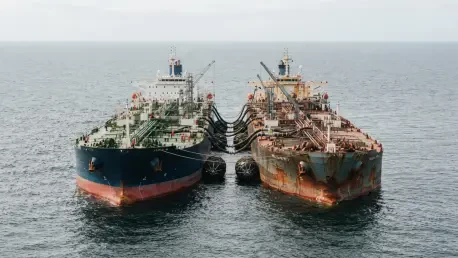
Despite the imposition of these restrictive measures, the actual volume of oil flowing through the Persian Gulf has demonstrated a surprising level of resilience, actually increasing from 5.7 million barrels per day in August to 8.5 million barrels per day by October. This growth suggests that while the blacklisting has certainly complicated the process, it has not yet choked off the primary supply lines of the global energy market. To navigate these hurdles, maritime operators have increasingly turned to sophisticated ship-to-ship transfers. Blacklisted tankers now commonly load crude at primary Gulf terminals before offloading their cargo to non-designated vessels in deeper waters, such as the Gulf of Oman. This multi-stage process effectively cleanses the logistical trail of the cargo, allowing it to proceed to final destinations in major Asian markets like China and Singapore without immediate risk of seizure or further regulatory interference.
The statistical divergence in transit patterns highlights how the blacklisting has forced a specialized division of labor within the regional tanker fleet. While the broader market saw a roughly 32 percent increase in transits through the Strait of Hormuz during the latter half of the year, vessels on the Non-Compliance List experienced a sharp decline in their weekly transit numbers. In some cases, these designated ships saw their activity drop by as much as 28 percent as they were relegated to the initial shuttle leg of the journey. This segregation of duties ensures that the riskier transit through the Strait is handled by vessels that remain off the official blacklist, thereby reducing the likelihood of high-profile interdictions. However, this reliance on a two-tier shipping system introduces significant operational overhead, as every transfer point adds potential for delays, environmental risks, and increased costs for the end consumers.
Emerging Bottlenecks in the Maritime Supply Chain
Recent developments on November 2 saw a massive expansion of the blacklist, with 114 additional vessels added to the non-compliance roster in a single regulatory sweep. This aggressive expansion is beginning to create a noticeable bottleneck effect within the regional shipping industry, as the pool of available non-designated tankers becomes increasingly smaller. As the industry is forced to compete for a shrinking number of intermediary vessels, the demand for these specific assets has driven up spot rates and altered the traditional structure of the Gulf relay system. This shortage of clean vessels means that even if production remains high, the physical ability to move that oil out of the region and into global markets is becoming tethered to the availability of a very specific subset of the global fleet. If this trend continues through 2027, the market may see a shift where the cost of logistics begins to outweigh the profit margins on the crude itself.
The industry responded to these mounting pressures by investing in more transparent tracking technologies and diversifying maritime routes to bypass the most contested waters. Stakeholders recognized that the efficiency of the global oil trade depended entirely on whether this multi-stage transfer system could handle the increased volume of blacklisted vessels without significant delays or capacity shortages. Moving forward, shipping firms prioritized the acquisition of newer, highly efficient vessels capable of performing deep-water transfers with minimal downtime. They also engaged in more robust legal vetting processes to ensure that their shuttle partners remained compliant with evolving regional standards. Ultimately, the evolution of these logistical strategies demonstrated that the market possessed a high degree of adaptability in the face of geopolitical friction. These actions established a new baseline for maritime operations, where flexibility and risk mitigation became as critical as the cargo being transported.