
Professional contractors prioritize reliability and delivery speed because their ability to earn a living is directly tied to how efficiently they manage their time and resources. For years, the massive orange warehouses of Home Depot served as a reliable fallback for a forgotten box of nails or a broken drill bit, yet they rarely functioned as the primary pipeline for major construction materials. The logistical friction of navigating crowded retail aisles and manually loading flatbed trucks created a significant barrier for large-scale professional operations. Recognizing this gap, the company initiated a multi-billion-dollar pivot designed to strip away the retail veneer and expose a sophisticated industrial backbone. This shift represents a fundamental change in identity, moving away from consumer-centric home improvement toward a robust logistics ecosystem. By decoupling professional fulfillment from the standard retail experience, the organization is positioning itself to capture the lucrative high-volume contractor market.
Network Expansion: Building Specialized Delivery Systems
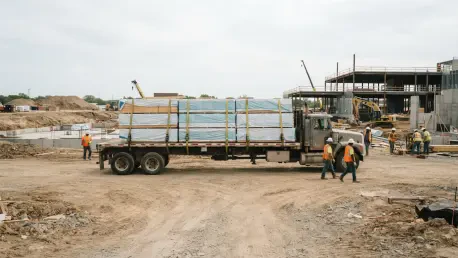
A cornerstone of this transformation involves a massive $1.2 billion investment to establish 150 new delivery centers tailored specifically for the professional trade. This expansion relies on two distinct facility types: Flatbed Distribution Centers and Direct Fulfillment Centers. Flatbed centers are strategically located to manage oversized, heavy materials such as lumber, concrete, and roofing shingles, which were previously cumbersome to handle in a retail environment. By extracting these high-volume goods from traditional stores, the company ensures that bulk orders are picked and shipped with industrial precision. Meanwhile, Direct Fulfillment Centers optimize the delivery of online orders for specific finishing items like windows or plumbing fixtures. This dual-layered approach effectively creates a high-capacity logistics network that bypasses the traditional shopping floor entirely, allowing for a more streamlined flow of goods from the manufacturer to the construction site.
The ultimate goal of this logistical overhaul is to provide same-day or next-day delivery capabilities to 90% of the population across the United States. Under specialized leadership, the strategy has moved beyond simple delivery to focus on job lot quantities—the total volume of materials required to complete an entire phase of a project. Instead of forcing a contractor to send a crew to a retail warehouse to load multiple pallets, the company now delivers these massive quantities directly to the job site. This logistical capability allows the retailer to compete with specialty wholesalers who have long dominated the trade industry. By treating the delivery of building materials as a sophisticated supply chain challenge rather than a retail inconvenience, the company has effectively removed the physical limitations of its brick-and-mortar stores. This evolution ensures that the heavy lifting is handled by a specialized fleet, freeing up contractors to focus on their skilled labor.
Asset Integration: Scaling Reach Through Digital Innovation
Beyond physical buildings and trucks, the transition into a logistics partner requires a sophisticated digital layer to manage the complexities of professional procurement. In recent years, a new order management platform was launched to address the specific needs of pro accounts, which often involve massive quantities and complex delivery schedules. One of the most significant shifts in this area is the introduction of payment-upon-delivery options, moving away from the traditional retail model where customers must pay upfront at a register. This financial evolution aligns with industry standards for contractors, significantly improving their cash flow and administrative efficiency. By allowing pros to manage their billing in a way that matches their project milestones, the company has removed a major friction point that previously drove professionals toward specialized competitors. This integrated financial system turns the retailer into a more flexible partner that understands economic realities.
The acquisition of SRS Distribution and GMS further accelerated this logistical evolution by adding 1,300 centers and a fleet of 13,000 vehicles to the existing network. This massive expansion allowed the company to move beyond standard retail boundaries and operate as a true industrial partner. The transition into a primary logistics provider was solidified as the organization consolidated the supply chain to reduce the administrative burden on professional contractors. Most projects previously required coordinating with dozens of suppliers, but the new model offered a streamlined one-stop shop that managed the heavy lifting. Contractors who utilized these integrated delivery services experienced a significant reduction in scheduling conflicts and procurement errors. Moving forward, businesses should prioritize using these consolidated logistics to minimize downtime and maximize labor efficiency. Ultimately, this strategic pivot transformed the business into an essential engine for construction, ensuring it remained indispensable.