
The persistent hum of electric motors and the rhythmic blinking of LED sensors have replaced the clatter of traditional forklifts as fulfillment centers across the globe transition toward a new era of fully autonomous operations. This transformation represents far more than a simple upgrade in mechanical tools; it is a fundamental restructuring of how the global supply chain functions in an environment of unprecedented demand. What began as localized experiments in the corners of massive distribution centers has rapidly matured into the primary engine of modern commerce, allowing businesses to keep pace with the relentless speed of digital transactions. As logistics providers grapple with the complexities of global trade, the integration of robotics has moved from being a competitive advantage to a basic requirement for survival. This shift is reshaping the physical layout of warehouses, the nature of industrial labor, and the financial strategies of the world’s largest retailers, all while driving the market toward a staggering valuation that reflects its newfound status as essential infrastructure.
Financial Trajectories: From Specialized Tools to Global Infrastructure
Current market evaluations indicate that the logistics robotics sector is on a path of exponential expansion, with projections suggesting a rise from $18 billion in 2026 to over $91 billion by 2035. This nearly fivefold increase is being propelled by a significant surge in unit shipments as robots become accessible to mid-sized enterprises rather than remaining the exclusive domain of tech giants. The financial commitment from the private sector demonstrates a high level of confidence in the long-term return on investment that these systems provide. As the cost of sensor technology and high-performance computing continues to decrease, the barrier to entry has lowered, allowing for a broader implementation across diverse industries including pharmaceuticals, automotive parts, and perishable groceries. This democratization of automation is creating a self-sustaining cycle where increased demand leads to greater production efficiencies, further driving down costs and encouraging even wider adoption across the global marketplace.
A critical shift in the perception of robotics has occurred among warehouse operators who now view these autonomous systems as vital infrastructure rather than speculative technology projects. In previous years, robots were often confined to controlled “pilot” areas where their performance was measured against traditional methods with a high degree of skepticism. Today, they are treated with the same level of permanence as heavy steel racking or complex conveyor systems, integrated directly into the architectural blueprints of new facilities. This transition toward considering robots as essential capital investments allows companies to scale their operations with a level of agility that was previously impossible. By treating a fleet of autonomous mobile robots as a flexible utility, businesses can adjust their throughput capacities in real time to handle seasonal peaks without the need for massive, permanent physical expansions. This strategic shift in capital allocation is a primary driver behind the massive valuation growth seen in the sector today.
Technological Maturity: The Rise of Autonomous Mobile Robots
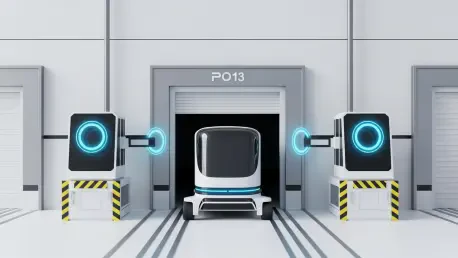
The technological landscape of the logistics sector has been redefined by the rapid evolution of autonomous mobile robots that navigate complex environments without the need for fixed tracks or magnetic tape. Unlike older generations of automated guided vehicles which were limited to rigid paths, today’s machines utilize sophisticated LiDAR and computer vision systems to perceive their surroundings in three dimensions. This level of environmental awareness allows robots to safely navigate alongside human workers and adapt to changing warehouse configurations on the fly. The ability to dynamically reroute around obstacles and optimize travel paths has significantly improved the efficiency of internal transport, reducing the time it takes for a product to move from a receiving dock to a shipping container. As these hardware platforms become more robust and capable of handling heavier payloads, they are taking over the most physically demanding and repetitive tasks, leaving higher-level coordination to human supervisors.
While the physical robots themselves represent a significant portion of the market value, the software used to orchestrate these fleets is currently the fastest-growing segment of the industry. Modern warehouse execution systems now leverage advanced algorithms to coordinate hundreds of individual units simultaneously, ensuring that no two robots interfere with each other’s progress. This orchestration goes beyond simple traffic management; it involves real-time data analysis to predict bottlenecks and redistribute workloads before delays occur. The integration of artificial intelligence into these software layers allows the system to learn from past performance, continuously refining pick paths and storage strategies to shave seconds off every transaction. As companies look for ways to gain an edge in a crowded market, the focus has shifted toward these “digital brains” that turn a collection of individual machines into a unified, intelligent workforce capable of managing the most complex logistics challenges with minimal human intervention.
Regional Dynamics: Global Competition and Market Specialization
From a geographic perspective, the Asia-Pacific region has established itself as the primary leader in the logistics robot market, supported by an expansive manufacturing base and proactive government policies. Countries like China, Japan, and South Korea have invested heavily in the development of domestic robotics firms, creating a robust ecosystem that feeds both local and international demand. In these markets, the push for automation is often driven by the need to maintain manufacturing dominance while navigating demographic shifts that affect the availability of manual labor. The rapid urbanization in these areas has also led to the creation of mega-fulfillment centers that are designed from the ground up to be robot-centric. By leveraging high-density storage and high-speed sorting robots, regional players are setting new benchmarks for operational throughput that the rest of the world is now striving to emulate through similar large-scale technological investments.
In contrast, the market dynamics in North America and Europe are primarily shaped by high labor costs and increasingly stringent workplace safety regulations. In these regions, the adoption of logistics robots is often seen as a solution to the high turnover rates and safety risks associated with traditional warehouse work. European markets, in particular, have focused on the integration of “cobots” or collaborative robots that are specifically designed to work in close proximity to humans without the need for safety cages. Meanwhile, emerging markets in the Middle East and South America are beginning to adopt these technologies at an accelerated pace as they modernize their trade infrastructure to compete globally. These regions often jump directly to the latest autonomous solutions, bypassing older technologies and creating a unique demand for modular, easily deployable robotic systems. This global patchwork of adoption strategies ensures that the market remains resilient, with growth in one region often fueling innovation and cost reductions in another.
Integration Strategies: Overcoming Hurdles in Unified Logistics
Despite the clear momentum in the industry, significant hurdles remain regarding the integration of new robotic hardware with legacy warehouse management software. Many older facilities still rely on database architectures that were never designed to communicate with a fleet of autonomous robots in real time. This “integration gap” often leads to data silos where the robots operate efficiently within their own ecosystem but remain disconnected from the broader supply chain visibility tools. To combat this, the industry is moving toward standardized communication protocols that allow for seamless data exchange between different brands of robots and various software platforms. Companies that have successfully bridged this gap are seeing much higher rates of productivity, as their entire operation—from inventory tracking to final packing—functions as a single, cohesive unit. Overcoming these technical barriers is essential for businesses that wish to fully realize the $91 billion potential of the market.
The future of the logistics sector lies in the development of fully unified ecosystems where artificial intelligence, real-time tracking, and modular robotics work together across all stages of the supply chain. This holistic approach extends beyond the four walls of the warehouse to include specialized robots for cold storage environments and autonomous units for the final stages of last-mile delivery. By creating a continuous chain of automation, companies can significantly reduce the margin for error and lower the overall cost per shipment. The industry is currently seeing a trend toward “Robotics-as-a-Service” models, which allow smaller firms to lease advanced technology rather than purchasing it outright, further accelerating the spread of these systems. As these technologies continue to converge, the focus will remain on building resilient, adaptable networks that can respond to the shifting demands of the global consumer base while maintaining a high level of operational efficiency and safety.
Strategic Evolution: Future Steps for Autonomous Logistics
The successful expansion of the robotics market was built on the industry’s ability to transition from isolated automated tasks to a fully synchronized operational philosophy. Organizations that achieved the highest returns on their investments did so by prioritizing the interoperability of their systems, ensuring that hardware from different manufacturers could communicate through a centralized command structure. The move toward modularity allowed these companies to upgrade individual components without overhauling their entire infrastructure, providing a level of future-proofing that was vital in a rapidly evolving technological climate. Early adopters also recognized that the human element remained crucial, focusing on retraining their workforces to manage and maintain the robotic fleets rather than simply replacing staff. This balanced approach fostered a more resilient corporate culture that was better prepared to handle the complexities of a tech-heavy logistics environment while maintaining high morale and safety standards.
Moving forward, the primary focus for logistics leaders shifted toward the integration of predictive analytics and machine learning to optimize the workflows that robots execute. The path to long-term success required more than just the deployment of machines; it demanded a comprehensive rethink of inventory placement and order flow to maximize the unique capabilities of autonomous systems. Businesses that treated automation as a holistic strategy rather than a series of individual upgrades were the ones that ultimately captured the greatest market share. For those still in the process of scaling their operations, the next logical steps involved investing in robust cybersecurity frameworks to protect their autonomous networks and exploring sustainable energy solutions to power their growing fleets. By viewing these robots as the foundational layer of a global, data-driven supply chain, the industry successfully turned a multibillion-dollar projection into a functional reality that redefined the speed of global commerce.