
In the rapidly evolving landscape of global trade, the ability to move goods with surgical precision has transformed from a competitive advantage into a fundamental necessity for survival. In the current operational climate, businesses are facing a perfect storm of labor shortages and an urgent need for carbon neutrality, all while maintaining the speed required for same-day deliveries. These pressures have accelerated the adoption of specialized technologies that do more than just digitize paper records; they create an interconnected ecosystem capable of self-correction. As organizations move through 2026, the focus has shifted from simple automation to deep intelligence that bridges the gap between digital planning and physical execution. By leveraging advanced robotics and decentralized security protocols, the industry is redefining what it means to be efficient. This transformation is not about replacing human labor but about augmenting capability to handle the massive data volumes generated by every shipment.
1. Autonomous Machines and Digital Replicas: Enhancing Physical Operations
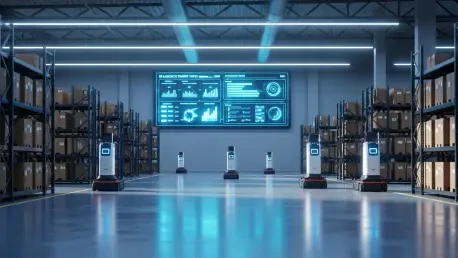
Autonomous Mobile Robots, or AMRs, have moved beyond experimental pilots to become standard infrastructure in modern distribution centers across the globe. These machines differ from their predecessors because they do not rely on fixed tracks, instead using sophisticated lidar and vision systems to navigate busy warehouse floors dynamically. While their primary function is the physical movement of goods, their true value lies in their role as mobile data hubs that continuously monitor inventory levels and traffic patterns. By gathering granular data on every movement, AMRs allow management systems to adjust pick paths and schedules in real time, effectively neutralizing the impact of unexpected surges in order volume. During times of labor scarcity, these systems take over repetitive tasks, allowing human workers to focus on complex problem-solving. This synergy between man and machine has led to a significant reduction in workplace injuries and a substantial increase in overall warehouse throughput.
Digital twins have emerged as the primary tool for simulating and optimizing complex supply chain environments by creating virtual replicas of physical facilities. These high-fidelity models mirror real-world conditions using live data feeds from IoT sensors embedded within vehicles and containers to track location and temperature. By running millions of simulations within the twin, logistics managers can predict the outcome of various disruptions, such as a port closure or a sudden spike in demand, before they actually occur. This proactive approach allows companies to develop robust contingency plans and optimize the layout of their facilities for maximum efficiency. The integration of IoT ensures that the virtual model remains perfectly synchronized with reality, providing a level of visibility that was previously impossible to achieve. Consequently, businesses can now manage their assets with a degree of precision that minimizes waste and maximizes resource utilization while ensuring operational continuity.
2. Distributed Ledgers and Autonomous Intelligence: Building Trusted Networks
The implementation of blockchain technology has addressed the persistent challenge of maintaining transparency and trust between disparate parties in global logistics. Distributed ledger systems provide a secure, unchangeable record of every transaction and movement, ensuring that all stakeholders have access to a single version of the truth. This shared digital ledger is particularly effective for managing complex shipping documentation and verifying the origin of high-value products while accelerating customs clearance. By removing the need for manual paperwork and redundant verification steps, blockchain significantly reduces the administrative burden and the potential for human error or fraud. Every participant in the network can track the lifecycle of a shipment with total confidence, knowing that the record cannot be tampered with or deleted. This level of accountability has fostered a more collaborative environment where manufacturers and carriers can operate with unprecedented synchronization and trust.
While traditional analytics software provides historical insights, the rise of agentic artificial intelligence has introduced a new era of proactive decision-making. These AI agents are designed to operate independently within defined parameters, allowing them to take immediate action on routine tasks like updating delivery schedules or rerouting inventory to avoid delays. Unlike standard automation, these systems possess the ability to communicate with one another, learning from their collective experiences to improve performance over time. This continuous learning loop means that the logistics network becomes smarter and more resilient with every shipment it processes. By offloading thousands of micro-decisions to autonomous AI, human managers are freed from the minutiae of daily operations, allowing them to focus on high-level strategic planning and relationship management. This shift is essential for handling the speed of modern commerce, ensuring that systems can adapt to changes in real time without manual input.
3. Sustainable Practices and Localized Processing: Optimizing the Future
Environmental responsibility has transitioned to a core business requirement that directly impacts the bottom line and corporate reputation in today’s market. Leading logistics providers are now using advanced artificial intelligence to design fuel-efficient routes that minimize mileage and reduce idle time for heavy-duty vehicles. Furthermore, the deployment of electric vehicle fleets for last-mile city deliveries has become standard as companies strive to lower their carbon footprints. These sustainable practices are supported by data-driven insights that help identify where energy waste is occurring, whether in the warehouse or during transit. Reducing emissions is no longer just about compliance; it is about meeting the demands of eco-conscious consumers who prioritize brands with green credentials. Investing in sustainable technology results in lower operational costs over the long term, as energy-efficient systems typically require less maintenance. This alignment of environmental and economic goals is a hallmark of the modern industry.
The success of sophisticated logistics technologies relies on processing massive amounts of data with minimal latency, leading to the adoption of edge computing and 5G. Edge computing involves processing data directly on the warehouse floor rather than sending it to a distant cloud server, which is crucial for time-sensitive operations. This localized processing ensures that autonomous robots can instantly react to obstacles while coordinating the rapid movement of goods in the shipping yard. When paired with the high-speed connectivity of 5G networks, this setup allows for perfect synchronization between thousands of sensors and automated systems. The result is a highly responsive environment where every piece of equipment and every worker is connected in real time. Yard and dock activities are now managed with high precision as the system tracks the exact position of every trailer. This connectivity ensures that the entire facility operates as a single unit, driving efficiency and reducing the time goods spend in transit.
4. Strategic Implementation: Navigating the Roadmap to Success
To successfully integrate these powerful technologies, organizations must follow a structured approach that begins with evaluating specific requirements and coordinating business goals. It is essential to identify the key decisions that drive logistics outcomes and determine exactly what data is needed to support those choices. Once strategic alignment is established, the next phase involves testing the chosen technology via focused applications in a single department. This allows the team to demonstrate value and resolve technical hurdles before committing to a company-wide rollout. Following a successful pilot, companies can then move to expand operations, creating uniform integration methods that allow solutions to grow alongside the business. The final step is an ongoing process of refining AI models and measuring their impact on overall performance. This iterative cycle ensures that the technology remains relevant and continues to deliver a strong return on investment as market conditions and customer demands evolve.
The transformation of logistics execution through these six technologies marked a significant shift in how global commerce functioned and succeeded. Organizations that recognized the potential of autonomous systems and real-time data connectivity early on secured a dominant position in the marketplace. By moving away from reactive management and embracing proactive intelligence, these firms significantly reduced operational friction and enhanced their resilience against global disruptions. The focus on sustainability proved to be a wise investment that lowered costs while simultaneously building trust with a more environmentally aware consumer base. As these systems became more integrated, the boundaries between physical labor and digital oversight blurred, creating a more efficient and safer working environment for everyone involved. Ultimately, the adoption of localized processing and high-speed networks ensured that the speed of information finally matched the speed of physical movement. This era of logistics demonstrated that successful companies were those that treated technology as a strategic asset.