
Rohit Laila has spent decades navigating the complexities of global logistics, witnessing the industry’s shift from physical security to high-tech innovation. With a career spanning supply chain management and delivery, he has a unique perspective on how organized crime is pivoting toward digital deception. His expertise provides a vital lens for understanding the modern risks that threaten the stability of global freight networks.
This discussion explores the transition of cargo theft from traditional break-ins to sophisticated digital fraud, including the rise of AI-assisted impersonation. We examine the vulnerabilities of trucks and rail systems, the significant role of insider participation, and the billions of dollars lost to strategic theft each year.
How is the rise of digital deception and AI-assisted fraud fundamentally changing the way logistics professionals must secure their shipments today?
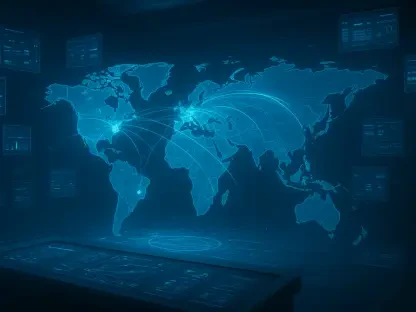
The industry is seeing a shift where the crowbar is being replaced by the keyboard, and it is catching many operators off guard. Criminals are now using phishing emails and spoofed websites to create a “digital twin” of a legitimate carrier, leading to strategic theft that now accounts for 30% of all reported incidents in the United States. It is no longer just about a broken lock; it is about a cloned motor carrier identity that looks perfectly legitimate on a dispatcher’s screen. When a fraudulent load pickup occurs, the driver walks away with the freight without a single alarm going off, leaving the shipper to realize the loss only days later. This evolution into digital fraud, which costs the industry roughly $6.6 billion a year, requires a complete overhaul of how we verify trust within our networks.
With nearly a quarter of global theft incidents involving insider participation, how should companies address the human element in securing high-demand commodities?
The fact that 22% of cargo theft incidents involve insider participation is a sobering reminder that the threat often comes from within. Whether it is an employee leaking transit schedules or a contractor providing gate codes, the human element remains a significant vulnerability. We see this most often with commodities like food, beverages, and electronics, which are the most frequently stolen items because they are so easy to sell. It creates a palpable sense of unease when you realize that someone with authorized access to your facility might be coordinating with an organized crime ring. To combat this, businesses must blend rigorous background checks with real-time monitoring of every hand that touches a shipment to ensure accountability.
While trucks remain the primary target at 70% of incidents, rail theft is also on the rise—what does this tell us about the evolving nature of cargo vulnerability?
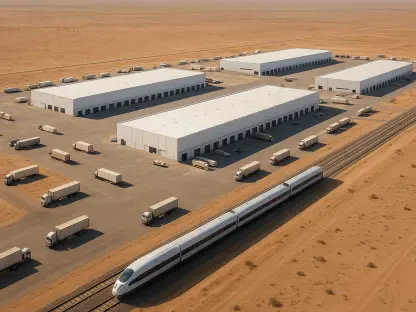
Trucks are targeted in seven out of ten incidents because the “last mile” and unsecured parking remain the easiest points of entry for thieves. However, the rise of rail theft to 10% of reported incidents in the U.S. signals that organized groups are becoming much more brazen. These are not random acts of opportunity; they are coordinated attacks on distribution centers and rail lines that require precise timing and internal information. I recall the case where $18,000 worth of World Cup equipment for England’s national soccer team was stolen in Missouri, proving that even high-profile freight is at risk in standard channels. It shows that no matter the mode of transport, maintaining visibility and detecting things like GPS spoofing is now a baseline requirement for any provider.
What is your forecast for the future of cargo security as criminal tactics become increasingly sophisticated?
Identity-first security will become the cornerstone of every logistics operation as AI-powered fraud makes fake communications nearly impossible to spot. We will see a massive push toward blockchain-verified credentials and biometrics for drivers at every loading dock to prevent fraudulent pickups. The era of relying on a simple email to confirm a shipment is over because the financial risks are simply too high with $6.6 billion in annual losses. Companies that fail to integrate these high-tech safeguards will find themselves constantly reacting to a criminal element that is always two steps ahead. Ultimately, the battle for the supply chain will be won or lost in the digital cloud, long before the wheels ever hit the pavement.