
The fundamental difference between delivering a consumer electronic device and a temperature-sensitive biologic lies in the tolerance for error, where a single degree of variance can render a life-saving shipment completely useless. While both sectors rely on the movement of goods, the divergence between high-volume consumer supply chains and high-stakes medical networks has never been more pronounced. Retail giants like Amazon have set the benchmark for rapid e-commerce fulfillment, yet the infrastructure required for such speed is often insufficient for the rigorous demands of global health standards. Specialized providers, including UPS through its Premier Healthcare service and FedEx via its Life Sciences division, have established distinct platforms to bridge this gap.
These specialized logistics networks exist to address regulatory requirements and profit margins that differ significantly from the general retail market. While retail logistics focuses on minimizing cost-per-package through massive volume, healthcare logistics prioritizes environmental precision and regulatory compliance. The investment strategies reflect this; carriers are no longer just moving boxes but are building complex, temperature-controlled ecosystems. This evolution is driven by the need to protect the integrity of pharmaceutical products while capturing the high-margin opportunities that the general e-commerce sector currently lacks.
Specialized Infrastructure and Environmental Precision
The technical divide between these two industries is best illustrated by the massive capital expenditure required to maintain environmental control. UPS recently completed a $48 million investment to establish 27 temperature-controlled cross-dock facilities in critical hubs like Chicago, Boston, and Toronto. These sites are specifically engineered to handle biologics and GLP-1 injectables, which require a strict “cold-chain” environment. In contrast, standard retail logistics relies primarily on ambient storage and transportation, which is unsuitable for the chemical stability of modern medicine.
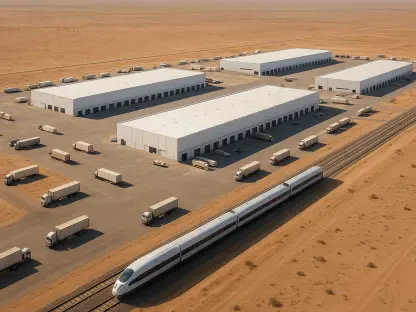
Strategic facility placement further separates these two models. Healthcare nodes are frequently located immediately adjacent to major airports to facilitate seamless air-to-ground transitions, reducing the time sensitive inventory spends in uncontrolled environments. For example, facilities in Los Angeles and Miami serve as vital links for international manufacturers who require immediate cooling upon landing. This level of technical specification is a far cry from the localized retail warehouses designed for high-speed last-mile delivery to residential neighborhoods.
Operational Functionality and Value-Added Services
Beyond simple transport, the utility of healthcare logistics nodes involves complex value-added services that retail networks rarely offer. In a medical supply chain, a facility serves as a hub for breaking down large pharmaceutical shipments or consolidating freight for global distribution. This allows a manufacturer to store bulk products on a destination continent before distributing them locally, enhancing responsiveness to regional healthcare crises. Retail logistics, however, remains focused on the rapid turnover of inventory and the “Amazon effect” of nearly instantaneous consumer gratification.
The operational pivot seen in major carriers highlights the different goals of these sectors. UPS has intentionally moved away from lower-margin Amazon volumes to focus on specialized medical services that offer greater stability. Performance metrics in the healthcare sector are measured by temperature consistency and regulatory audit trails, whereas retail success is typically defined by the number of successful deliveries per hour. This focus on precision allows for a level of service where international shipments can be monitored at a granular level throughout their entire journey.
Financial Viability and Strategic Market Positioning
The financial profiles of these sectors reveal why major logistics players are shifting their focus toward life sciences. The healthcare sector consistently delivers double-digit operating margins, a stark contrast to the shrinking margins found in general e-commerce. UPS reported that its healthcare portfolio generated over $11 billion in revenue, reflecting a steady climb from previous years. Similarly, the FedEx Life Sciences organization has reached nearly $10 billion in revenue, proving that specialized logistics serves as a vital growth engine for carriers looking to insulate themselves from volatile retail markets.
Leadership at these companies, including CEO Carol Tomé, has identified healthcare as an essential pillar of long-term profitability. While retail logistics is often subject to the whims of consumer spending habits, medical supplies represent a consistent, non-discretionary demand. This financial reality has encouraged continued investment in high-end infrastructure, even when the broader economy faces headwinds. The specialized nature of the service creates a barrier to entry that standard freight carriers cannot easily overcome without significant capital.
Technical Challenges and Industry Considerations
Standard retail networks face significant limitations when attempting to handle high-stakes pharmaceuticals. The risk of temperature excursions—where a product deviates from its required thermal range—can lead to the total loss of sensitive medical inventory. Maintaining a global cold-chain requires constant modernization and facility upgrades, which represent a substantial ongoing capital expenditure. These technical difficulties often deter general freight carriers from entering the space, as the liability associated with damaged medical goods is far higher than that of typical consumer parcels.
When choosing between a specialized life sciences provider and a general carrier, organizations must weigh the cost of the service against the value of the inventory. Sensitive biologics require the specialized oversight and real-time tracking that only dedicated healthcare platforms can provide. A transit delay in the retail world might result in a dissatisfied customer, but a similar delay in the medical world could result in a patient missing a critical treatment. This makes the choice of a logistics partner a matter of risk management rather than just a logistical preference.
Strategic Recommendations for Future Supply Chain Alignment
The comparison between precision-based healthcare models and volume-based retail structures established a clear hierarchy of needs for global shippers. Organizations that prioritized specialized cold-chain providers for high-margin medical injectables found far greater stability than those that relied on general freight networks. The infrastructure boosts at UPS and FedEx provided a necessary safety net for the pharmaceutical industry, ensuring that sensitive products maintained their efficacy from the laboratory to the patient.
Moving forward, decision-makers focused on inventory safety over simple transit speed. The integration of airport-adjacent nodes and value-added services allowed manufacturers to respond more effectively to shifting global demands. By choosing service tiers based on the specific requirements for environmental precision, companies successfully mitigated the risks associated with temperature excursions. Ultimately, the strategic separation of these two logistics models ensured that the pursuit of efficiency did not come at the expense of global health standards.