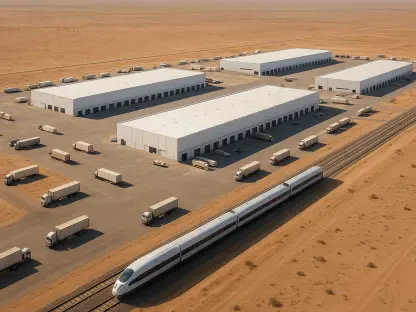

The traditional image of a static, dust-covered warehouse has been permanently replaced by a high-velocity environment where digital precision and physical speed must align perfectly to meet global consumer demands. This transformation represents more than just a logistical update; it is a fundamental reconfiguration of how goods move through the global economy. As e-commerce continues to dominate the retail landscape, the pressure on distribution centers to act as the primary engine of customer satisfaction has never been more intense. Managers and stakeholders now navigate a terrain defined by massive SKU proliferation and a relentless push for shorter delivery windows.
The Radical Shift in Global Logistics and Distribution Infrastructure
The move from traditional dry-goods storage to complex, data-reliant environments marks a significant departure from older warehousing models. Historically, these facilities functioned as stagnant reservoirs for bulk goods, but they now operate as fluid transit points that require constant digital oversight. A primary driver of this change is the transition from pallet-based shipping to individual each-picking fulfillment. This shift complicates every aspect of the supply chain, as workers must navigate facilities to select single units rather than entire pallets, introducing a level of granular detail that was previously unnecessary in bulk distribution.
The sheer scale of inventory has also ballooned, with many facilities seeing stock-keeping unit (SKU) counts jump from a manageable 20,000 to an overwhelming 600,000 units. Such massive proliferation has forced architects to reconsider the very layout of modern facilities to ensure accessibility. To manage this volume, random storage systems have become the industry standard. By utilizing algorithms to place items wherever space is available, rather than in fixed locations, warehouses can maximize their physical footprint. This strategy relies heavily on robust Warehouse Management Systems (WMS) to ensure that every item remains easily discoverable by picking teams.
Market Dynamics and the Rise of On-Demand Fulfillment
Consumer expectations for near-instant delivery have shattered the old model of centralized distribution. In the current landscape, the industry has pivoted toward a decentralized approach, favoring smaller hubs located in high-density urban areas. This move decreases the physical distance between the product and the customer, which is essential for competing in a market where speed is the primary differentiator. Moreover, this decentralization allows companies to bypass the bottlenecks often associated with massive, far-flung distribution hubs that struggle with last-mile logistics.
The Transition to Decentralized Urban Micro-Fulfillment
The trend toward decentralized fulfillment manifests most clearly in the rise of dark stores and micro-fulfillment centers. These facilities allow traditional retailers to process online orders without disrupting the shopping experience of walk-in customers. By repurposing existing retail space or small urban footprints, businesses can maintain proximity to demand. This integration of in-store picking and urban micro-hubs creates a flexible network that can adapt to sudden spikes in local consumer activity.
Technological integration within these smaller footprints has become increasingly sophisticated. High-density racking and four-way shuttles are now common sights in narrow-aisle environments, allowing facilities to grow vertically when horizontal expansion is impossible. These shuttles move pallets or bins in four directions, providing access to deep storage without the need for wide forklift paths. However, the effectiveness of this hardware is entirely dependent on the data architecture behind it, ensuring that the movement of goods remains fluid and coordinated.
Projecting Inventory Expansion and Operational Scalability
Forecasting for the coming years indicates a continued upward trajectory in SKU volume and throughput requirements. Market data suggests that the capacity to scale operations quickly is now a primary key performance indicator for successful logistics firms. As global e-commerce volumes continue to rise, warehouses must prepare for a future where high-throughput capacity is the minimum requirement for market entry. This necessitates a forward-looking design philosophy that prioritizes modularity and flexibility over static installations.
The impact of SKU velocity on warehouse design is profound. High-velocity items must be positioned to minimize travel time, while slower-moving stock is relegated to denser, less accessible areas. This dynamic slotting strategy requires a level of analytical maturity that many organizations are still striving to achieve. Investment requirements are consequently shifting toward software and analytics platforms that can predict these shifts in inventory movement before they create significant operational friction or delays.
Mitigating Operational Friction and the Paradox of Warehouse Automation
Addressing the automation paradox is perhaps the most significant challenge for modern operations managers. This paradox suggests that as systems become more automated, the remaining manual tasks become even more critical to overall efficiency. High-tech solutions must be balanced with foundational process optimization to avoid simply automating an existing mess. Sources of operational waste, such as excessive travel time and aisle congestion, often persist even in automated environments if the underlying logic of the facility is flawed.
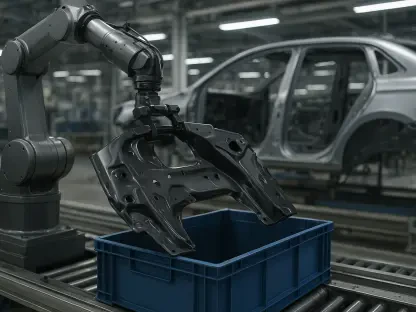
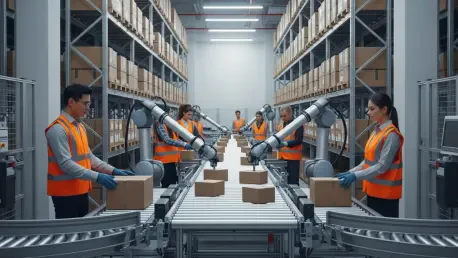
Strategies for human-centric management are essential, particularly for tasks like packing that remain resistant to full robotic automation. The tactile nature of handling diverse packaging materials and the spatial reasoning required to consolidate varied items into a single box continue to favor human workers. Resolving the tension between rising labor costs and the implementation of robotics involves a nuanced approach. In many markets, the goal is not to replace the workforce but to augment it, using collaborative robots to handle heavy lifting while humans focus on quality control.
Compliance and Security Standards in a Digital-First Environment
Navigating the regulatory landscape requires a deep understanding of workplace safety in high-density, automated environments. As machinery moves through the same spaces as human workers, safety protocols must evolve to prevent accidents. These mandatory protocols can occasionally impact throughput speed, creating a tension that managers must resolve through better training and smarter system design. Furthermore, the role of data security within the WMS has become a top priority as tracking becomes more granular and sensitive information is shared across the supply chain.
Labor practices are also under increased scrutiny, with industry standards for worker well-being becoming a significant factor in brand reputation. Facilities that prioritize ergonomic design and fair labor practices often see higher retention rates and better overall performance. The integration of digital tracking also allows for more transparent reporting, ensuring that safety standards are consistently maintained. This digital accountability is becoming a prerequisite for doing business with major global retailers who demand high ethical standards.
Foreseeing the Next Frontier of Predictive Intelligence and Robotics
The evolution of short decision cycles is transforming warehouse management into something resembling a real-time analytics sport. Performance data is no longer reviewed at the end of a shift; instead, it is utilized in the moment to adjust workflows and reassign resources. This level of predictive intelligence allows managers to see bottlenecks as they form. Repurposing existing technologies, such as security CCTV, provides a cost-effective way to gain these insights without a massive overhaul of existing equipment or infrastructure.
By applying computer vision to security feeds, organizations can analyze traffic patterns and identify persistent congestion points. This data allows for the redesign of floor plans or the adjustment of slotting strategies based on actual movement rather than theoretical models. Looking ahead, hybrid human-robotic systems are expected to further disrupt traditional workflows by creating more fluid interactions. Predictive data architecture will serve as the nervous system for these operations, providing the resilience needed to manage future global supply chain disruptions.
Strategic Recommendations for Navigating the Future of Warehousing
The transition from physical-heavy to data-intelligent warehouse operations required a fundamental shift in management perspective. Decision-makers identified that incremental improvements, when targeted correctly, leveraged existing infrastructure to provide immediate returns. It was discovered that human insight remained the most valuable asset in the logistics chain, especially when empowered by real-time data and clear priority structures. Companies that focused on flow optimization and the elimination of operational waste secured their place in a competitive market. Ultimately, the industry realized that the most effective warehouses were those that viewed technology as a partner to human strategy, rather than a total replacement for it. Success was found in the ability to remain agile amid constant technological and consumer shifts.