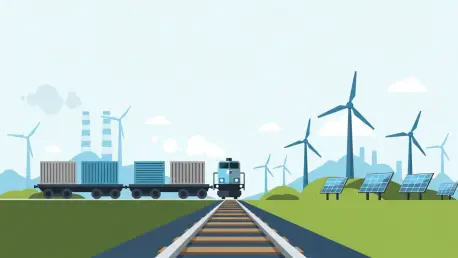

The Backbone of European Logistics: Understanding the German Rail Freight Landscape
As the central artery of continental trade, the German rail network faces an existential crisis that threatens to derail the ambitious climate targets of the entire European Union. This network serves as a vital corridor connecting major industrial zones, yet its economic foundation remains fragile. The primary custodian of this infrastructure is the state-owned entity DB InfraGO, while advocacy groups like the Netzwerk Europäischer Eisenbahnen (NEE) represent the interests of private and competitive freight operators seeking fair access.
The current system relies on a full-cost recovery framework, which mandates that track access charges cover a significant portion of infrastructure maintenance and operational expenses. However, this model creates an immense financial burden for regional and long-distance transport segments. Because existing regulations prioritize revenue generation for the state-owned manager, freight operators struggle to maintain thin margins while navigating a rigid landscape of infrastructure fees.
Analyzing Market Dynamics: The Economic Reality of Modern Rail
Shifting Paradigms in Sustainable Transport and Intermodal Competition
Modern logistics is undergoing a radical transformation as businesses prioritize green supply chains to meet strict environmental targets. This surge in demand for carbon-neutral shipping places rail at the center of the transition, but the sector cannot compete with road transport if its cost structure remains prohibitively high. Consumers and corporate partners now expect logistics providers to offer price-competitive, sustainable options that reflect the environmental benefits of rail over trucking.
Technological modernization further complicates the operational capacity of the network. While digital signaling and automated systems promise efficiency, they require massive upfront investments that the current pricing model fails to accommodate. Without a more agile and responsive pricing mechanism, rail freight risks being left behind by a more flexible and subsidized road haulage industry.
Decoding the Discrepancy Between Revenue Targets and Network Performance
Recent data reveals a staggering imbalance between financial expectations and actual usage. Revenue targets for infrastructure are projected to reach 8 billion euros by 2027, representing a 50 percent increase in costs for users over the current cycle. In contrast, network traffic has grown by only 5 percent during the same period, suggesting that operators are being asked to pay significantly more for a service that has not expanded in proportion to its cost.
This financial pressure highlights a critical gap between the high fees paid by operators and the stagnant state of infrastructure quality. Performance indicators show that while costs rise, network reliability often falters due to aging tracks and constant construction. The current pricing structure acts more as a tax on transport than a tool for infrastructure improvement, making it difficult for rail to achieve the modal shift goals set by the government.
Overcoming the Structural Obstacles of the Full-Cost Recovery Model
The full-cost model forces freight operators into a precarious position where high track access charges limit their ability to compete on price with diesel-heavy road transport. This dependency on operator fees makes the rail system volatile, as any drop in traffic volume leads to even higher per-unit costs for those who remain. Furthermore, the annual approval cycle for prices creates immense uncertainty, as operators often receive final cost decisions only weeks before they must be implemented in customer contracts.
To mitigate this planning risk, a transition away from cost-plus models is essential. Decoupling infrastructure returns from simple expense recovery would allow for a system that incentivizes genuine operational excellence and reliability. By reducing the reliance on volatile user fees, the industry can create a more predictable environment that encourages long-term business investment and strategic growth.
The Regulatory Shift Toward a Public Interest Infrastructure Framework
Transitioning to a public interest model represents a legal shift from a profit-driven return on equity to a system based on quality incentives. This approach moves the financial focus toward the public good, where the success of the rail network is measured by its punctuality and availability rather than its accounting profit. The Bundestag plays a central role in this shift by establishing multi-year price stability periods and setting federal adjustment formulas that provide the industry with the foresight it lacks.
Consolidating federal funding streams is another cornerstone of this reform. By bundling maintenance support and regionalization funds into a single, cohesive financial agreement, the government can provide DB InfraGO with the stability it needs to plan large-scale projects. This ensures compliance with European standards while tailoring the German model to support domestic goals of increasing rail’s share of the total transport market.
The Path Forward: Innovation and Long-Term Predictability in Rail Infrastructure
A transition toward marginal-cost-based pricing would lower the entry barriers for freight operators and make rail a more attractive option for shippers. Under this model, the base access fee for a standard freight train could drop significantly, reflecting the actual wear and tear on the tracks rather than a share of total overhead. Such a reduction is critical for protecting operators from sudden price hikes that could otherwise drive freight back onto the highways.
The future of financial incentives involves linking the income of the infrastructure manager directly to network reliability. By rewarding DB InfraGO for meeting specific punctuality and capacity targets, the system aligns the interests of the manager with those of the operators and their customers. A five-year price freeze would further provide the confidence needed for long-term fleet investments and cross-border rail standard alignment.
Securing the Future of Rail Freight Through Strategic Reform
The German rail sector recognized that the transition from a volatile, user-funded model to a stable, federally supported infrastructure was the only way to safeguard the industry. Strategic reforms moved away from an unpredictable annual cycle, replacing it with a framework that prioritized network quality over short-term revenue gains. By implementing a marginal-cost pricing system, the government ensured that rail remained a competitive alternative to other transport modes. This new approach successfully linked infrastructure income to operational performance, which incentivized the manager to focus on reliability. These actionable steps provided the predictability required for long-term investment, ultimately securing the role of rail as the backbone of a sustainable European logistics network.