
The traditional reliability of global trade routes has dissolved into a state of perpetual uncertainty as extreme weather patterns transform vital waterways into either impassable torrents or parched, shallow basins. This shift represents more than a temporary inconvenience; it is a fundamental restructuring of how goods move across the planet. Logistics professionals are finding that the old playbooks, which relied on seasonal predictability and steady environmental conditions, no longer apply to a world defined by water volatility.
The global supply chain currently functions as an intricate tapestry of interdependent networks, stretching from quiet inland canals to the vast corridors of transcontinental air freight and complex last-mile delivery circuits. Maritime, rail, road, and air segments no longer operate as siloed entities but exist in a state of deep interdependence where a disruption in one ripple across the entire economic landscape. Key market players are navigating a foundational shift in operational philosophy, moving away from the comfort of predictable shipping windows toward the high-stakes management of environmental instability.
The Global Logistics Ecosystem in an Era of Environmental Flux
Modern logistics networks have expanded to encompass every corner of the globe, yet this vastness has also increased their exposure to localized climate shocks. Inland waterways, once considered the most cost-effective routes for heavy commodities, are now frequently the first points of failure when atmospheric conditions shift. These segments are vital for the movement of energy, agricultural products, and raw materials, meaning that even a minor delay in a regional river system can lead to significant price spikes in global markets.
Technological influences are playing a dual role in this landscape, acting as both a catalyst for speed and a necessity for survival. While the drive for globalization has made networks more complex, advancements in data processing are helping operators understand the interconnected nature of their assets. Moving forward, the focus is shifting toward the management of environmental flux, where the ability to monitor water levels, wind speeds, and temperature thresholds in real time is becoming as critical as tracking the location of the cargo itself.
Driving Trends and Performance Metrics in a Changing Climate
Transitioning to Dynamic Flex and AI-Driven Decision Intelligence
Mode elasticity has emerged as the defining characteristic of modern freight management, effectively replacing the rigid, long-term contracts that once dominated the industry. Companies are increasingly building agility into their carrier agreements, allowing them to pivot between barge, rail, air, or ocean transport within hours. This strategic flexibility is essential for maintaining service levels when primary transport lanes are suddenly compromised by severe weather events.
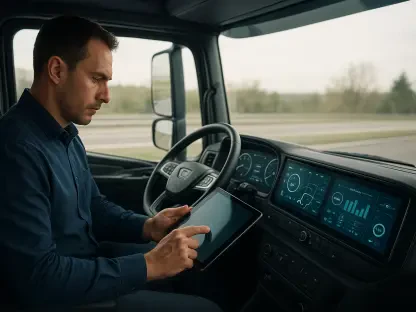
The industry is also moving beyond basic visibility tools to integrate AI decision intelligence layers that can automate execution during sudden crises. These systems do not just provide data; they offer automated action pathways that help managers navigate sourcing and fulfillment amidst chaos. This shift toward predictive visibility is particularly focused on mapping vulnerabilities within infrastructure, identifying where road networks or power grids might fail before the disruption actually occurs.
Quantitative Market Impacts and Projections for Resilient Infrastructure
The financial reality of climate volatility is reflected in startling capacity losses across major transit hubs. For example, severe heatwaves frequently restrict Rhine River barges to a mere twenty percent of their standard capacity, forcing a mass migration of cargo to already congested rail lines. Such restrictions create a ripple effect, increasing costs for shippers and reducing the overall efficiency of regional economies that depend on low-cost water transport.
Growth projections for the logistics technology sector suggest a massive surge in spending on climate-risk modeling through 2028. These investments are increasingly seen as essential because the economic cost of inaction far outweighs the initial capital required to build resilient networks. Performance indicators now regularly measure the impact of compounding risks, where multiple transport modes fail simultaneously, highlighting the urgent need for infrastructure that can withstand the new normal of volatility.
Addressing the Complexities of Compounding Climate Risks
Traditional redundancy models are failing because climate events are becoming more systemic and widespread. When a region faces a simultaneous deluge and drought, both primary and backup transit modes can be paralyzed at once, leaving cargo stranded without a viable path forward. Infrastructure paralysis often extends beyond physical roads to include labor availability, as extreme heat or flooding prevents workforces from reaching warehouses or ports, further complicating the recovery process.
Strategic solutions to these bottlenecks require a commitment to multi-modal agility and the ability to reroute shipments in real time. By leveraging live environmental data, companies can identify alternative routes that bypass impacted zones before the congestion becomes unmanageable. This approach requires a high degree of coordination between shippers, carriers, and local authorities to ensure that essential goods continue to flow even when the primary infrastructure is failing.
Regulatory Frameworks and Compliance in a High-Volatility Market
Regulatory landscapes are evolving to match this new volatility, with new standards for carbon reporting and sustainability becoming mandatory for freight operators. Government mandates are playing a larger role in fortifying critical infrastructure, ensuring that ports and railways can withstand record-breaking floods and sustained heat events. As national environmental emergencies become more frequent, security measures and compliance protocols are being tightened to maintain the flow of essential goods during crises.
International trade laws are also adapting to this reality, with more frequent use of force majeure clauses to accommodate delays that are truly beyond human control. These legal adjustments are necessary to protect companies from the financial fallout of unavoidable climate disruptions. However, compliance now involves more than just following rules; it requires proactive participation in sustainability initiatives that aim to mitigate the very climate risks that are disrupting the industry.
Mapping the Future: Innovation and Climate-First Network Design
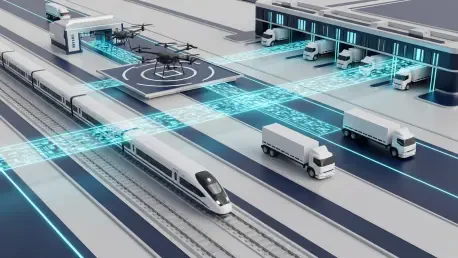
Looking forward, global network optimization will treat predictive climate data as a core constraint rather than a peripheral risk factor. Market disruptors like autonomous vessels and drones are poised to bypass traditional infrastructure chokepoints that are increasingly vulnerable to environmental damage. These technologies offer a way to maintain delivery schedules even when roads are flooded or ports are closed, providing a critical layer of resilience for the supply chains of the future.
Future growth will likely favor warehouse locations prioritized for environmental stability and water security rather than just tax incentives or labor costs. Successful companies will be those that design their networks to flex with the volatility of the natural world, turning resilience into a primary competitive advantage. As global economic conditions continue to hinge on the ability to adapt to water volatility, climate-first design will become the standard for all major logistics operations.
Conclusion: Prioritizing Agility to Secure Global Trade Continuity
The transition from passive observation to proactive, AI-enhanced execution defined the most successful logistics strategies of the recent period. It became clear that competitive advantage belonged to networks built for flexibility rather than those anchored solely to fixed assets. To maintain trade continuity, organizations shifted their focus toward integrated climate intelligence as a fundamental requirement for survival in a volatile market.
The most effective leaders moved quickly to invest in predictive analytics and multi-modal partnerships, ensuring that their supply chains remained operational regardless of external conditions. These proactive measures established a new standard for global trade, where agility served as the ultimate safeguard against environmental flux. By treating climate data as an operational asset, the industry moved closer to securing a stable future for the movement of goods across a changing planet.