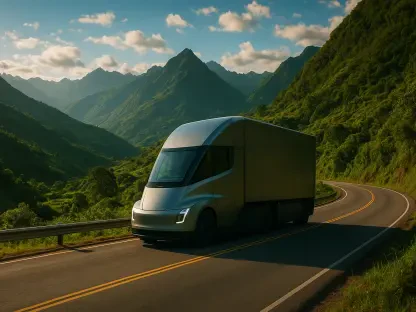

The sight of a forty-ton Class 8 truck navigating a bustling interstate without a human behind the wheel has transitioned from a science-fiction trope into a daily reality for major logistics hubs across the Sun Belt. While the technological milestones achieved on the open highway are undeniable, the industry is currently grappling with a stark bifurcation that separates the predictable world of long-haul freight from the chaotic reality of urban delivery. This divide defines the current state of automation, where the software proficiency required to maintain a steady speed on a clear highway is insufficient to solve the myriad physical and logistical hurdles found at the customer’s doorstep. As the logistics sector moves through 2026, the focus has shifted from proving that trucks can drive themselves to figuring out how they can actually deliver their cargo without a human to bridge the final gap.
The current landscape is characterized by a significant separation between middle-mile operations and the complexities of the last mile. Class 8 truck technology has reached a level of maturity that allows for high-speed, autonomous travel between major distribution centers, yet this success has not translated to the residential street. This era of automated freight is dominated by key market players like Aurora Innovation and Volvo Autonomous Solutions, who have moved beyond the experimental phase of pilot programs into the deployment of scalable commercial hardware. However, the transition from hub-to-hub transit to actual delivery remains the most significant bottleneck in the supply chain, as the “automation gap” between the highway exit and the loading dock continues to resist purely digital solutions.
The Great Logistics Divide: A New Era of Automated Freight
The bifurcation between highway automation and urban delivery is the defining characteristic of the modern logistics sector. Middle-mile operations, which typically involve long-distance transport between massive warehouses, provide the ideal environment for Level 4 autonomy. These routes are characterized by predictable lane markings, limited pedestrian interaction, and steady traffic patterns that allow autonomous systems to operate with a high degree of confidence. In contrast, the last-mile environment is a symphony of unpredictable variables, from double-parked delivery vans and playing children to the intricate maneuvers required to back into a narrow loading bay. This divide has forced companies to reconsider the dream of a singular, end-to-end autonomous solution in favor of a more modular approach.
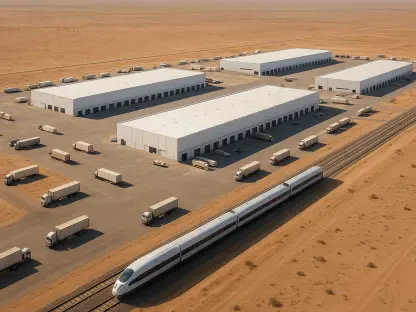
Technological advancements in Class 8 trucks have prioritized the needs of the middle mile, where the return on investment is most immediate. The sensors and software suites currently in use are optimized for detecting obstacles at long ranges and maintaining lane integrity at 65 miles per hour. While these systems are incredibly sophisticated, they are not designed for the five-mile-per-hour, high-dexterity environment of an urban distribution center. Consequently, the industry has seen the rise of specialized logistics corridors where autonomous trucks operate like high-speed trains on an invisible track, leaving the more complex “switching” and “delivery” tasks to human operators or specialized local robotics.
The transition from pilot programs to commercial hardware signifies that the industry has moved past the era of proof-of-concept. In 2026, the focus is on reliability and maintenance at scale, as companies like McLane Company integrate these autonomous units into their daily supply chain workflows. The distinction between a truck that can drive itself and a truck that can participate in a commercial logistics network is found in the supporting infrastructure. This includes remote monitoring centers and automated inspection stations that ensure the vehicle remains safe and functional throughout its journey. As these hardware platforms become more robust, the limitation to further growth is no longer the software’s ability to drive, but rather the system’s inability to interact with the physical world of the loading dock.
Market Trajectory and the Rise of High-Speed Automation
Scaling the Predictable: Middle-Mile Success Stories and Technological Trends
The success of the partnership between Aurora and McLane Company serves as a primary example of how middle-mile automation has moved from theory to practice. By logging over 280,000 miles with a 100% on-time delivery record, these companies have demonstrated that the “Aurora Driver” software is more than capable of handling the rigors of commercial freight. This success is not merely about the software but the integration of that software into purpose-built hardware like the Volvo VNL. This collaborative engineering ensures that the vehicle’s braking, steering, and electrical systems are redundant and optimized for autonomous control, reducing the likelihood of mechanical failures that could disrupt a driverless run.
The shift toward Level 4 autonomy on fixed, pre-mapped highway corridors is a direct response to the need for 24/7 freight availability. In a world of tightening margins and increasing consumer demands for instant gratification, the ability to keep a truck moving through the night without violating hours-of-service regulations is a massive competitive advantage. This trend is not just about replacing drivers; it is about expanding the capacity of the entire logistics network. As B2B expectations evolve, the predictability of a machine-driven truck becomes a valuable asset for inventory management, allowing warehouses to time their arrivals and departures with minute-by-minute precision.
Data-Driven Growth: Projections for the Global Autonomous Landscape
While the middle mile enjoys rapid scalability, the global autonomous landscape for the last mile is following a very different trajectory. Projections suggest that the last-mile market will reach $11.5$ billion by 2035, but the composition of this market is shifting away from traditional vehicles. Delivery drones are expected to capture 49% of the market share, while small ground-based robots are projected to account for 42%. Autonomous vans, which were once thought to be the future of residential delivery, are now estimated to hold only 9% of the market. This disparity highlights the fact that full-sized vehicles are often the least efficient tool for navigating the final few blocks of a delivery route.
The ROI benefits of increased vehicle utilization are most pronounced in the long-haul sector, where labor costs and fuel efficiency are the primary drivers of profitability. For a Class 8 truck, the ability to operate without a sleeper cab and with optimized aerodynamic profiles can lead to significant cost savings. However, in the last mile, the costs are dominated by the “dwell time” spent searching for parking or waiting for a human to receive a package. Because the financial incentives are so different, capital is increasingly flowing toward specialized drones and small robots that can bypass the traditional constraints of the urban street, leaving the autonomous truck to dominate the high-speed corridors between hubs.
The Loading Dock Barrier: Solving the Physics of Delivery
The “Automation Gap” is a term that has come to define the disconnect between software maturity and the physical requirements of unloading cargo. A truck that arrives autonomously at a warehouse is still a forty-ton box of goods that must be moved. Companies like Udelv have attempted to solve this with electric delivery vehicles featuring automated shelving systems, yet even these innovations face a bottleneck. They rely on the “professional receiving” staff at the destination to perform the actual manual labor of removing the items. This means that while the vehicle is autonomous, the delivery process itself is still tethered to human labor, limiting the potential for a fully “lights-out” logistics chain.
Engineering a vehicle that can safely navigate an interstate at 65 miles per hour is a vastly different challenge than creating one that can maneuver a crowded residential street at 5 miles per hour. The sensor density required for low-speed, high-precision movement is significantly higher, and the risk profile changes when the vehicle is in close proximity to pedestrians and private property. Furthermore, the sheer variety of loading dock configurations across the country makes it nearly impossible to create a universal autonomous docking system. Until there is a standardized physical interface between the truck and the warehouse, the “physics of delivery” will remain a domain where humans are far more efficient than machines.
The “Human-in-the-Loop” necessity is therefore likely to persist for the foreseeable future, especially for irregular or heavy cargo. While a robot can follow a line on a map, it cannot yet handle a shifted pallet or a broken crate with the same intuition as a seasoned dockworker. This irregular cargo handling is a major obstacle to full automation, as the cost of developing a robotic system capable of managing these edge cases is currently prohibitive. Consequently, local drivers and logistics personnel remain essential, serving as the critical link that translates the machine-driven efficiency of the highway into the human-centric reality of the final delivery point.
Navigating the Legal Path: Regulatory Frameworks and Compliance
Regulatory milestones from the Federal Motor Carrier Safety Administration have played a crucial role in enabling the current wave of autonomous deployments. One significant development was the case for removing physical warning triangles, which are typically deployed by a driver during a roadside stop. By allowing autonomous systems to use digital alerts and integrated lighting instead, regulators have cleared a path for truly driverless operations. This shift reflects a broader understanding that autonomous trucks require a different set of safety protocols than traditional vehicles, focusing on system redundancy and remote oversight rather than human-centric safety gear.
On the international stage, regulatory shifts are accelerating. Japan’s Ministry of Land, Infrastructure, Transport and Tourism has set a 2026 deadline for the deployment of Level 4 autonomous semitrailers on designated highway routes. This move is driven by a critical labor shortage and a need to maintain the flow of goods in a rapidly aging society. These global standards are helping to create a validation protocol for driverless runs, ensuring that safety is not compromised as trucks move between major logistics hubs. The implementation of these frameworks provides the legal certainty that manufacturers need to move from small-scale testing to full-rate production.
The commercial viability of autonomous trucking is also being bolstered by regulatory exemptions for cab-less truck designs. By removing the need for a driver’s seat, steering wheel, and environmental controls, manufacturers can create vehicles that are lighter, more aerodynamic, and capable of carrying more freight. These designs represent the ultimate goal of middle-mile automation, where the vehicle is treated as a pure tool of logistics rather than a workspace for a human. As safety standards continue to evolve, the impact of these exemptions will be a major factor in determining which hardware platforms dominate the market in the years following 2026.
The Hybrid Future: Innovation Beyond the Highway
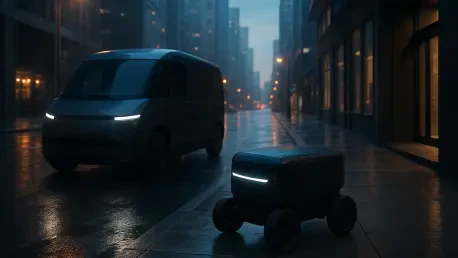
As we look toward the next phase of the logistics evolution, the emergence of specialized platforms for the residential environment is becoming increasingly clear. Rather than trying to force a large truck into a small neighborhood, the industry is moving toward a hybrid model where small-scale robotics handle the “irregular” final miles. These small robots can navigate sidewalks and narrow paths that are inaccessible to traditional vans, providing a solution to the parking and congestion problems that plague urban delivery. This specialization allows each part of the logistics chain to use the tool most appropriate for the environment, maximizing efficiency from the highway gate to the front door.
Potential market disruptors are also looking beyond the truck itself to the integration of automated distribution centers and robotic loading systems. By automating the warehouse environment, companies can create a seamless link between the storage of goods and their transport on autonomous trucks. This holistic approach aims to bridge the gap that currently exists at the loading dock, creating a “software-defined” supply chain that minimizes human intervention at every step. While this level of integration is still in its early stages, the shift in capital toward these systems indicates that the industry is beginning to view the loading dock as a solvable engineering problem rather than a permanent barrier.
The long-term outlook for the logistics industry is one of coexistence between machine-driven interstates and human-centric local logistics. While the highway will become the domain of high-speed automation, the final touchpoints of the delivery process will likely remain in human hands for quite some time. The investment focus is shifting from the vehicle itself to the connectivity between different modes of transport, ensuring that the transition from a Class 8 truck to a delivery drone or a human driver is as smooth as possible. This hybrid future acknowledges that while machines are excellent at repetition and endurance, humans still hold the advantage when it comes to the dexterity and problem-solving required for the last mile.
Final Assessment: The Enduring Value of the Human Connector
The comprehensive review of the logistics sector in 2026 established that driverless trucking matured into a specialized and highly successful middle-mile achievement. The findings demonstrated that while high-speed automation effectively conquered the predictability of the interstate, the “Last-Mile Problem” remained a defining boundary for the profitability of fully autonomous systems. This reality forced a recalibration of expectations, as stakeholders recognized that the software maturity of the era could not yet replace the physical dexterity required at the loading dock or the residential doorstep.
The industry moved toward a consensus that prioritized hybrid models, which leveraged the strengths of machine efficiency for long-haul routes while maintaining human involvement for complex final-mile tasks. Strategic recommendations for stakeholders emphasized the need to invest in the interfaces between autonomous highways and local distribution networks. It was concluded that the most resilient supply chains were those that integrated high-tech automation with the irreplaceable problem-solving skills of human drivers and dockworkers. Ultimately, the logistics chain was reaffirmed as a business that, at its most critical and final touchpoints, still relied on the human connector to ensure successful delivery.