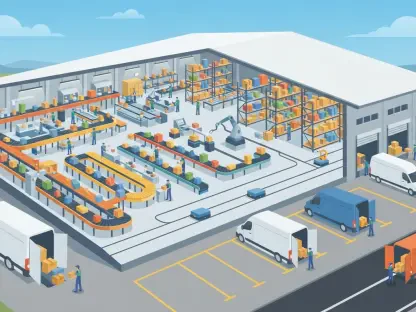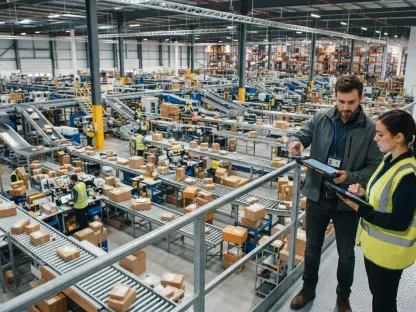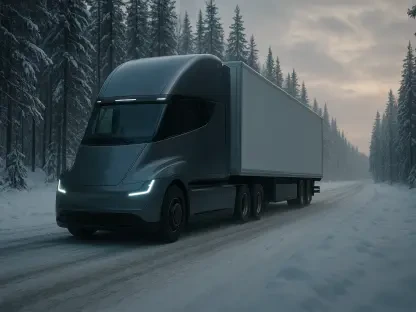

The seamless efficiency of modern logistics no longer rests on the stamina of human workers but on the sophisticated reasoning of silicon and steel. As supply chains face a staggering 90% talent acquisition gap, the pivot toward automated infrastructure has transformed from a futuristic luxury into an immediate industrial requirement. This shift represents the dawn of Physical AI, where machines are no longer tethered to repetitive tracks but possess the spatial awareness to navigate the chaotic reality of a high-volume shipping dock.
Introduction to Modern Warehouse Robotics
Global logistics hubs have undergone a metamorphosis, moving away from the rigid, pre-programmed systems toward fluid, intelligent robotics. Unlike earlier iterations that required perfectly uniform environments, today’s systems utilize spatial reasoning to interact with unpredictable objects. This evolution is largely fueled by a labor market where nine out of ten organizations cannot find enough staff to maintain operations, pushing robotics out of the specialized automotive sector and into the general warehouse floor.
The transition from experimental prototypes to large-scale industrial deployment marks a significant turning point for the industry. While heavy manufacturing once dominated the robotic market, the current demand is driven by the need for agility in e-commerce fulfillment. Organizations are no longer looking for machines that simply move; they are investing in Physical AI capable of handling non-uniform tasks, effectively bridging the gap between digital data and physical execution.
Core Components and Systems of Autonomous Logistics
Advanced Robotic Picking and Sorting Arms
Amazon’s deployment of Sparrow and Cardinal represents a milestone in high-speed item selection, where computer vision and deep learning allow for the handling of millions of individual items. These systems do not merely move objects; they analyze shape, weight, and fragility in real time. The introduction of Vulcan technology further elevates these systems by integrating a sense of touch, allowing robots to adjust their grip pressure dynamically to avoid damaging goods.
This haptic feedback is critical for reducing breakage and ensuring that delicate items are sorted with a level of precision that previously required human oversight. By evaluating performance metrics related to sorting accuracy, it is clear that these robotic arms significantly reduce human error in high-volume facilities. The ability to distinguish between a plastic-wrapped garment and a glass jar allows these machines to operate at speeds that manual labor cannot safely match.
Autonomous Loading and Consolidation Units
The Mech trailer-loading system, a collaborative effort between FedEx and Dexterity, addresses one of the final frontiers of logistics: the unstructured environment of a trailer. By using physical AI to calculate the best way to stack varied boxes, this technology bridges the gap between the static conveyor belt and the dynamic shipping dock. These purpose-specific units are designed for arduous tasks like heavy lifting and tote consolidation, effectively removing the physical strain that traditionally led to high turnover rates.
These systems are unique because they navigate complex environments that lack standardized dimensions. Unlike traditional stationary arms, autonomous loading units must account for shifting floor levels and tight spaces. By automating the consolidation of freight, facilities can maximize their shipping density, ensuring that every cubic inch of a trailer is utilized without the fatigue-related errors common in manual loading.
Emerging Trends in Collaborative Automation
There is a visible shift in the robotic landscape as collaborative robot orders surged by over 55% during 2026. This trend highlights a move toward human-robot synergy, where machines handle the heavy lifting while humans manage the logistical flow. Interestingly, the demand for general-purpose robots is being eclipsed by purpose-specific engineering, where a single machine is optimized to solve one highly complex problem, such as un-palletizing “ugly” freight.
The move toward cobots signals a more nuanced approach to automation that prioritizes safety and flexibility. Instead of fully replacing human staff, companies are deploying robots to work in shared spaces, taking over the most repetitive 10% of tasks that cause the most physical wear. This strategy has allowed the market for general warehouse robotics to outpace traditional automotive robotics for the first time, reflecting a broader industrial pivot toward logistics.
Real-World Applications and Industrial Impact
Case Studies: FedEx and Amazon Implementation
The transition from pilot programs to full-scale production is most evident in locations like FedEx’s Maryland hub, which now operates as a primary template for robotic integration. These investments are not merely about replacing labor but about radically compressing delivery windows. Data shows that Amazon’s reliance on its robotic fleet has directly enabled the company to deliver 40% of its total orders within 24 hours, a feat that would be impossible with manual sorting alone.
The Maryland facility demonstrates how automation can scale without disrupting existing workflows. By integrating robotic hubs into the heart of the distribution network, FedEx has managed to maintain consistent throughput even during peak seasonal surges. This implementation proves that the technology has moved beyond the “proof of concept” phase and is now a reliable component of global infrastructure.
Sector-Wide Deployment: DHL, UPS, and Beyond
Carriers like DHL and UPS are following suit, leveraging automation to stabilize their operations against a volatile workforce. By targeting the most dangerous and repetitive roles for automation, these firms have reported a decrease in workplace injuries and a stabilization of throughput. This collective scaling has propelled the global automation market to a valuation of $27.4 billion in 2026, marking it as the primary driver of logistics spending.
Sector-wide deployment is also addressing the “hard-to-fill” roles that have long been a bottleneck for growth. As major carriers automate their sorting and consolidation processes, the entire global supply chain becomes more resilient to local labor shortages. This widespread adoption ensures that the benefits of high-speed sorting and autonomous loading are felt across the entire logistics ecosystem.
Current Challenges and Implementation Barriers
Despite these advancements, handling “ugly” freight—items with irregular dimensions or non-standard packaging—remains a significant technical hurdle. Most robotic systems thrive on predictability, but the reality of global shipping involves battered boxes and un-bagged items that defy standard computer vision models. Moreover, the steep initial capital requirements create a barrier for smaller players who cannot afford the multi-million dollar entry price of advanced systems.
Integration also poses a major challenge, as merging new AI software with legacy warehouse management systems can take months of troubleshooting. Furthermore, the safety implications of high-speed autonomous units operating in close proximity to human staff necessitate rigorous regulatory compliance. Organizations must balance the drive for speed with the necessity of fail-safe sensors that prevent accidents in shared workspaces.
Future Outlook and Market Evolution
Looking ahead, the market is projected to reach $59.5 billion by 2030 as technology continues to mature and costs stabilize. Breakthroughs in sensory AI will likely allow robots to manage even more delicate materials, potentially moving into the pharmaceutical and food sectors with greater ease. As these machines become more ubiquitous, the role of the human worker will continue to pivot from manual labor toward system maintenance and high-level logistical oversight.
The evolution of haptic feedback and real-time spatial mapping will eventually eliminate the current limitations regarding irregular freight. As robots become more “aware” of their surroundings, the need for standardized packaging may decrease, allowing for more flexible shipping methods. This transition will likely result in a more technically skilled workforce, where human intelligence is reserved for solving complex logistical puzzles rather than moving boxes.
Summary of Findings and Assessment
The review of current logistics trends confirmed that automation was no longer an elective upgrade but a fundamental requirement for industrial survival. It was observed that organizations successfully integrated robotic systems to offset the chronic talent shortages that had previously crippled supply chain reliability. The transition toward purpose-specific machines proved more effective than general-purpose robotics, allowing for a focused reduction in workplace injuries and operational bottlenecks.
Ultimately, this technological maturation provided a necessary buffer against economic fluctuations and labor volatility. The assessment indicated that while technical hurdles remained, the speed and accuracy gains were too significant to ignore. Stakeholders who prioritized the deployment of Physical AI were positioned to lead the market, while those who delayed implementation struggled to keep pace with rising consumer demands for near-instant delivery.