
The geopolitical landscape of the Arabian Peninsula is currently experiencing a profound structural realignment as regional powers pivot toward land-based logistics to mitigate the perennial risks associated with the Strait of Hormuz. For decades, the global energy market and regional trade relied almost exclusively on this narrow waterway, but recent disruptions have transformed maritime security from a logistical detail into a paramount national security priority. This shift is characterized by a move toward multimodal logistics, blending deep-water port access with expansive land corridors that bypass traditional maritime chokepoints.
Saudi Arabia and Oman emerged as the primary architects of this new infrastructure-led resilience. By redefining cross-border trade through heavy investments in road and rail, these nations are not merely building paths but are constructing a defensive economic architecture. This evolution is supported by recent regulatory shifts and inter-governmental agreements that simplify the once-cumbersome process of moving goods across desert borders, signaling a departure from isolated national projects toward a unified regional network.
The Strategic Shift in Middle Eastern Logistics and Maritime Dependency
The historical reliance on the Strait of Hormuz created a singular point of failure for the region’s economic security. This bottleneck, through which a significant portion of the world’s oil and liquefied natural gas flows, has long been susceptible to geopolitical tensions and maritime threats. In response, regional players have initiated a strategic pivot toward economic resilience, recognizing that true sovereignty requires the ability to move goods independently of vulnerable naval passages.
Mapping these primary maritime chokepoints revealed a clear need for alternative routes that could handle massive freight volumes. Consequently, multimodal logistics emerged as a vital pillar of national security. Major regional actors, specifically Saudi Arabia and Oman, are leading this charge by investing billions in infrastructure that links the interior of the peninsula directly to ports on the Arabian Sea, thereby neutralizing the strategic leverage of the strait.
Regulatory shifts and bilateral agreements have been essential in facilitating this smoother land-based transit. New frameworks have significantly reduced the administrative friction that previously hindered cross-border movement. By standardizing transit protocols, governments are ensuring that the physical infrastructure is backed by a legal environment that encourages private-sector participation and long-term logistical planning.
Emerging Trade Corridors and Economic Projections
Pivotal Trends Reshaping Arabian Peninsula Connectivity
The inauguration of the Rub’ al Khali road link represents a watershed moment for direct Saudi-Oman trade efficiency. By cutting through the heart of the Empty Quarter, this artery removes the necessity for freight to transit through neighboring states, drastically lowering both time and operational costs. This direct link serves as the physical backbone for a new generation of trade agreements that prioritize speed and directness over traditional, circuitous maritime routes.
Logistics risk has transitioned from a temporary concern into a permanent structural planning assumption. Businesses and state agencies no longer view overland routes as emergency backups; instead, they are integrating them into the core of their supply chain strategies. This change is further catalyzed by technological integration in border management and high-profile private-sector initiatives, such as the Arkan-SPARK partnership, which aim to commercialize these new corridors.
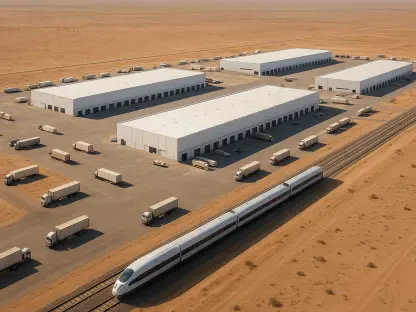
Furthermore, there is a growing interest in “Middle Corridor” rail projects that seek to link Turkey to the heart of the Gulf. These ambitious networks aim to connect the Mediterranean and the Arabian Peninsula, providing a trans-continental alternative to sea lanes. As these rail links mature, they offer the promise of a integrated logistics network that bridges Europe and Asia through a robust, land-based Middle Eastern hub.
Market Data and Long-Term Growth Forecasts for Land Transit
Data projections for freight volumes moving via direct inland routes suggest a significant uptick from 2026 through 2030. As these corridors become more operational, the industry expects a steady migration of cargo from sea to land, particularly for high-value goods that benefit from faster transit times. Comparative analyses show that while maritime shipping remains dominant for bulk commodities, overland routes are becoming increasingly competitive for time-sensitive logistics.
Investment trends are currently favoring Omani deep-water ports located outside the Persian Gulf, such as Duqm and Salalah. These facilities are being expanded to serve as the primary arrival points for global shipping, which can then be dispersed inland via the new road and rail networks. This strategy effectively moves the logistical center of gravity away from the interior of the Gulf and toward the open ocean.
As these land-based redundancies mature, the market anticipates a shift in insurance premiums and shipping costs. Reducing the necessity of passing through the Strait of Hormuz may lead to more stable insurance rates for regional cargo. This financial predictability is a crucial driver for long-term investment, as it lowers the overall risk profile of trade within the Arabian Peninsula and its neighboring markets.
Operational Hurdles and Physical Infrastructure Constraints
Despite the strategic momentum, the development of these networks faces substantial capital expenditure and lengthy construction timelines. Building trans-continental rail and high-capacity highways requires immense financial commitments and sustained political will. The sheer scale of these projects means that while the benefits are significant, they are realized over years rather than months, requiring stakeholders to maintain a long-term perspective.
Geographical and climatic challenges also pose significant barriers to infrastructure maintenance and operation. The extreme heat and shifting sands of the Empty Quarter and northern deserts demand specialized engineering solutions and frequent maintenance. Navigating these harsh environments increases the operational cost of land transit, which must be carefully balanced against the security benefits of bypassing maritime chokepoints.
Economic competition remains a factor, as maritime shipping continues to enjoy superior economies of scale. Moving vast quantities of oil or dry bulk via sea is inherently cheaper on a per-unit basis than road or rail transport. To be truly competitive, overland routes must prove their value through reliability, speed, and safety, especially when dealing with the challenge of harmonizing diverse customs protocols across multiple national borders.
The Regulatory Framework and Security Standards for Trans-Gulf Trade
Standardized freight operations are being bolstered by a series of bilateral Memorandums of Understanding and regional logistics agreements. these documents provide the necessary legal certainty for companies to invest in the specialized equipment needed for overland transit. By aligning national regulations, Gulf states are creating a more predictable environment for the movement of diverse cargo types across the region.
Compliance with international safety and security protocols is paramount, especially for hazardous or high-value overland shipments. Modern tracking technologies and rigorous inspection standards are being implemented to ensure that land routes meet the same security benchmarks as established maritime lanes. This focus on safety is essential for gaining the trust of global shipping lines and international insurers.
The evolution of customs unions and digital “single-window” systems has been instrumental in reducing friction at border crossings. These innovations allow for the electronic submission and processing of transit documents, significantly cutting down on wait times. Moreover, strengthening the security of the physical infrastructure against regional geopolitical volatility remains a priority to ensure that these land corridors remain a dependable alternative in times of crisis.
The Future Landscape of Global Energy and Goods Transit
Bypass pipelines represent a critical opportunity to decouple hydrocarbon exports from maritime chokepoints. By moving oil and gas directly to terminals on the Arabian Sea, regional producers can guarantee supply to global markets even if the Strait of Hormuz is obstructed. These projects, combined with new land corridors, are fundamentally changing the energy security map of the Middle East.
Innovation in autonomous trucking and smart logistics hubs is poised to make land routes even more competitive. As these technologies are integrated into the regional network, they promise to lower labor costs and improve the efficiency of long-haul desert transit. Smart hubs, located at strategic intersections of rail and road, will act as the brains of this new network, optimizing cargo flows in real-time.
Shifting global alliances could either accelerate or hinder the development of these trade corridors. Cooperation between regional powers and global trade partners is necessary to ensure the long-term viability of these routes. Oman, in particular, is transforming into a strategic global gateway, bridging the gap between the Arabian Sea and the Mediterranean, and positioning itself as a central node in the global trade of the future.
Final Assessment of the Regional Logistics Transformation
The evaluation of overland routes established that these corridors functioned as a critical buffer against the inherent instability of the Strait of Hormuz. Stakeholders who prioritized the integration of land-based redundancy into their supply chains positioned themselves to navigate a more fragmented geopolitical environment. Diversified transit architecture ultimately served as the foundation for long-term economic stability, proving that physical connectivity was the most effective hedge against maritime volatility.
Investors and logistical planners moved toward a multimodal model that balanced the cost-efficiency of sea lanes with the security of land routes. The transition required a departure from traditional shipping silos and a move toward integrated, technology-driven freight management. Future efforts should focus on the continued harmonization of regional customs and the deployment of autonomous transit solutions to further reduce the overhead of overland trade.
The transformation of the regional logistics landscape created a new paradigm where the Strait of Hormuz was no longer the sole arbiter of trade flow. By investing in the permanence of land-based corridors, the Gulf states successfully diluted the impact of maritime chokepoints. This strategic evolution ensured that the region remained a global commerce hub, capable of maintaining trade continuity regardless of the geopolitical tensions within its surrounding waters.