
International buyers frequently prioritize supply chain reliability over price alone, making the consistent performance of the U.S. inland waterway system a key factor in grain purchasing decisions. This understanding forms the backbone of a new visual initiative launched by U.S. Wheat Associates, which utilizes modern storytelling to demystify the complex path agricultural commodities take from the American heartland to distant shores. Funded through the USDA’s Regional Agricultural Promotion Program, the project specifically examines the export of Soft Red Winter wheat, a staple for global baking industries. By documenting the precise coordination required between independent farmers and commercial transporters, the initiative provides international stakeholders with a clear window into the logistical backbone of American production. This transparency remains vital in a global market where buyers need more than just raw data; they require the absolute assurance of a resilient network that operates 24 hours a day to meet demand.
The Human Element and Collaborative Ecosystem
The initiative clarifies that the supply chain is not merely a sequence of mechanical events but rather a living network composed of dedicated professionals and multi-generational families. This collaborative ecosystem begins at the farm gate, where harvest success is evaluated not just by the volume of grain collected but by how efficiently that grain can enter the national infrastructure. Farmers like John Howell, representing a sixth generation of Illinois agriculture, illustrate how the individual producer serves as the initial link in a much larger chain. This historical continuity represents a vast repository of localized knowledge that translates into higher crop quality and resilient farming practices. When a buyer chooses U.S. wheat, they are essentially tapping into this generational expertise. The involvement of younger family members in modern operations suggests that the industry is well-prepared for current challenges, ensuring that the techniques developed over the last century are refined using the latest agricultural technologies and data-driven management.
Beyond the local elevator, the synchronization of the network becomes increasingly complex as it incorporates regional transport managers and international trade teams. The project emphasizes that every participant in this journey understands their specific role in maintaining the flow of goods to the Gulf of Mexico. For the international miller or baker, this means that the wheat they purchase has been handled by experts who preserve the integrity of the shipment. This transparency is further enhanced by hosting foreign delegations, where millers from overseas visit American farms and facilities. These interactions are vital for fostering a mutual understanding of the technical requirements of different markets and the operational challenges faced by farmers. When a miller stands in a wheat field, they gain firsthand insight into variables like protein and moisture. Conversely, the American farmer learns exactly how their wheat is being used, whether for pastry flours or industrial baking. This exchange of information creates a feedback loop that allows the U.S. supply chain to adapt to changing consumer preferences and technical standards.
Infrastructure Assets and Market Reliability
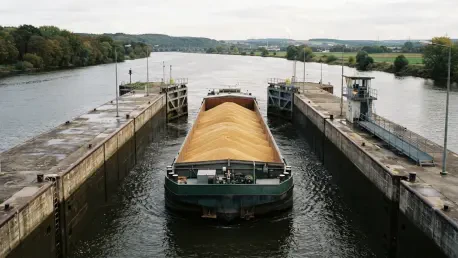
A significant portion of the analysis focuses on the Mississippi and Ohio river systems, which serve as the primary arteries for transporting Soft Red Winter wheat to global markets. These waterways represent a unique geographic and technological advantage for the United States, providing a high-capacity pipeline that connects the fertile soils of the interior with the deep-water ports of the Gulf Coast. The efficiency of barge transportation is unmatched in its ability to move massive quantities of grain with a relatively low carbon footprint and at a cost that keeps American wheat competitive on the world stage. Unlike rail or truck transport, which can face different types of congestion or capacity limits, the river system allows for the bulk movement of thousands of tons of grain in a single tow. This infrastructure is the silent engine of the American export economy, allowing for a steady stream of high-quality products to reach customers in regions ranging from Latin America to Southeast Asia. This reliability remains a key differentiator for the U.S. in the global market.
Maintaining this strategic infrastructure requires constant investment and technological updates to ensure that the lock and dam systems remain operational and efficient. The video project highlights how these mechanical components are essential for navigating the changing elevations of the river system, allowing barges to move seamlessly through various states. For international buyers, the health of these waterways is directly linked to their own food security, as any delay in the inland system could have ripple effects on their local milling operations. The United States has prioritized the reliability of this network, positioning it as a more dependable alternative to the logistical hurdles found in other grain-exporting nations. By focusing on the Mississippi and Ohio rivers, the project underscores why the U.S. can offer a consistent supply of wheat specifically suited for products like crackers and cookies. The ability to forecast delivery times with high precision remains one of the most persuasive arguments for sourcing grain from the American heartland.
Future Considerations for Global Market Stability
To maintain this competitive edge, the agricultural sector prioritized the modernization of digital tracking and sustainable water management practices. These steps addressed the growing demand for traceability in the global food supply, allowing international buyers to verify the environmental and social impact of their purchases in real time. Stakeholders recognized that physical reliability must be paired with data transparency to satisfy the requirements of modern supply chain auditing. As a result, the industry transitioned toward integrated platforms that connected river logistics with port operations, reducing transit times and improving delivery windows. This digital shift ensured that the U.S. remained at the forefront of logistical innovation, providing a level of granular detail that was previously unavailable to global millers. The integration of satellite monitoring and blockchain-based documentation provided a robust defense against logistical bottlenecks, ensuring that every shipment was tracked with precision from the inland terminal to the export vessel.
The success of this video project provided a template for future outreach, showing that clear communication of strength is as vital as the infrastructure itself. Moving forward, the focus shifted toward ensuring that the next generation of farmers and logisticians possessed the technical skills to manage an automated export network. Educational programs were established to bridge the gap between traditional agricultural expertise and modern data science, securing the heartland’s role as a primary global provider. Furthermore, expanding these storytelling initiatives to include other wheat classes and transport methods allowed for a more comprehensive market presence. Industry leaders recommended that similar transparency models be adopted across other commodity sectors to bolster the reputation of American exports. By investing in both the physical assets of the river system and the human capital of the farming community, the industry successfully positioned itself for long-term growth and stability in an increasingly volatile global market.