
Data collected from over 50 specific logistics tasks at Apptronik’s training facility provide the technical foundation for Apollo’s autonomous picking operations. This collaboration between GXO Logistics and Apptronik represents a potential watershed moment for the integration of humanoid robotics within the global supply chain. At the heart of this initiative is a recently signed letter of intent that outlines a conditional path for GXO to deploy as many as 1,000 Apollo humanoid robots across its extensive network of facilities. While the figure of 1,000 robots highlights the ambitious scale of the project, the agreement is carefully structured around performance benchmarks rather than being a finalized purchase order. This initiative explores the technical and economic facets of the agreement, detailing how both companies plan to move from experimental pilots to a full-scale commercial rollout by late 2027. By leveraging GXO’s massive footprint, the partnership aims to determine if these machines can meet strict targets.
Technical Heritage: Humanoid Robotics in Practice
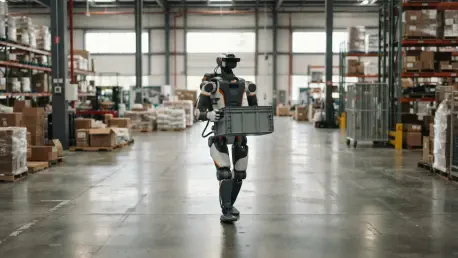
The engineering behind the Apollo robot represents a sophisticated evolution of technology originally developed at the Human Centered Robotics Lab at the University of Texas at Austin. With a heritage that includes NASA’s Valkyrie and 15 previous robotic iterations, Apptronik has focused on creating a platform capable of functioning as a dedicated coworker within existing warehouse environments. Unlike traditional automation, which often necessitates a complete and costly overhaul of a facility’s infrastructure, Apollo is designed to operate within current architectural constraints. This means the robot can navigate the same aisles and utilize the same equipment as its human counterparts, effectively bridging the gap between static machinery and manual labor. By prioritizing versatility and ease of integration, the design team ensured that the robot could be deployed in brownfield sites where fixed automation was previously considered impractical or too expensive to implement due to structural limitations.
Upcoming trials are set to test Apollo’s proficiency in a variety of critical logistics functions, including goods-to-person picking and complex material handling tasks. These robots are engineered to move cases, totes, and small consumer goods between storage areas and packing stations with high precision and consistency. A vital aspect of this design philosophy is the robot’s ability to work alongside humans and existing automation without creating safety hazards or operational bottlenecks. Rather than replacing essential tools like handheld scanners or conveyor systems, the humanoid acts as a flexible link that handles the physically taxing aspects of manual lifting and carrying. This approach directly addresses the chronic issues of staff fatigue and workplace injuries that frequently occur during high-volume shifts. By offloading these repetitive and strenuous burdens to the Apollo units, logistics providers can create a safer environment for their human workforce while maintaining necessary throughput.
Operational Framework: Scaling Through the RaaS Model
Central to the widespread adoption of these humanoid systems is the implementation of the Robotics as a Service business model, which transforms the financial landscape of warehouse automation. This framework allows companies like GXO to scale their robotic fleets without the massive upfront capital expenditures traditionally associated with advanced robotics technology. Instead of purchasing the units outright, the provider pays for robotic hours as a standard service line, making it easier to integrate these tools into existing operational budgets. Such a model is particularly advantageous in the contract logistics sector, where service providers manage facilities for various brands under specific, often time-limited contracts. The inherent flexibility of the RaaS model enables these firms to ramp their automation capacity up or down in direct response to seasonal demand or shifting market conditions. By mitigating financial risk, the model encourages faster experimentation and regular software updates.
Once a specific robotic workflow is validated within a single facility, the service-based nature of the agreement allows for rapid replication across a global network of logistics sites. This scalability is a primary driver for GXO, as it seeks to maintain a competitive advantage in an industry characterized by razor-thin margins and the constant pressure to improve efficiency. The ability to deploy a proven automated solution across different regions with minimal friction ensures that technological advancements are not confined to isolated pockets of innovation. Furthermore, the shift from a capital-intensive ownership model to an operational expense model aligns with broader corporate strategies to maintain liquidity while still investing in modernization. By lowering the barrier to entry, Apptronik and GXO are setting a precedent for how sophisticated AI-driven machines can be introduced into traditional industries. This strategic approach ensures that cutting-edge automation remains both accessible and financially sustainable.
Industry Validation: The Road to Global Deployment
The roadmap for this deployment is rooted in a history of joint evaluations and rigorous data collection. The partnership began in 2024 with basic proof-of-concept programs, eventually leading to a 2026 pilot program in the United States that focused on autonomous picking for small consumer goods. During this time, Apptronik and GXO conducted extensive research on specific logistics tasks to refine the robot’s AI and mechanical responses to the unpredictable nature of real-world warehouse operations. These preliminary phases were crucial for hardening the hardware and ensuring that the systems could react appropriately to dynamic floor obstacles. Success was predicated on meeting jointly agreed Key Performance Indicators regarding uptime and throughput. This data-driven approach ensured that the technology was vetted for reliability before it became a permanent fixture. By early 2026, the team completed the necessary testing to move into the final live production trials scheduled for the following year.
As the industry transitioned toward the final 2027 trials, the strategic focus shifted to the validation of Apollo in live buildings operating under peak pressures. This phase confirmed that humanoid coworkers provided the necessary resilience to solve chronic labor availability issues. The project demonstrated that the path to true innovation required a balance of ambitious engineering and practical economic frameworks. Logistics leaders who watched this rollout learned that integrating physical AI required a focus on repeatability and safety above all else. By prioritizing these factors, the initiative paved the way for a new era where humanoids became a fundamental component of the global economy. Organizations were encouraged to evaluate their own architectural constraints to see where flexible automation could bridge the gap between manual labor and static machinery. Ultimately, the partnership proved that humanoid robots were no longer experimental but were ready for large-scale integration in the supply chain.