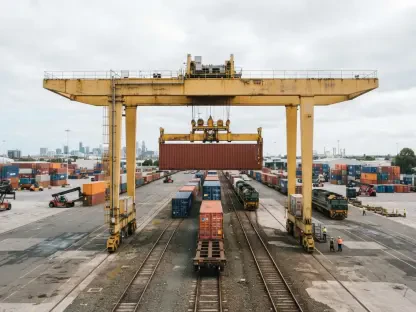

Outsourcing fulfillment to a third-party logistics provider offers an alternative for growing brands that need access to advanced infrastructure without the massive upfront investment of building a private facility. Modern retail distribution is currently defined by a high-stakes race to integrate advanced technology, where the pressure to implement high-tech infrastructure remains immense. However, the primary objective for any brand should not be automation for its own sake, as over-engineering often leads to diminishing returns and operational rigidity. Instead, a successful strategy focuses on identifying the specific level of technology that resolves operational bottlenecks at a sustainable cost. Deciding how to scale involves a multidimensional assessment of whether to build internal capabilities or leverage the specialized expertise of third-party logistics providers. This operation-first mindset ensures that technology remains a tool for business growth.
Identifying Essential Operational Requirements
Before selecting a specific technological solution, a retailer must conduct a rigorous assessment of its foundational order dynamics and inventory characteristics. Factors such as peak seasonal volumes, lines per order, and SKU turnover rates dictate the type of machinery required to maintain efficiency. For instance, a facility handling high-velocity items with uniform packaging might thrive with a standard conveyor system, whereas a diverse catalog requires more sophisticated robotic picking solutions. Furthermore, the strategy must account for different fulfillment channels, such as direct-to-consumer or wholesale, alongside the maturity of existing warehouse management systems. Two companies with identical sales volumes might require completely different automation paths based on these unique nuances. If the underlying data regarding product dimensions and weight is inaccurate, even the most expensive system will fail to deliver the expected throughput, leading to costly errors.
The integration of automated systems must also consider the physical constraints of the existing facility and the readiness of the workforce to adapt to new digital workflows. Implementing a high-speed sorter is meaningless if the outbound dock lacks the capacity to process the increased volume, creating a new bottleneck further down the line. A holistic view of the supply chain allows managers to identify where automation will provide the greatest return on investment without disrupting the equilibrium of the warehouse. This involves analyzing historical data from 2026 to 2028 to project future growth patterns, ensuring that the chosen hardware can scale alongside the business. By focusing on the end-to-end flow of goods, organizations can avoid the common pitfall of “islands of automation” that operate efficiently in isolation but fail to communicate with the rest of the enterprise. This approach prioritizes process stability and labor synergy over technical flashiness.
Comparing Internal and Outsourced Operations
Managing automation internally is a viable path for companies with predictable long-term facility plans and robust technical infrastructure. This model offers the highest level of control and customization, allowing for deep integration into a brand’s unique processes and proprietary software stacks. When a company owns the technology, it can tweak algorithms and mechanical settings in real time to respond to shifts in consumer behavior or product packaging. While many retailers now utilize Robotics-as-a-Service to shift costs from capital expenditure to operational expenditure, the internal model still places the full weight of system maintenance and staff training on the retailer’s own team. Success in this area depends on a long-term commitment to maintaining the technological edge through continuous updates. Organizations that succeed with this model often treat their warehouses as technology hubs rather than simple storage spaces, ensuring they remain competitive.
In contrast, leveraging a third-party logistics partnership grants access to advanced infrastructure without the need for massive upfront capital investments. Retailers can choose between multi-client operations, where shared infrastructure reduces costs for midsized brands, or dedicated operations designed for large-scale, specialized needs. This flexibility allows brands to focus on product development while experts manage the complexities of labor and technological shifts. Modern logistics providers have transitioned into technology powerhouses, offering seamless integration with e-commerce platforms and real-time inventory visibility. This level of connectivity ensures that the retailer retains a high degree of control over the customer experience even when physical handling is outsourced. By leveraging the scale of a provider, smaller companies can compete with industry giants on shipping speed and accuracy, entering new markets quickly without building local distribution centers.
Analyzing Total Cost and Future Flexibility
A comprehensive business case for automation must move beyond simple equipment quotes to evaluate the total cost to serve over the entire lifecycle of the technology. For internal projects, this calculation must include ongoing maintenance, specialized engineering support, and the potential cost of system downtime during peak periods. It is not enough to look at the purchase price; one must also account for energy consumption, software licensing fees, and periodic hardware refreshes. When looking at outsourced models, retailers must weigh implementation fees and per-unit service charges against the risks of labor fluctuations and warehouse vacancy. A robust strategy involves stress-testing these financial models against worst-case scenarios, ensuring that the chosen path remains profitable even if market conditions change suddenly. The goal is to identify a break-even point where efficiency gains officially outweigh the operational costs of the automation.
The analysis revealed that the most successful organizations established a roadmap for incremental automation, starting with low-risk projects that offered immediate returns. Leaders focused on standardizing data formats and improving inventory accuracy as a prerequisite for any hardware installation. They also implemented a culture of continuous feedback, where warehouse staff provided insights into system performance and ergonomic challenges. This collaborative approach ensured that the technology served the people operating it, rather than creating new complexities. Selecting the right partner or system required thorough vetting of technical experience and the ability to integrate with existing order management platforms. The industry concluded that clear definitions of responsibility regarding system performance and future modifications were vital for long-term success. By staying informed about emerging trends, brands positioned themselves to thrive in an increasingly automated retail environment.